If you’ve been learning SEO, you’ve probably heard the term stop words in keywords SEO. Some marketers say you should remove them. Others say they don’t matter anymore.
So what’s the truth?
Are stop words hurting your rankings?
Should you remove them from your titles and URLs?
Or is this just an outdated SEO myth?
In this guide, we will break everything down in simple language so you can clearly understand how stop words affect SEO in 2026 and beyond.
What Are Stop Words?
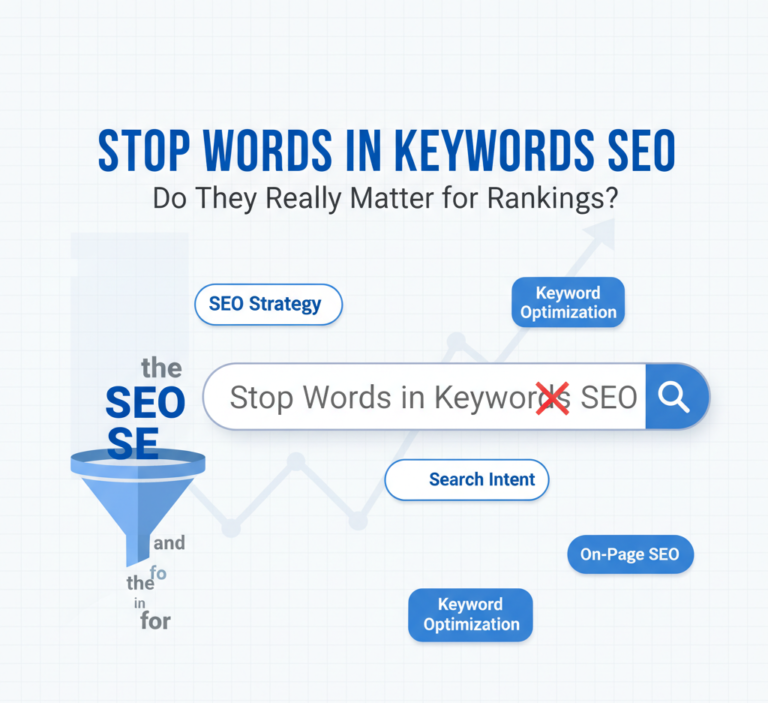
Stop words are common words that appear frequently in everyday language. These include words like:
- the
- a
- an
- in
- on
- at
- for
- to
- of
- and
- is
- with
For example:
- Best restaurants in New York
- How to start a blog
- Top shoes for running
Words like “in,” “to,” and “for” are called stop words.
They are small, but they help sentences make sense.
Why Were Stop Words Removed in the Past?
In the early days of search engines, technology was limited. Search engines had less storage and slower processing systems. To save space and improve speed, they ignored very common words.
If someone searched:
“The best pizza in Chicago”
Older search engines might have processed it as:
“best pizza Chicago”
At that time, removing stop words helped performance.
But search engines have evolved a lot since then.
Do Stop Words Still Matter for SEO?
Today, search engines understand full sentences and natural language. They do not simply ignore small words anymore.
In fact, stop words often help search engines understand meaning and intent.
Consider these two searches:
- Flights to Paris
- Flights from Paris
The words “to” and “from” completely change the meaning. If those words were removed, the search intent would be unclear.
That is why modern SEO does not require you to remove stop words.
Are Stop Words Bad for Rankings?
No, stop words are not bad for SEO.
They do not hurt your rankings when used naturally.
Search engines today focus on:
- User intent
- Content quality
- Relevance
- Page experience
- Authority
They do not penalize you for using words like “the” or “in.”
If anything, removing them incorrectly can make your content look unnatural and spammy.
When Stop Words Actually Help SEO
1. They Improve Readability
Good SEO content is written for humans first.
Compare these two titles:
- Best Hotels in Dubai for Families
- Best Hotels Dubai Families
The first one sounds natural. The second one feels robotic.
Search engines prefer content that users trust and enjoy reading.
2. They Match Search Intent
Many users type full phrases when searching:
- How to start a business
- What is digital marketing
- Best places to visit in summer
If you remove stop words, your content may not match the real query as closely.
Matching search intent is far more important than removing small words.
3. They Help with Voice Search
Voice search queries are conversational.
People ask:
- What is the best laptop for students?
- How do I improve my SEO ranking?
Voice searches include stop words naturally.
If your content sounds natural, you are more likely to rank for these searches.
When You Can Remove Stop Words
Although you do not need to remove stop words from content, there are a few situations where shortening makes sense.
1. In URLs
Short URLs are easier to read and share.
For example:
Instead of:
yourwebsite.com/the-best-seo-guide-for-beginners
You could use:
yourwebsite.com/best-seo-guide-beginners
This keeps the URL clean and simple.
But do not remove words if it makes the URL confusing.
Clarity always comes first.
2. When Improving Title Length
Sometimes, you may remove a stop word to keep your title within character limits.
For example:
“Guide to SEO Tools for Small Businesses”
If it is too long, you might shorten it slightly. But never make it awkward.
Common SEO Myths About Stop Words
Let’s clear up some confusion.
Myth 1: Removing Stop Words Boosts Rankings
This is outdated advice. Modern search engines understand natural language. Rankings depend on content quality and authority, not on removing “the” from your title.
Myth 2: Stop Words Hurt Keyword Density
Keyword density is no longer a major ranking factor. Over-optimizing content is more harmful than using normal language.
Write naturally. Do not count words.
Myth 3: Stop Words Should Be Avoided Completely
Avoiding them completely makes your content sound unnatural.
Search engines reward user-friendly writing.
How to Use Stop Words Correctly in SEO
Here is a simple rule:
Write naturally. Optimize smartly.
Follow these best practices:
1. Focus on User Intent
Ask yourself:
What is the user really looking for?
If stop words help clarify intent, keep them.
2. Prioritize Readability
If removing a word makes your sentence hard to read, do not remove it.
SEO is about improving user experience.
3. Keep URLs Clean But Clear
Shorter URLs are good, but clarity is better.
Never sacrifice meaning just to remove small words.
4. Use Natural Keyword Variations
Instead of repeating one exact keyword, use variations naturally throughout your content.
For example:
- stop words in SEO
- SEO stop words
- stop words in keywords
- keyword optimization
This helps search engines understand your topic better.
Real Example: Good vs Bad Optimization
Good:
Stop Words in Keywords SEO: Complete Guide
Bad:
Stop Words Keywords SEO Guide
The first title sounds professional and trustworthy. The second looks forced.
Which one would you click?
Search engines consider user behavior. If users click and stay on your page, your rankings improve.
Why Modern SEO Is Different
SEO today is not about tricks.
It is about:
- Creating valuable content
- Answering user questions clearly
- Writing naturally
- Providing a good experience
Stop words are a normal part of human language. Search engines understand that.
Trying to remove them unnecessarily is an old strategy that no longer works.
Final Verdict: Should You Remove Stop Words?
In most cases, no.
Keep stop words when they:
- Improve readability
- Clarify meaning
- Match user intent
- Make your content natural
You may remove them in URLs or shorten titles slightly, but only when it makes sense.
Modern SEO is about clarity, trust, and value.
If your content helps users and answers their questions clearly, small words will not hurt your rankings.
Key Takeaways
- Stop words are common words like “the,” “in,” and “for.”
- They are not harmful to SEO.
- Modern search engines understand full phrases.
- Removing stop words is not necessary for better rankings.
- Readability and user intent matter more than small word adjustments.