

In today’s fast-paced digital world, businesses need more than traditional marketing methods to stay competitive. SEO and digital marketing have become essential strategies for brands aiming to reach their target audience, drive traffic, and boost sales online. This article provides a fully human-written, SEO-friendly guide explaining what SEO and digital marketing are, their components, benefits, and best practices.
Introduction to SEO and Digital Marketing
SEO and digital marketing are intertwined concepts, but they serve distinct purposes:
- SEO (Search Engine Optimization) focuses on improving a website’s visibility in search engine results pages (SERPs).
- Digital marketing is a broader strategy encompassing all online marketing efforts, including SEO, social media, email marketing, content marketing, paid ads, and more.
Together, SEO and digital marketing help businesses increase brand awareness, reach the right audience, and convert visitors into customers.
What is SEO?
SEO is the process of optimizing your website to rank higher on search engines like Google, Bing, and Yahoo. It ensures that your content is discoverable by people searching for relevant keywords.
Key Components of SEO
- On-Page SEO
- Focuses on optimizing individual web pages.
- Includes keyword optimization, meta titles, meta descriptions, headings (H1, H2), and URL structure.
- Ensures content is relevant and easy to read for both users and search engines.
- Off-Page SEO
- Involves strategies outside your website to improve authority and ranking.
- Includes backlinks, social media signals, influencer mentions, and guest blogging.
- Technical SEO
- Optimizes website infrastructure for search engines.
- Focuses on site speed, mobile-friendliness, secure connections (HTTPS), crawlability, and structured data.
- Content SEO
- Creating high-quality, valuable content for users.
- Content can include blogs, articles, videos, infographics, and guides.
- Keyword research ensures the content aligns with what your audience is searching for.
What is Digital Marketing?
Digital marketing is the promotion of products or services through online channels. It covers a wide range of activities designed to reach potential customers where they spend most of their time—on the internet.
Core Components of Digital Marketing
- Search Engine Marketing (SEM)
- Paid strategies like Google Ads to appear at the top of search results.
- Complements SEO by targeting competitive keywords quickly.
- Social Media Marketing (SMM)
- Promoting brands through platforms like Facebook, Instagram, Twitter, LinkedIn, and TikTok.
- Involves organic posting, paid ads, influencer partnerships, and community engagement.
- Content Marketing
- Creating informative, engaging, and shareable content.
- Builds authority, drives traffic, and nurtures leads.
- Email Marketing
- Sending targeted emails to your audience for promotions, updates, or newsletters.
- Highly effective for building customer relationships and retention.
- Affiliate Marketing
- Partnering with affiliates who promote your products and earn a commission for sales or leads.
- Pay-Per-Click (PPC) Advertising
- Paid campaigns on Google, Bing, or social media platforms.
- Allows brands to reach a specific audience based on demographics, interests, and behavior.
- Video Marketing
- Utilizing platforms like YouTube or social media for video content.
- Engages audiences and enhances brand storytelling.
How SEO Fits Into Digital Marketing
SEO is a key part of digital marketing because it helps attract organic traffic to your website. While paid ads provide immediate results, SEO builds long-term visibility.
- SEO drives free, organic traffic.
- Content marketing improves SEO performance by creating valuable resources that earn backlinks.
- Technical SEO ensures your website functions well across all digital marketing channels.
By combining SEO with other digital marketing strategies, businesses can achieve maximum reach and return on investment (ROI).
Benefits of SEO and Digital Marketing
Implementing SEO and digital marketing offers several advantages:
- Increased Visibility
- Higher search engine rankings lead to more website traffic.
- Targeted Traffic
- Reaches users actively searching for products or services related to your business.
- Cost-Effective
- Organic SEO reduces reliance on paid ads, while digital marketing allows precise budget allocation.
- Brand Credibility and Trust
- Ranking high on search engines signals authority and reliability.
- Better Customer Engagement
- Digital marketing channels facilitate two-way communication with potential customers.
- Measurable Results
- Analytics tools track traffic, conversions, and ROI for continuous improvement.
Best Practices for SEO and Digital Marketing
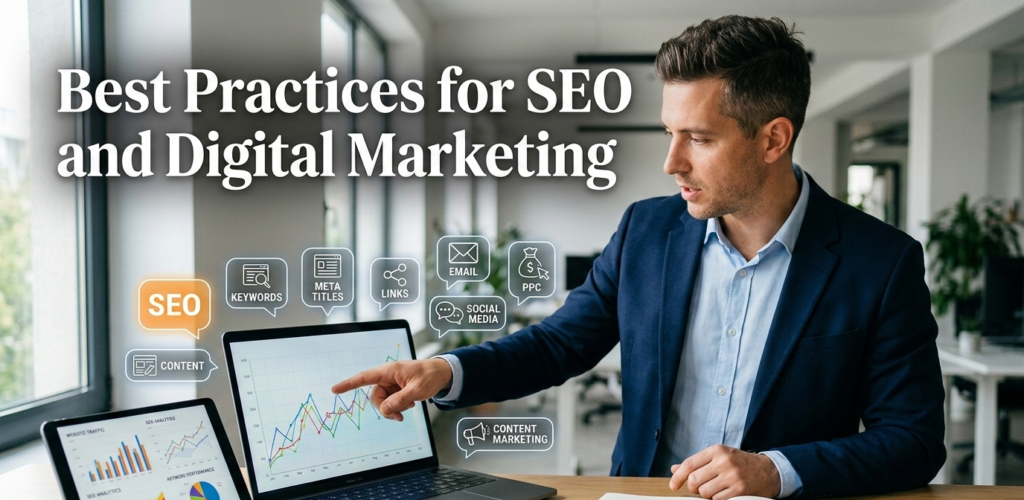
For SEO:
- Conduct thorough keyword research using tools like Google Keyword Planner or SEMrush.
- Optimize meta titles, headings, and content for relevant keywords.
- Ensure your website is mobile-friendly and fast-loading.
- Use internal and external links to enhance authority.
- Regularly create high-quality, valuable content for your audience.
For Digital Marketing:
- Build a multi-channel strategy including social media, email, PPC, and content marketing.
- Personalize campaigns based on audience segmentation.
- Use analytics to track performance and adjust strategies in real time.
- Engage with your audience through comments, messages, and community forums.
- Maintain a consistent brand voice across all platforms.
SEO and Digital Marketing Trends in 2026
To stay competitive, businesses should be aware of the latest trends:
- AI and Automation
- Tools for content creation, ad targeting, and analytics are becoming mainstream.
- Voice Search Optimization
- Optimizing content for voice queries through smart speakers and mobile devices.
- Video and Interactive Content
- Engaging content like live streams, AR experiences, and tutorials improve user engagement.
- Mobile-First Approach
- Search engines prioritize mobile-friendly websites, making responsive design critical.
- Local SEO
- Businesses targeting local customers optimize Google My Business and localized content.
Conclusion
SEO and digital marketing are essential tools for businesses aiming to thrive in the modern digital landscape. SEO ensures your website is discoverable by users searching for relevant information, while digital marketing encompasses a wider range of strategies to engage, convert, and retain customers.
By understanding the principles of SEO, leveraging digital marketing channels, and staying updated with trends, businesses can increase visibility, drive targeted traffic, and achieve sustainable growth.
In 2026, the synergy of SEO and digital marketing will continue to shape how brands connect with audiences, making them indispensable tools for every modern business.