
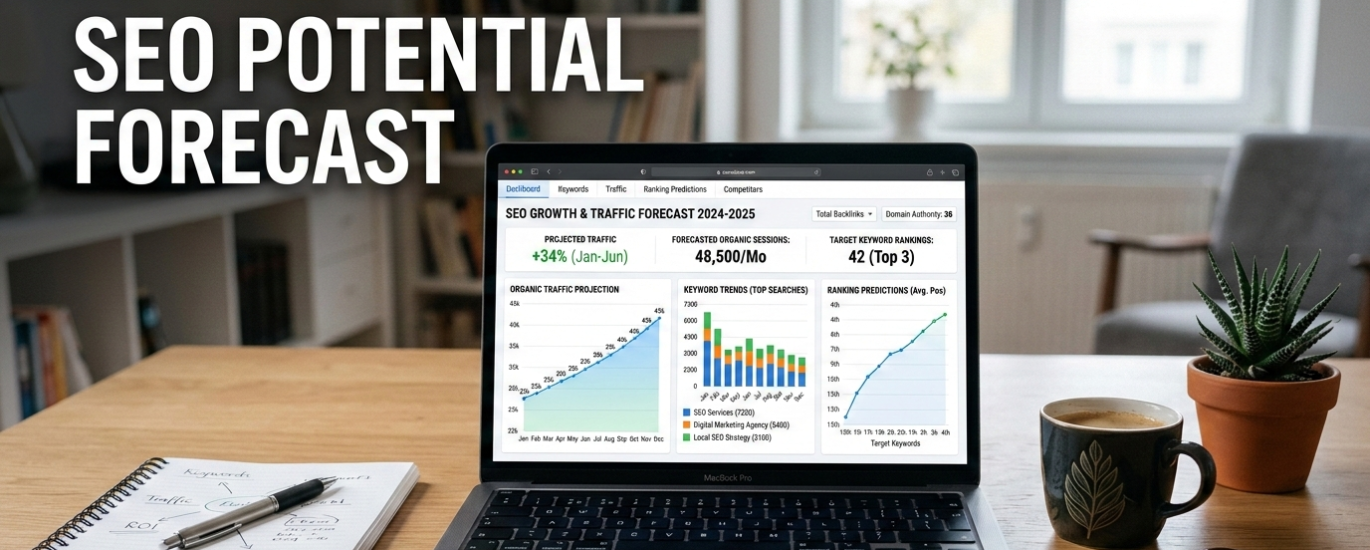
In the evolving world of digital marketing, businesses must anticipate trends and opportunities to stay ahead. One critical aspect of this is understanding SEO potential forecast—predicting how search engine optimization can impact a website’s traffic, visibility, and revenue over time. By analyzing potential SEO outcomes, businesses can make data-driven decisions, allocate resources effectively, and maximize ROI.
This comprehensive guide explores what SEO potential forecasting is, why it matters, how to implement it, and strategies to ensure long-term SEO success.
What Is SEO Potential Forecast?
SEO potential forecast refers to the process of predicting the future performance of a website’s search engine optimization efforts. It involves analyzing current metrics, trends, and opportunities to estimate:
- Future organic traffic growth
- Potential keyword rankings
- Estimated click-through rates (CTR)
- Lead generation or conversion potential
- Revenue impact from organic search
Forecasting allows businesses to prioritize SEO activities, set realistic goals, and optimize their strategies for maximum impact.
Why SEO Potential Forecast Matters
1. Data-Driven Decision Making
Forecasting provides insights into which keywords, pages, or campaigns will likely drive the most value. Companies can focus resources where they matter most.
2. Improved ROI
By understanding the potential impact of SEO, businesses can allocate budgets efficiently, avoiding wasted resources on low-impact activities.
3. Strategic Planning
Forecasting helps companies set realistic traffic and revenue targets, plan content calendars, and identify opportunities for growth.
4. Competitive Advantage
Businesses that predict SEO trends and act proactively gain an edge over competitors who rely on reactive strategies.
5. Risk Mitigation
SEO potential forecasting identifies weak areas, allowing companies to address technical issues, content gaps, or missed opportunities before they impact performance.
Key Components of SEO Potential Forecast
To create an accurate SEO potential forecast, businesses should analyze several factors:
1. Keyword Analysis
- Identify high-volume, high-intent keywords relevant to your business
- Estimate potential traffic for each keyword
- Consider seasonal trends, search intent, and competition
- Use tools like Ahrefs, SEMrush, or Google Keyword Planner for insights
2. Competitor Analysis
- Examine competitor rankings and backlink profiles
- Identify top-performing pages in your niche
- Forecast potential traffic you could capture by outranking competitors
3. Current SEO Performance
- Audit your website’s existing SEO performance
- Analyze organic traffic, CTR, bounce rate, and conversion rates
- Determine which pages or keywords have untapped potential
4. Content Potential
- Evaluate current content for optimization opportunities
- Identify content gaps where your business can target untapped keywords
- Forecast traffic and engagement growth from new or improved content
5. Technical SEO Readiness
- Assess website speed, mobile responsiveness, indexation, and crawlability
- Predict how fixing technical issues can improve rankings and traffic
6. Backlink Opportunities
- Analyze existing backlink profiles
- Forecast the impact of acquiring new high-quality backlinks
- Identify authoritative websites in your niche for link-building opportunities
7. Local and Regional SEO Factors
- If your business serves specific locations, consider local search trends
- Forecast potential growth from Google Business Profile optimization, reviews, and local citations
Steps to Conduct an SEO Potential Forecast
Step 1: Set Goals
- Define measurable objectives such as traffic, leads, or revenue
- Align forecast with business growth targets
Step 2: Collect Data
- Gather data from analytics platforms like Google Analytics and Search Console
- Use SEO tools to analyze keyword rankings, traffic potential, and competitors
Step 3: Analyze Trends
- Review historical traffic and ranking trends
- Consider seasonal changes, market demand, and industry developments
Step 4: Estimate Traffic Potential
- Use keyword search volume, CTR, and competition data to calculate potential organic traffic
- Consider realistic ranking improvements for each keyword
Step 5: Predict Revenue Impact
- Estimate conversions based on historical conversion rates
- Calculate potential revenue generated from increased organic traffic
Step 6: Prioritize Actions
- Focus on high-impact keywords, content, and technical improvements
- Allocate resources where the forecast shows the most potential
Step 7: Monitor and Adjust
- Regularly track actual performance versus forecast
- Refine your SEO strategy based on results to improve accuracy
Tools for SEO Potential Forecast
Several tools can help businesses analyze and forecast SEO potential:
- Google Analytics: Tracks website traffic, user behavior, and conversions.
- Google Search Console: Provides keyword performance, impressions, and CTR data.
- SEMrush: Offers keyword research, competitor analysis, and traffic forecasting features.
- Ahrefs: Analyzes backlink profiles, organic keywords, and competitor insights.
- Moz: Tracks keyword rankings, domain authority, and SEO opportunities.
Combining multiple tools improves accuracy and provides comprehensive insights.
Best Practices for Maximizing SEO Potential
- Focus on High-Intent Keywords: Target keywords that attract visitors ready to convert.
- Optimize Existing Content: Update pages with better keywords, meta tags, and internal links.
- Build Quality Backlinks: Invest in relationships and content that naturally attracts links.
- Leverage Local SEO: For regional businesses, optimize Google Business Profile and local citations.
- Monitor Performance Regularly: Compare forecasts with actual results and adjust strategies.
- Stay Updated on Algorithm Changes: Google and other search engines constantly update ranking factors.
Common Mistakes in SEO Potential Forecasting
- Overestimating traffic without considering competition
- Ignoring seasonal or market fluctuations
- Focusing solely on quantity of keywords, not quality
- Neglecting technical SEO issues that hinder growth
- Relying only on forecasts without tracking real performance
Avoiding these mistakes ensures more accurate predictions and actionable insights.
Benefits of SEO Potential Forecast
- Clear understanding of expected SEO ROI
- Data-driven prioritization of SEO efforts
- Improved resource allocation
- Reduced risk of wasted time and effort
- Competitive advantage in your niche
- Long-term strategic planning for growth
Forecasting empowers businesses to make informed decisions and achieve sustainable SEO success.
Future Trends in SEO Potential Forecasting
- AI-Powered Predictive Analytics: Machine learning models predicting keyword performance and traffic potential.
- Integration with CRM Systems: Linking SEO forecasts to sales data for precise ROI calculations.
- Voice Search and Conversational Queries: Forecasting potential traffic from voice-activated search.
- Semantic Search Optimization: Predicting impact based on search intent rather than exact keywords.
- Hyperlocal SEO Forecasting: Estimating traffic from neighborhood-level searches for regional businesses.
Keeping up with these trends ensures businesses maximize their SEO potential in 2026 and beyond.
Conclusion
Understanding SEO potential forecast allows businesses to plan strategically, focus resources on high-impact areas, and predict future growth from organic search. By combining keyword research, competitor analysis, technical SEO, content optimization, and backlink strategies, companies can maximize their SEO ROI and achieve sustainable online success.
Forecasting is not just about numbers—it’s about guiding your SEO strategy with actionable insights, reducing risks, and ensuring your business thrives in the competitive digital landscape.