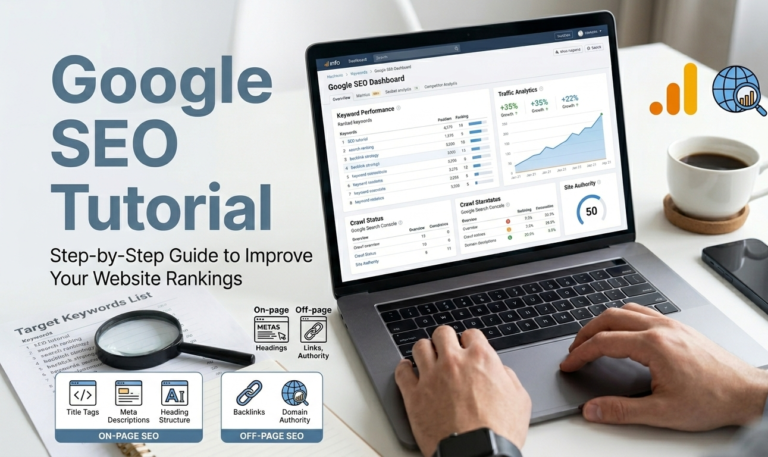
Search Engine Optimization (SEO) is the backbone of online visibility. For anyone who owns a website, runs a business online, or manages digital content, understanding SEO is essential. This Google SEO tutorial will guide you through everything you need to know to optimize your website for search engines, increase organic traffic, and improve rankings on Google.
Whether you are a beginner looking to learn SEO basics or an intermediate user aiming to refine your skills, this tutorial provides actionable steps and best practices to help you succeed.
What is Google SEO?
Google SEO refers to the process of optimizing your website to rank higher in Google search results. It involves improving both the technical structure and content of your site to ensure search engines can crawl, index, and understand your pages.
SEO is not just about search engines—it’s also about improving user experience, providing relevant content, and helping visitors find what they need quickly and efficiently.
Why Google SEO is Important
Google dominates the search engine market, making it the primary platform for organic traffic. Optimizing for Google has several benefits:
- Increase Organic Traffic: Higher rankings mean more visibility and clicks from people searching for your products, services, or content.
- Enhance User Experience: Optimizing your website improves loading speed, mobile usability, and navigation.
- Build Credibility: Websites that rank higher are perceived as more trustworthy and authoritative by users.
- Drive Conversions: Targeted traffic from SEO is more likely to convert into leads, sales, or subscribers.
- Cost-Effective Marketing: Organic SEO reduces the need for paid advertising while delivering long-term results.
Key Components of Google SEO
Google SEO can be divided into several components, each of which plays a critical role in achieving higher search rankings.
1. Technical SEO
Technical SEO ensures that Google can crawl, index, and understand your website efficiently. Key elements include:
- Website Speed: Faster websites provide a better user experience and improve rankings. Use tools like Google PageSpeed Insights to test your speed.
- Mobile-Friendliness: Google prioritizes mobile-friendly sites with responsive design. Test your site with the Mobile-Friendly Test tool.
- Crawlability & Indexing: Ensure all important pages are crawlable by Google bots. Use Google Search Console to monitor indexing.
- HTTPS Security: Secure websites (HTTPS) are preferred by Google.
- Structured Data: Implement schema markup to enhance rich snippets and search results visibility.
2. On-Page SEO
On-page SEO focuses on optimizing individual web pages to make them search-engine-friendly. Key elements include:
- Title Tags: Include primary keywords in page titles. Keep them concise (50–60 characters).
- Meta Descriptions: Write compelling meta descriptions that encourage clicks.
- Header Tags (H1, H2, H3): Structure content with headers to improve readability and SEO.
- Keyword Optimization: Naturally include target keywords in content, headings, and URLs.
- Internal Linking: Link relevant pages within your site to distribute link equity and improve navigation.
- Image Optimization: Use alt text, compress images, and include descriptive filenames.
3. Content SEO
High-quality content is the core of Google SEO. Google rewards websites that provide valuable, relevant, and comprehensive content.
Best Practices:
- Conduct keyword research to identify what your audience is searching for.
- Use long-tail keywords to target specific queries with lower competition.
- Create content that satisfies user intent—informational, transactional, or navigational.
- Incorporate LSI keywords (related terms) to improve contextual relevance.
- Update content regularly to keep it fresh and authoritative.
4. Off-Page SEO
Off-page SEO involves activities outside your website that influence your search rankings. The most important factor is backlinks.
- High-Quality Backlinks: Earn links from reputable websites to boost your site’s authority.
- Social Signals: While not a direct ranking factor, social engagement can drive traffic and visibility.
- Brand Mentions: Google considers online mentions of your brand as a sign of credibility.
- Guest Posting & PR: Publishing content on other authoritative sites helps build backlinks and authority.
5. User Experience & Engagement
Google considers user behavior when ranking pages. Optimizing for engagement includes:
- Reducing Bounce Rate: Keep visitors engaged with clear navigation and relevant content.
- Page Layout & Readability: Use short paragraphs, bullet points, and headings to make content easy to read.
- Core Web Vitals: Focus on Largest Contentful Paint (LCP), Cumulative Layout Shift (CLS), and First Input Delay (FID).
- Call-to-Actions (CTAs): Encourage interaction, subscription, or conversion for better user experience.
Step-by-Step Google SEO Tutorial
Step 1: Conduct Keyword Research
Identify keywords your audience uses to find your products or services. Use tools like:
- Google Keyword Planner
- SEMrush
- Ahrefs
- Ubersuggest
Organize keywords by intent (informational, transactional, navigational) and prioritize based on search volume and competition.
Step 2: Optimize On-Page Elements
- Include primary keywords in titles, meta descriptions, and headings.
- Use descriptive URLs that reflect content and keywords.
- Optimize images with alt text and proper file names.
- Link internally to related content for better site structure.
Step 3: Improve Technical SEO
- Ensure your website loads quickly and is mobile-friendly.
- Use structured data (schema markup) for enhanced search results.
- Fix crawl errors, broken links, and duplicate content using Google Search Console.
- Implement HTTPS for site security.
Step 4: Create High-Quality Content
- Focus on content that answers user questions and provides solutions.
- Use long-form articles, videos, infographics, and tutorials to increase engagement.
- Update old content with fresh information to maintain rankings.
Step 5: Build Backlinks
- Reach out to authoritative websites for guest posting opportunities.
- Create shareable content that naturally attracts links.
- Monitor your backlink profile for quality and relevance.
Step 6: Monitor & Analyze Performance
Use analytics and SEO tools to track results:
- Google Analytics: Track traffic, behavior, and conversions.
- Google Search Console: Monitor impressions, clicks, and indexing status.
- Ahrefs / SEMrush: Track keyword rankings and backlink profile.
Regular monitoring allows you to refine your strategy, improve underperforming pages, and maintain high rankings.
Common Google SEO Mistakes to Avoid
- Ignoring Mobile Optimization: Mobile usability is critical for rankings.
- Keyword Stuffing: Overusing keywords can lead to penalties.
- Duplicate Content: Copying content across pages harms SEO.
- Neglecting Technical SEO: Crawl errors, slow pages, and broken links reduce visibility.
- Not Updating Content: Outdated content loses relevance and traffic.
- Focusing Only on Search Engines: User experience and engagement are equally important.
Tools Recommended in This Google SEO Tutorial
- Google Keyword Planner – Keyword research and search volume
- Google Search Console – Monitor indexing, errors, and search performance
- Google Analytics – User behavior and traffic insights
- SEMrush / Ahrefs – Comprehensive SEO analysis and competitor research
- GTmetrix / PageSpeed Insights – Page speed optimization
- Moz Pro – Domain authority, keyword suggestions, and site audits
Advanced Tips for Google SEO Success
- Optimize for Featured Snippets: Structure content to answer questions clearly.
- Use Long-Tail Keywords: Target highly specific queries for better conversions.
- Improve Page Speed: Reduce image sizes and use caching for faster load times.
- Focus on User Intent: Understand why users search for keywords and provide relevant solutions.
- Leverage Video Content: Google favors mixed media, especially videos.
Conclusion
This Google SEO tutorial provides a complete roadmap for beginners and intermediate users to optimize websites effectively. By implementing technical SEO, on-page and off-page optimization, high-quality content, and user-focused strategies, you can improve your Google rankings, attract organic traffic, and enhance conversions.
SEO is a continuous process, and consistent testing, monitoring, and updating are key to long-term success. Follow this tutorial, measure results with analytics tools, and refine your approach regularly to stay ahead in the competitive world of digital marketing.