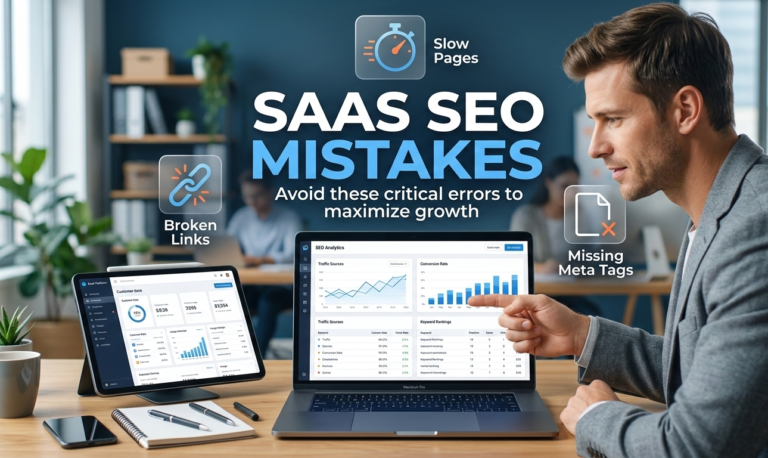
Search engine optimization (SEO) is essential for SaaS (Software as a Service) companies that want to attract qualified leads, increase website traffic, and grow their user base. However, many SaaS businesses make critical SEO mistakes that limit their visibility and hinder growth.
What is SaaS SEO?
SaaS SEO refers to the strategies and practices aimed at improving a software company’s website visibility in search engines. The goal is to attract organic traffic from potential customers searching for solutions that the SaaS product provides.
Unlike traditional e-commerce or informational websites, SaaS websites have unique challenges:
- Highly competitive B2B markets
- Complex product offerings and technical content
- Need to target decision-makers, not just casual users
Effective SaaS SEO requires a blend of technical optimization, content strategy, and user experience enhancements.
Common SaaS SEO Mistakes
1. Ignoring Keyword Research
One of the most critical mistakes is failing to conduct thorough keyword research. SaaS companies often focus on branded terms or general keywords without considering search intent.
Consequences:
- Low visibility for relevant search queries
- Wasted content efforts on terms that don’t convert
- Missing long-tail keywords that attract high-quality leads
How to Avoid:
- Use tools like SEMrush, Ahrefs, or Google Keyword Planner
- Identify keywords for each stage of the customer journey (awareness, consideration, decision)
- Focus on long-tail and intent-based keywords that attract decision-makers
2. Poor Technical SEO
Many SaaS websites overlook technical SEO issues, which can severely impact rankings. Common technical mistakes include:
- Slow page loading speeds
- Mobile unresponsiveness
- Broken links and 404 errors
- Poor site architecture
- Duplicate content
How to Avoid:
- Conduct regular website audits using tools like Screaming Frog or Google Search Console
- Optimize site speed through caching, image compression, and efficient code
- Implement mobile-first design principles
- Use canonical tags and structured data to prevent duplicate content issues
3. Weak On-Page SEO
Even with good keywords, neglecting on-page optimization can prevent pages from ranking effectively. SaaS websites often make these mistakes:
- Missing or poorly written meta titles and descriptions
- Headers (H1, H2, H3) not aligned with keyword strategy
- Lack of internal linking between product pages, blogs, and resources
- Minimal or thin content on landing pages
How to Avoid:
- Optimize meta titles and descriptions for every page
- Use headers to structure content and include target keywords
- Implement internal linking to guide users and search engines
- Create comprehensive, high-quality content that answers users’ questions
4. Overlooking Content Strategy
Content marketing is critical for SaaS SEO. Many SaaS companies make the mistake of focusing only on product pages and ignoring blogs, guides, and educational content.
Consequences:
- Missed opportunity to capture informational search queries
- Limited backlink opportunities
- Reduced thought leadership in the industry
How to Avoid:
- Develop a content calendar targeting both industry and product-related topics
- Focus on problem-solving content for your target audience
- Include blogs, tutorials, case studies, and whitepapers
- Optimize content for featured snippets and voice search
5. Neglecting User Experience (UX)
Search engines prioritize websites that provide a positive user experience. Many SaaS websites make UX-related SEO mistakes:
- Confusing navigation and menus
- Excessive pop-ups or auto-play videos
- Poorly designed landing pages that reduce conversions
How to Avoid:
- Simplify navigation and make important pages easily accessible
- Optimize forms and CTAs for conversions
- Use clean layouts with mobile responsiveness
- Conduct A/B testing to identify UX improvements
6. Ignoring Backlinks and Authority
Backlinks are critical for SEO, yet many SaaS companies neglect link-building. Without backlinks from authoritative websites, your pages may struggle to rank.
How to Avoid:
- Publish high-quality, shareable content that attracts organic links
- Guest post on industry blogs and collaborate with partners
- Leverage PR and thought leadership opportunities to gain mentions
- Monitor backlinks for spam and maintain a healthy profile
7. Focusing Only on Rankings, Not Conversions
SaaS businesses often obsess over ranking for competitive keywords without considering conversion rate optimization (CRO). High traffic alone does not guarantee new users.
How to Avoid:
- Track user behavior with analytics tools to identify drop-off points
- Optimize landing pages with clear CTAs and value propositions
- Use personalized content and demos to guide potential leads through the funnel
8. Poor Tracking and Analytics
Without proper tracking, SaaS companies cannot measure the ROI of their SEO efforts. Common mistakes include:
- Not setting up Google Analytics or Search Console correctly
- Ignoring metrics like organic traffic, leads, bounce rate, and conversions
- Failing to track keyword performance and content engagement
How to Avoid:
- Implement Google Analytics, Google Search Console, and marketing automation tools
- Set up conversion goals for trials, demos, and sign-ups
- Monitor KPIs regularly and adjust SEO strategy accordingly
Best Practices to Avoid SaaS SEO Mistakes
- Conduct Comprehensive Keyword Research: Align keywords with buyer intent.
- Audit and Optimize Website Regularly: Ensure technical SEO, mobile responsiveness, and speed are prioritized.
- Develop a Strong Content Strategy: Publish blogs, tutorials, case studies, and guides.
- Focus on UX and CRO: Design user-friendly pages and landing pages optimized for conversions.
- Build Quality Backlinks: Focus on industry-relevant, authoritative sites.
- Measure and Adjust: Use analytics to track performance and refine your SEO strategy.
- Stay Updated on SEO Trends: Algorithms change frequently; stay current to maintain rankings.
Conclusion
SaaS SEO is a unique and complex challenge, but avoiding common mistakes can dramatically improve visibility, traffic, and conversions. By addressing technical SEO issues, weak content, poor UX, and lack of backlinks, SaaS companies can create a solid foundation for organic growth.
Focusing on both search engine rankings and user experience ensures that SEO efforts result in not only more visitors but also more paying customers.
By following best practices and learning from common SaaS SEO mistakes, your business can develop an effective, sustainable SEO strategy that drives measurable growth over time.