In the ever-evolving digital landscape, Search Engine Optimization (SEO) remains one of the most powerful tools for businesses, marketers, and website owners looking to increase visibility, attract targeted traffic, and improve conversions. SEO guides are essential resources that provide structured knowledge, practical tips, and strategies to help individuals and businesses succeed online.
This article dives deep into SEO guides, their importance, types, best practices, and how they can help you stay ahead in 2026.
What Are SEO Guides?
SEO guides are comprehensive resources designed to educate users on search engine optimization techniques. They often include:
- Step-by-step tutorials
- Best practices for on-page and off-page SEO
- Keyword research strategies
- Technical optimization tips
- Case studies and examples
SEO guides aim to simplify complex concepts, enabling marketers, business owners, and beginners to implement effective SEO strategies.
Why SEO Guides Are Important
SEO guides play a crucial role in the digital marketing ecosystem because:
- Provide Structured Learning – They break down SEO into manageable concepts for learners.
- Help Improve Rankings – Following guides ensures your website aligns with best practices, boosting search visibility.
- Save Time and Resources – Rather than trial and error, guides provide proven strategies.
- Stay Updated – SEO is dynamic; guides often include the latest algorithm updates and trends.
- Enhance Business Growth – Implementing strategies from guides leads to increased traffic, higher engagement, and better conversions.
Whether for beginners or experienced marketers, a high-quality SEO guide is a blueprint for digital success.
Types of SEO Guides
SEO guides come in various formats, each serving different purposes and audiences:
1. Beginner SEO Guides
These guides cover fundamental SEO concepts:
- What SEO is and why it matters
- Basic keyword research
- Introduction to on-page and off-page SEO
- Simple content optimization techniques
Beginner guides are ideal for individuals or small businesses just starting their SEO journey.
2. Advanced SEO Guides
Advanced guides focus on complex topics such as:
- Technical SEO (site speed, schema markup, crawlability)
- Advanced keyword analysis
- Link-building strategies
- Competitive analysis and SEO audits
These guides are designed for experienced marketers seeking to refine their SEO strategy and gain a competitive advantage.
3. Niche-Specific SEO Guides
Some guides are tailored to specific industries or types of websites, including:
- E-commerce SEO guides
- Local SEO guides for businesses targeting local customers
- Travel, healthcare, or education SEO guides
- Content-driven website SEO guides
Niche-specific guides provide practical tips relevant to your business and audience.
4. Step-by-Step Tutorials
These guides break SEO processes into actionable steps, including:
- Conducting keyword research
- Optimizing meta tags and headings
- Creating content optimized for SEO
- Building backlinks and improving domain authority
Step-by-step tutorials make it easier for beginners to apply strategies directly to their websites.
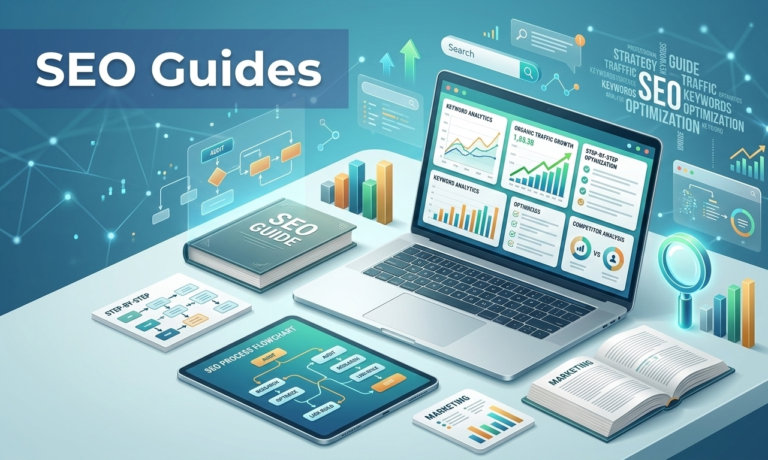
5. Visual SEO Guides
Some guides use infographics, videos, or flowcharts to explain SEO concepts visually. Visual guides help:
- Simplify complex strategies
- Engage users more effectively
- Improve information retention
Visual guides are particularly effective for social media sharing and educational content.
Key Components of an Effective SEO Guide
A high-quality SEO guide should include the following components:
1. Keyword Research Tips
- Identify primary and secondary keywords
- Explore long-tail and low-competition keywords
- Understand search intent (informational, transactional, or navigational)
Keyword research is the backbone of SEO; without it, your content may fail to reach the right audience.
2. On-Page SEO Techniques
- Optimize title tags, meta descriptions, and headers
- Include keywords naturally in content
- Optimize images with alt text and file names
- Internal linking to improve site navigation and authority
On-page SEO ensures your website is search-engine friendly and user-centric.
3. Technical SEO
- Ensure mobile-friendly design
- Improve website speed and performance
- Implement structured data (schema markup)
- Optimize URL structures and site architecture
Technical SEO ensures search engines can crawl and index your site effectively.
4. Off-Page SEO
- Build high-quality backlinks from relevant websites
- Engage in social media marketing
- Leverage guest posting, PR, and influencer collaborations
Off-page SEO strengthens your website’s authority and credibility, influencing rankings.
5. Content Strategy
- Create high-quality, informative, and engaging content
- Use visuals, videos, and infographics to enhance content
- Regularly update content to maintain relevance and freshness
A strong content strategy drives traffic, engagement, and conversions.
6. Analytics and Monitoring
- Use tools like Google Analytics and Google Search Console
- Track keyword rankings, traffic, and user behavior
- Conduct regular SEO audits to identify and fix issues
Analytics ensures your SEO efforts are measurable and continuously improving.
SEO Guide Trends for 2026
To stay competitive, consider these trends when using or creating SEO guides:
- AI-Enhanced SEO – Guides now incorporate AI tools for keyword research, content optimization, and competitor analysis.
- Voice Search Optimization – Tutorials include strategies to rank for voice queries.
- Mobile-First Indexing – Emphasis on mobile optimization in every guide.
- Video and Visual SEO – Including video SEO strategies in guides is increasingly important.
- E-A-T Principles – Guides now stress Expertise, Authority, and Trustworthiness in content creation.
Following guides aligned with current trends ensures your SEO strategy remains relevant and effective.
How to Use SEO Guides Effectively
- Start with a beginner-friendly guide if new to SEO
- Implement step-by-step tutorials immediately for practical learning
- Refer to advanced or niche-specific guides to refine strategies
- Combine multiple guides to create a comprehensive SEO approach
- Regularly update your knowledge as SEO algorithms and trends evolve
Effective use of SEO guides turns knowledge into measurable results.
Common Mistakes to Avoid
- Ignoring technical aspects – On-page content alone won’t rank well
- Overloading with keywords – Keyword stuffing reduces readability
- Neglecting analytics – Without tracking, you won’t know what works
- Following outdated guides – SEO evolves rapidly; stay updated
- Copying competitors blindly – Adapt strategies to your audience and niche
Avoiding these mistakes ensures your SEO efforts are strategic, effective, and sustainable.
Benefits of Following SEO Guides
- Accelerated learning curve for beginners
- Improved search engine rankings
- Higher website traffic and engagement
- Data-driven and structured SEO strategy
- Better ROI on digital marketing efforts
SEO guides provide a roadmap to success, helping businesses implement best practices without trial and error.
Conclusion
SEO guides are essential resources for anyone seeking to master search engine optimization in 2026. From beginners learning the basics to advanced marketers refining complex strategies, guides provide step-by-step instructions, actionable tips, and insights into current trends.
By using SEO guides effectively, businesses can:
- Increase online visibility
- Improve website rankings
- Drive targeted traffic
- Enhance brand credibility and authority
Investing time in following SEO guides is one of the smartest ways to stay ahead in a competitive digital environment, ensuring your strategies are current, actionable, and results-driven.