
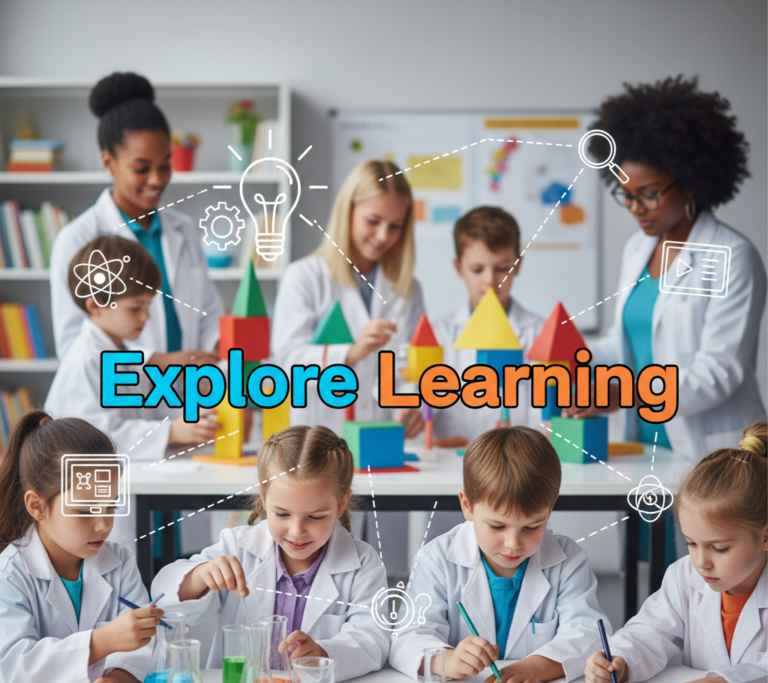
In today’s fast-paced world, education is no longer limited to traditional classrooms. Explore learning encourages students and educators to embrace interactive, hands-on, and digital learning methods. By combining curiosity, technology, and practical experiences, learners can develop essential skills and knowledge more effectively.
Whether you are a teacher, parent, or student, understanding how to explore learning can transform your educational journey and make learning engaging, meaningful, and fun.
What is Explore Learning?
Explore learning is an educational approach that emphasizes curiosity-driven discovery, problem-solving, and interactive learning. Unlike conventional rote memorization, it focuses on understanding concepts, applying knowledge, and fostering critical thinking skills.
Key aspects of explore learning include:
- Encouraging hands-on experiences and experiments.
- Promoting inquiry-based learning where questions lead the process.
- Integrating digital tools and resources for interactive learning.
- Supporting self-paced and personalized education.
This approach is widely adopted in schools, tutoring centers, and online learning platforms to make education more engaging and effective.
How Explore Learning Works
The concept of explore learning involves actively engaging students in the learning process rather than passive absorption. Here’s how it works in practice:
1. Encouraging Curiosity
Teachers and mentors create an environment where students feel comfortable asking questions and exploring ideas. Curiosity drives deeper understanding and engagement.
2. Hands-On Activities
Experiments, simulations, and practical exercises allow students to apply concepts in real-world scenarios. For example, science experiments or coding exercises reinforce theoretical knowledge.
3. Integrating Technology
Digital tools like interactive apps, educational games, and online resources enhance the learning experience. Platforms that support virtual labs or simulations are excellent for immersive learning.
4. Personalized Learning
Explore learning supports self-paced education. Students can focus on areas of interest, revisit challenging topics, and learn at their own speed with guidance from educators.
Benefits of Explore Learning
Using explore learning offers numerous advantages for students, educators, and parents:
- Enhanced Engagement: Interactive activities keep learners motivated.
- Better Retention: Hands-on learning helps students remember concepts longer.
- Critical Thinking: Encourages problem-solving and analytical thinking.
- Creativity Development: Supports innovative thinking through exploration.
- Confidence Building: Learners gain confidence by experimenting and finding solutions independently.
- Adaptable Learning: Suitable for various learning styles, including visual, auditory, and kinesthetic learners.
Tips for Effective Explore Learning
To implement explore learning successfully, consider these strategies:
- Ask Open-Ended Questions: Encourage students to think critically and explore solutions.
- Incorporate Real-World Problems: Relate lessons to practical scenarios to make learning meaningful.
- Use Technology Wisely: Select apps and tools that complement hands-on learning.
- Promote Collaboration: Group activities foster teamwork, communication, and problem-solving.
- Reflect and Discuss: Encourage students to reflect on their experiences and discuss what they learned.
Common Applications of Explore Learning
Explore learning can be applied in multiple educational settings:
- Schools: Interactive lessons, science experiments, and project-based learning.
- Tutoring Centers: Personalized programs that focus on student interests and strengths.
- Online Platforms: Digital learning apps, simulations, and virtual labs.
- STEM Programs: Coding, robotics, and engineering challenges promote hands-on exploration.
- Homeschooling: Self-paced, curiosity-driven learning at home using digital and physical resources.
Frequently Asked Questions (FAQ)
1. What is the main goal of explore learning?
The main goal is to make education interactive, curiosity-driven, and focused on understanding concepts rather than memorization.
2. Is explore learning suitable for all ages?
Yes, it can be adapted for preschool, K-12, college students, and even adult learners.
3. How does technology support explore learning?
Digital tools, apps, simulations, and virtual labs make learning interactive and provide opportunities for self-paced exploration.
4. Can explore learning improve academic performance?
Yes, studies show that active, hands-on learning improves engagement, retention, and understanding of concepts.
5. How can parents support explore learning at home?
Encourage curiosity, provide learning resources, and create opportunities for hands-on experiments or problem-solving activities.
Conclusion
Explore learning is transforming education by making it more engaging, interactive, and personalized. By focusing on curiosity, hands-on experiences, and technology integration, students develop essential skills that prepare them for the modern world.
Whether in classrooms, tutoring centers, or online platforms, explore learning empowers students to take charge of their education, enhances retention, and builds confidence. Embracing this approach can create a lifelong love for learning and inspire creativity and innovation in every learner.