
Table of Contents
- Introduction
- What Does SEO Stand For? Breaking It Down Simply
- The Quick History of SEO and Why It Evolved
- The Main Parts of SEO You Need to Know
- Why Knowing What Does SEO Stand For Actually Matters for Your Website
- Real Benefits of SEO for Businesses and Bloggers
- Practical Tips to Start Improving Your SEO Today
- Common SEO Myths That Still Trip People Up
- Frequently Asked Questions (FAQ)
- Conclusion
Introduction
Have you ever typed a question into Google and wondered why certain websites always pop up at the top? That’s not luck—it’s SEO at work. If you’re just starting out online, one of the first things you’ll hear is “focus on SEO,” but many people still ask: what does SEO stand for?
In this guide, we’ll answer that question clearly and go way beyond the basics. You’ll learn exactly what SEO means, how it works in 2026, why it’s worth your time, and simple steps you can take right now to help your website get found. No confusing jargon, no fluff—just straightforward advice that actually helps.
By the end, you’ll understand why SEO has become essential for anyone with a website, blog, or online business. Let’s dive in.
What Does SEO Stand For? Breaking It Down Simply
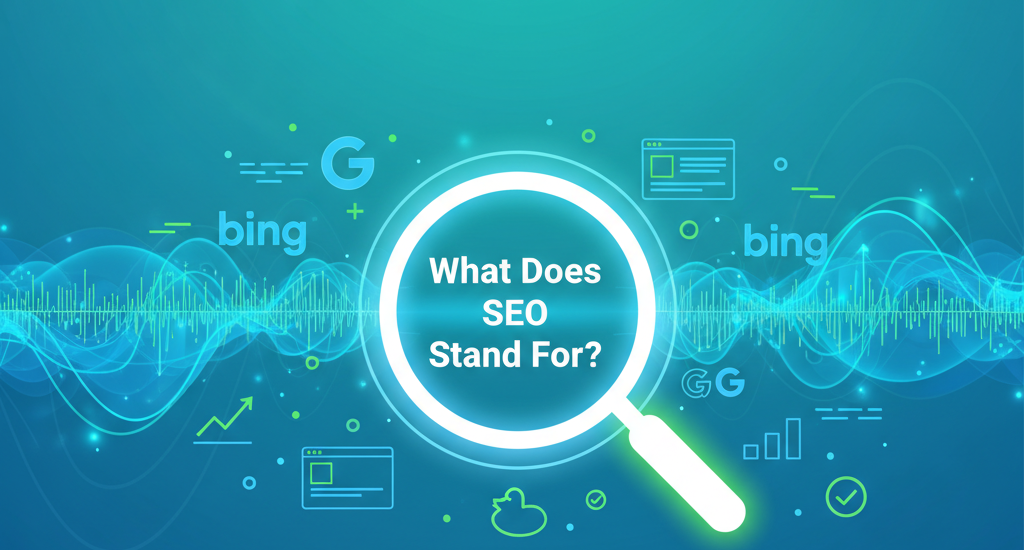
What does SEO stand for? It stands for Search Engine Optimization.
In plain English, SEO is the practice of making your website easier for search engines like Google, Bing, and Yahoo to understand, crawl, and rank higher in their results. When someone searches for “best running shoes” or “how to bake sourdough bread,” SEO helps your page show up instead of your competitor’s.
Think of it like this: search engines are like librarians for the entire internet. SEO is your way of organizing the “books” (your web pages) so the librarian recommends yours first. It’s not about tricking Google—it’s about creating a better experience for real people.
The Quick History of SEO and Why It Evolved
SEO didn’t always exist in its current form. Back in the late 1990s, when search engines were brand new, people stuffed keywords everywhere and used shady tricks to rank. That era is long gone.
Google’s big updates—like Panda (2011), Penguin (2012), and the more recent Helpful Content Update—changed everything. Today, search engines reward websites that give real value. Knowing what does SEO stand for today means understanding that it’s about quality, not shortcuts.
In 2026, SEO also factors in AI-generated content, voice search, and mobile-first indexing. The core idea stays the same: help users find what they need fast.
The Main Parts of SEO You Need to Know
SEO isn’t one single thing. It has several important pieces that work together. Here’s a clear breakdown:
- On-Page SEO: Everything you control on your own website. This includes using the right keywords naturally, writing helpful headings, adding alt text to images, and making sure your content answers searcher questions.
- Technical SEO: The behind-the-scenes work. Fast loading speed, mobile-friendly design, secure HTTPS, and a clean site structure (called a sitemap) all matter here.
- Off-Page SEO: Signals from outside your site, mainly backlinks from trusted websites. Think of these as votes of confidence.
- Local SEO: Perfect for businesses with a physical location. It involves Google Business Profile, reviews, and location-specific keywords.
- Content SEO: Creating useful, up-to-date articles, videos, or guides that people actually want to read and share.
Each part supports the others. If one is weak, your whole SEO strategy suffers.
Why Knowing What Does SEO Stand For Actually Matters for Your Website
Understanding what does SEO stand for isn’t just trivia—it changes how you build and grow your online presence.
Without SEO, even the most beautiful website can stay invisible. People rarely scroll past the first page of Google results. In fact, the top three spots capture over 50% of all clicks.
SEO levels the playing field. Small bloggers and local shops can compete with big brands when they focus on the right things. It also future-proofs your site because search engines keep updating their rules, and solid SEO practices usually survive those changes.
Real Benefits of SEO for Businesses and Bloggers
Let’s talk results. Here are the biggest advantages you’ll see once you start applying SEO:
- More free traffic: Instead of paying for ads every time, you get visitors who are already looking for what you offer.
- Higher trust and authority: Websites that rank well look more professional and reliable to visitors.
- Better user experience: Good SEO forces you to improve navigation, speed, and content quality—things your readers love.
- Long-term savings: SEO is an investment that keeps paying off, unlike paid ads that stop the moment your budget runs out.
- Higher conversion rates: Targeted visitors from search engines are often ready to buy, sign up, or contact you.
One important sentence to remember: SEO is not a quick fix but a long-term strategy that builds real value for your audience.
Practical Tips to Start Improving Your SEO Today
You don’t need to be a tech genius to begin. Try these beginner-friendly steps:
- Do simple keyword research – Use free tools like Google Keyword Planner or AnswerThePublic to find words people actually search for.
- Write for people first – Create clear, helpful content that answers questions completely.
- Optimize your page titles and meta descriptions – Make them compelling and include your main keyword naturally.
- Speed up your site – Compress images, use a good caching plugin, and choose fast hosting.
- Build quality backlinks – Guest post on relevant blogs, create shareable infographics, or get listed in trusted directories.
- Track your progress – Set up Google Analytics and Google Search Console (both free) to see what’s working.
Start with just one or two tips this week. Small consistent actions beat trying to do everything at once.
Common SEO Myths That Still Trip People Up
- Myth: “SEO is dead because of AI.” Reality: AI helps with research, but human-written, experience-based content still wins.
- Myth: “I just need to stuff keywords everywhere.” Reality: Google penalizes this now. Natural language wins.
- Myth: “It only takes a few weeks to rank.” Reality: Most sites need 3–12 months of steady work for real results.
- Myth: “Only big companies need SEO.” Reality: Small sites often gain the most because they can be more agile.
Frequently Asked Questions (FAQ)
What does SEO stand for? Search Engine Optimization—the process of improving your website so it ranks higher in search results.
Is SEO free? Basic SEO is free, though many people invest in tools or help from experts later on.
How long does SEO take to work? It usually takes 3–6 months to see meaningful improvements, but some changes (like fixing technical issues) can show results faster.
Do I need SEO if I run social media ads? Yes. SEO brings steady, free traffic while ads give quick bursts. They work best together.
Can one person handle SEO alone? Absolutely. Many solo bloggers and small business owners manage their own SEO successfully with the right learning resources.
Conclusion
So, what does SEO stand for? It stands for a smarter, more sustainable way to grow your online presence. It’s about understanding search engines, creating value for real people, and staying consistent over time.
Whether you run a blog, an e-commerce store, or a local service business, SEO can help you reach more customers without relying only on paid ads. Start small, stay patient, and keep learning. The internet rewards those who focus on quality and helpfulness.
Your next step? Pick one tip from this guide and apply it to your website today. You’ve got this!