Table of Contents
- Introduction
- What Is an SEO Glossary and Why Do You Need One?
- Foundational SEO Terms You Must Understand
- On-Page and Technical SEO Glossary
- Off-Page SEO, Link Building, and Authority Terms
- Modern SEO Concepts: AI, E-E-A-T, and Generative Search
- Practical Tips for Using This SEO Glossary Effectively
- Benefits of Mastering SEO Terminology
- Frequently Asked Questions (FAQ)
- Conclusion
Introduction
Feeling lost when reading an SEO article or talking to a specialist? Terms like “E-E-A-T,” “Core Web Vitals,” or “semantic SEO” get thrown around constantly, but not everyone knows what they really mean.
That’s exactly why a clear SEO glossary is so helpful. It breaks down the most important words and phrases in simple language so you can focus on improving your website instead of decoding jargon.
In 2026, with AI-powered search, generative answers, and stricter quality signals, understanding the right SEO glossary terms has never been more valuable. Whether you’re a beginner blogger, small business owner, or experienced marketer, this guide explains key concepts in plain English with real-world examples.
By the end, you’ll feel confident navigating SEO discussions and applying the ideas to your own site. Let’s make sense of it all together.
What Is an SEO Glossary and Why Do You Need One?
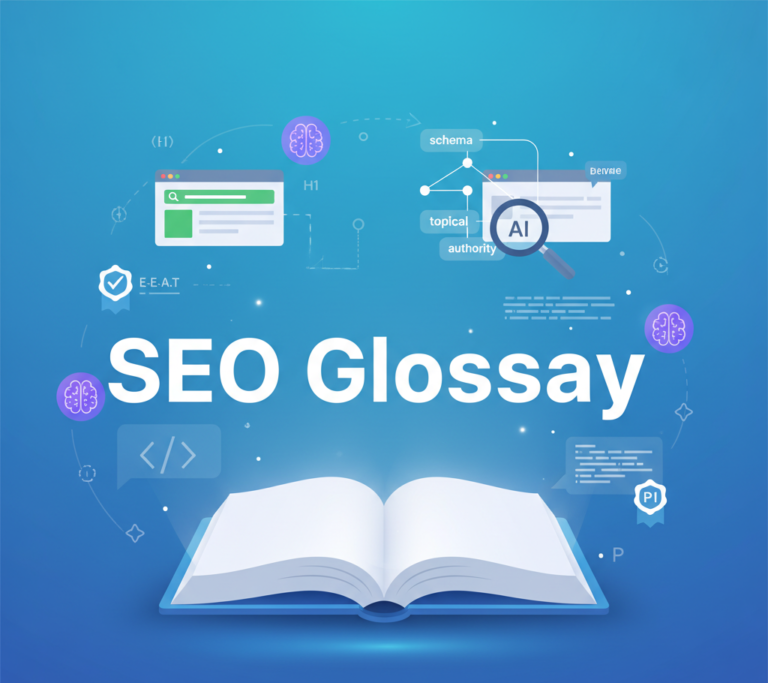
An SEO glossary is simply a collection of definitions for the most common terms used in search engine optimization. It covers everything from basic ideas like “keywords” to advanced ones like “Generative Engine Optimization (GEO).”
Why bother? SEO has its own language. Without it, you might misinterpret advice or miss opportunities. A good SEO glossary saves time, reduces confusion, and helps you make smarter decisions about content, technical fixes, and marketing strategies.
Important sentence: Mastering the language of SEO is the first step toward better rankings and sustainable traffic.
LSI keywords such as search engine optimization terms, SEO terminology, digital marketing glossary, technical SEO definitions, and SEO acronyms often appear alongside this topic because people want clear explanations they can actually use.
Foundational SEO Terms You Must Understand
Start with these core ideas that form the backbone of any SEO glossary.
- SEO (Search Engine Optimization): The process of improving your website so it ranks higher in unpaid (organic) search results on Google, Bing, and other engines.
- SERP (Search Engine Results Page): The page you see after typing a query—full of organic links, ads, featured snippets, and AI overviews in 2026.
- Keyword: Words or phrases people type into search boxes. They can be short (“running shoes”) or long-tail (“best running shoes for flat feet 2026”).
- Search Intent: The reason behind a search—informational, navigational, commercial, or transactional. Matching intent is crucial for ranking well.
- Organic Traffic: Visitors who find your site through unpaid search results, as opposed to paid ads.
Numbered list of beginner essentials:
- Impressions: How many times your page appears in search results.
- CTR (Click-Through Rate): The percentage of people who click your link after seeing it.
- Bounce Rate: Percentage of visitors who leave after viewing only one page.
These foundational terms help you understand how search engines connect users with content.
On-Page and Technical SEO Glossary
On-page SEO focuses on elements you control directly on your website. Technical SEO ensures search engines can crawl, index, and understand your site properly.
Key terms explained:
- Title Tag: The clickable headline that appears in search results. Keep it under 60 characters and include your main keyword naturally.
- Meta Description: The short snippet under the title tag. It doesn’t directly affect rankings but influences clicks.
- Header Tags (H1, H2, H3): Structure your content like an outline for both readers and search engines.
- XML Sitemap: A file that lists important pages so crawlers can find them more easily.
- Robots.txt: A file that tells search engines which pages they can or cannot access.
- Core Web Vitals: Google’s metrics for loading speed, visual stability, and interactivity. Good scores improve user experience and rankings.
- Canonical Tag: Tells search engines which version of a page is the “main” one when duplicates exist.
Bullet points for common technical issues:
- Crawl Budget: The number of pages search engines are willing to crawl on your site.
- Indexability: Whether a page can be added to Google’s index and shown in results.
- Schema Markup: Structured data that helps search engines understand content better and enables rich results.
Mastering these SEO glossary entries helps fix visibility problems quickly.
Off-Page SEO, Link Building, and Authority Terms
Off-page SEO involves signals from outside your site, especially links and mentions.
- Backlinks: Links from other websites pointing to yours. Quality matters far more than quantity in 2026.
- Domain Authority (or Site Authority): A score estimating how likely a site is to rank well (not an official Google metric, but useful for comparison).
- Link Equity: The ranking power passed through a link (also called “link juice”).
- NoFollow vs Dofollow: NoFollow links don’t pass full ranking value; Dofollow links do.
Anchor Text: The visible, clickable words in a link. Natural, descriptive text performs best.
Building genuine authority through helpful content and real relationships remains one of the strongest long-term strategies.
Modern SEO Concepts: AI, E-E-A-T, and Generative Search
The search world has changed a lot. Here are the newer SEO glossary terms you’ll hear constantly in 2026.
- E-E-A-T (Experience, Expertise, Authoritativeness, Trustworthiness): Google’s framework for evaluating content quality. Demonstrating real experience and trust signals is more important than ever.
- AEO (Answer Engine Optimization): Optimizing content so it gets featured or cited in AI-generated answers and featured snippets.
- GEO (Generative Engine Optimization): Creating content that performs well in AI summaries and generative results by being clear, structured, and authoritative.
- Semantic SEO: Focusing on topics and meaning rather than just exact keywords. This includes using LSI keywords (Latent Semantic Indexing)—related terms that help search engines understand context.
- Entity SEO: Optimizing around specific people, places, or concepts that search engines recognize as distinct “entities.”
Bold insight: In 2026, creating helpful, experience-backed content that AI systems can trust and cite often matters more than traditional keyword stuffing.
Other useful modern terms include LLM (Large Language Models), vector search, and conversational search—all shaping how people find information.
Practical Tips for Using This SEO Glossary Effectively
Here’s how to turn knowledge into action:
Numbered tips:
- Bookmark this SEO glossary and refer back when you encounter unfamiliar terms.
- Focus on 5–10 terms at a time instead of trying to learn everything at once.
- Apply one concept per week—for example, improve your title tags or check Core Web Vitals.
- Use free tools like Google Search Console to see real data related to these terms.
- Combine terms: Pair good on-page optimization with strong E-E-A-T signals for better results.
When writing content, naturally include LSI keywords and related semantic terms so your pages feel comprehensive and relevant.
Benefits of Mastering SEO Terminology
Understanding an SEO glossary brings real advantages:
- Communicate clearly with developers, writers, or agencies.
- Spot good versus bad advice online.
- Make faster, more confident decisions about your website.
- Identify opportunities others miss, such as optimizing for AI answers.
- Track progress using the right metrics instead of vanity numbers.
In short, speaking the language of SEO turns confusion into clarity and guesswork into strategy.
Frequently Asked Questions (FAQ)
What is the most important term in any SEO glossary? It depends on your goals, but E-E-A-T and search intent are foundational in 2026 because they influence almost every ranking decision.
Do I need to memorize the entire SEO glossary? No. Start with basics like keywords, SERP, and technical terms, then expand as your site grows.
What are LSI keywords and do they still matter? LSI keywords are conceptually related terms that help search engines understand your topic better. Yes, they support semantic SEO and improve topical relevance.
Is technical SEO more important than content in 2026? Both matter. Great content won’t rank if search engines can’t crawl or understand it properly.
How has the SEO glossary changed with AI search? New terms like AEO, GEO, and stronger emphasis on E-E-A-T have been added, while old tactics like keyword density have become less relevant.
Conclusion
A solid SEO glossary is more than a list of definitions—it’s a practical tool that helps you build better websites, create useful content, and grow sustainably in 2026.
Don’t feel overwhelmed by the jargon. Start with the foundational terms, apply one or two ideas this week, and keep learning as you go. The search landscape will keep evolving, but the core principles—helpful content, technical reliability, and real authority—remain constant.
Refer back to this guide whenever you need a quick refresher. The more comfortable you become with SEO terminology, the easier it gets to improve your visibility and connect with the right audience.
What’s one SEO term you’ve always wondered about? Drop it in the comments and I’ll be happy to explain it further!