Table of Contents
- Introduction
- What Is the Relationship Between SEO and Social Media?
- How Social Media Influences SEO in 2026
- Social SEO: Optimizing for Platforms That Act Like Search Engines
- Practical Ways to Integrate SEO and Social Media Strategies
- Benefits of Combining SEO and Social Media
- Common Mistakes to Avoid
- Frequently Asked Questions (FAQ)
- Conclusion
Introduction
Wondering if posting on Instagram or TikTok actually helps your Google rankings? Or how to make your social content show up when people search inside those apps? The connection between SEO and social media has never been more important.
In 2026, people don’t just search on Google anymore. Many, especially younger audiences, turn to TikTok, Instagram, YouTube, and Reddit first for recommendations, how-tos, and product discoveries. At the same time, strong social presence can indirectly support your traditional SEO efforts.
This guide explains the real relationship between SEO and social media in simple terms. You’ll learn how the two work together, practical tips you can use right away, and why treating them as separate strategies no longer makes sense. Whether you run a small blog, e-commerce store, or service business, these insights will help you reach more people across every platform.
What Is the Relationship Between SEO and Social Media?
SEO and social media are two sides of the same coin: both aim to get your content in front of the right audience organically. SEO focuses on search engines like Google, while social media builds engagement on platforms where people scroll and discover.
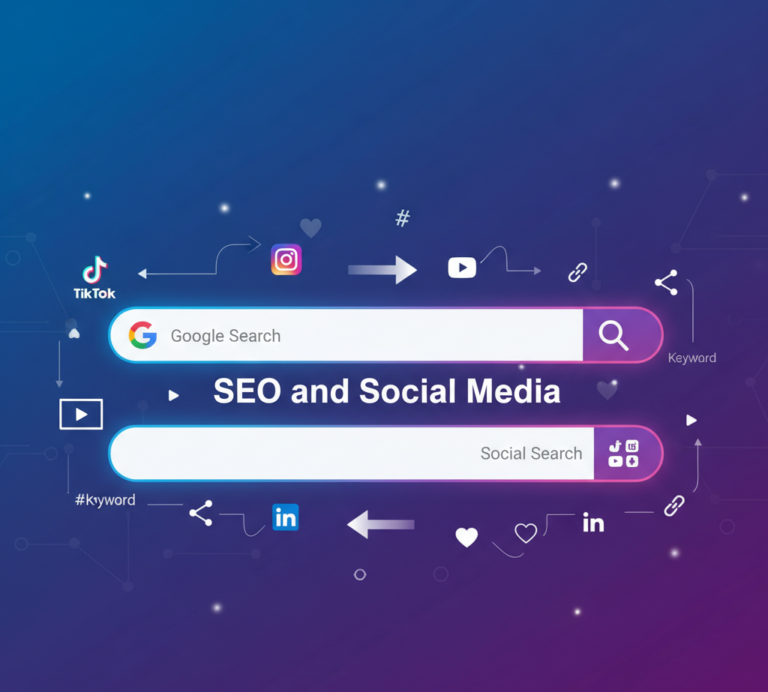
They overlap more than ever. Social platforms now function as search engines themselves—users type full questions into TikTok or Instagram search bars. Meanwhile, Google increasingly notices strong social signals such as shares, mentions, and brand discussions when determining authority.
Important sentence: In 2026, success comes from thinking about “search everywhere optimization” rather than just traditional SEO.
LSI keywords like social signals, social SEO, content discovery, brand authority, and cross-platform visibility naturally fit here because they describe the broader ecosystem of how people find information today.
How Social Media Influences SEO in 2026
Social media doesn’t directly tell Google how to rank your pages (likes and shares aren’t official ranking factors), but the indirect benefits are huge.
When your content gets shared widely, it drives referral traffic, increases brand mentions, and creates fresh signals that search engines notice. High engagement on social can also lead to more backlinks, user-generated content, and discussions on forums like Reddit that Google loves to index.
In 2026, AI-powered search tools and Google’s own overviews pull from social conversations, reviews, and creator content to provide answers. A strong social presence helps your brand appear as a trusted source in those generative results.
Bullet points showing indirect influence:
- More social shares = higher chance of earning natural backlinks.
- Active profiles build E-E-A-T (Experience, Expertise, Authoritativeness, Trustworthiness) signals.
- Referral traffic from social tells Google your content is relevant and useful.
- Consistent posting keeps your brand top-of-mind, encouraging branded searches like “your brand + keyword.”
Social content also acts as a freshness signal. Regular, helpful posts show you’re an active, relevant voice in your niche.
Social SEO: Optimizing for Platforms That Act Like Search Engines
One of the biggest shifts in SEO and social media is the rise of social SEO—optimizing content so it ranks inside platforms like TikTok, Instagram, and YouTube.
Users now search with natural questions: “best budget running shoes for beginners” or “how to fix a leaky faucet.” Platforms reward content that clearly matches these intents through captions, on-screen text, hooks, and alt text.
Key elements of social SEO in 2026:
- Use target keywords naturally in captions, video descriptions, and spoken words.
- Create clear, problem-solving formats like “5 tips for…” or “What I wish I knew about…”.
- Optimize profiles with keyword-rich bios and consistent branding.
- Focus on evergreen content alongside trending topics for long-term discoverability.
- Use alt text on images and proper hashtags sparingly—relevance beats volume.
YouTube remains especially powerful because its videos often rank in Google search too. Embedding relevant videos on your blog posts creates a nice synergy between SEO and social media.
Practical Ways to Integrate SEO and Social Media Strategies
Here’s how to make SEO and social media work together effectively:
Numbered list of actionable steps:
- Repurpose content smartly — Turn a high-performing blog post into a thread, carousel, short video, and Reel. Link back to the original article.
- Optimize social profiles — Treat your bio, username, and pinned posts like a landing page with keywords and a clear call-to-action.
- Encourage engagement — Ask questions, run polls, and reply to comments to boost signals and gather user insights for future content.
- Track cross-platform performance — Use UTM parameters to see which social posts drive website traffic and conversions.
- Build community — Participate genuinely on Reddit or LinkedIn to earn mentions that support brand authority.
- Create shareable assets — Infographics, guides, and data-backed posts are more likely to be shared and linked to.
Pro tip: Monitor what’s trending on social using tools like Google Trends, then create timely content that answers related questions on your website. This closes the loop between discovery on social and deeper information on your site.
Benefits of Combining SEO and Social Media
Pairing SEO and social media delivers several real advantages:
- Wider reach and faster discovery — Content can go viral on social while steadily ranking in search.
- Stronger brand signals — Consistent presence across platforms builds trust that search engines and AI tools notice.
- Better audience understanding — Comments and interactions reveal exactly what people want, helping you refine both social posts and blog content.
- Improved conversion paths — Social drives awareness; your optimized website handles consideration and purchase.
- Resilience against algorithm changes — If one platform tweaks its feed, your presence on search and other channels keeps traffic flowing.
Bold insight: Businesses that treat SEO and social media as one integrated strategy often see compounding growth in traffic, authority, and revenue.
In 2026, this integrated approach also helps with AI search visibility, as tools like ChatGPT and Gemini reference social discussions and authoritative content.
Common Mistakes to Avoid
Many people still treat SEO and social media separately and miss opportunities. Watch out for:
- Posting the same generic content everywhere without platform-specific optimization.
- Chasing viral trends at the expense of evergreen, keyword-rich material.
- Ignoring analytics—always check which posts drive website visits.
- Overusing hashtags or stuffing keywords unnaturally on social.
- Neglecting profile optimization while focusing only on posts.
Instead, focus on value and consistency. Quality engagement beats quantity every time.
Frequently Asked Questions (FAQ)
Does social media directly affect Google SEO rankings? No, likes and shares are not direct ranking factors, but they create indirect benefits like traffic, links, and brand signals.
What is social SEO and why does it matter in 2026? Social SEO means optimizing content for discovery inside platforms like TikTok and Instagram, which millions now use as primary search engines.
Should I focus more on social or traditional SEO? Both. Use social for awareness and quick discovery, and your website for in-depth information and conversions.
How can small businesses benefit from SEO and social media? By creating helpful content once and distributing it across channels, they can compete with larger brands through relevance and consistency.
Do I need to post every day to see results? No. Consistent, high-quality posting (a few times a week) with proper optimization works better than daily low-effort content.
How do I measure the success of my combined SEO and social strategy? Track organic traffic, referral traffic from social, engagement rates, branded search growth, and conversions from both channels.
Conclusion
SEO and social media are no longer separate tactics—they’re powerful partners in a world where people discover information everywhere. By optimizing for both traditional search and the social platforms that act like search engines, you meet your audience wherever they are and build stronger, longer-lasting visibility.
Start small: Pick one piece of content this week, optimize it for your website with good keywords and structure, then adapt it thoughtfully for your top social channels. Over time, you’ll see how the two reinforce each other.
The brands winning in 2026 aren’t just posting more—they’re creating helpful, searchable content that works across every platform. You can do the same.
What’s one way you’re already combining SEO and social media? Share your experiences or questions in the comments—I’d love to hear what’s working for you!