
In today’s competitive digital world, businesses can no longer treat SEO and social media as separate marketing channels. When combined correctly, they create a powerful system that increases visibility, drives qualified traffic, and builds long-term brand authority.
A strong SEO social media strategy helps your content reach more people, supports organic search growth, and improves overall online performance. This guide explains how SEO and social media work together and how to build a strategy that delivers real results.
What Is an SEO Social Media Strategy?
An SEO social media strategy is the process of aligning search engine optimization with social media marketing to improve content visibility, user engagement, and organic growth.
While social media signals are not direct Google ranking factors, social platforms strongly influence SEO performance by:
- Increasing content exposure
- Driving high-quality website traffic
- Improving brand awareness
- Supporting backlink generation
When both strategies work together, they strengthen each other.
Why SEO and Social Media Work Better Together
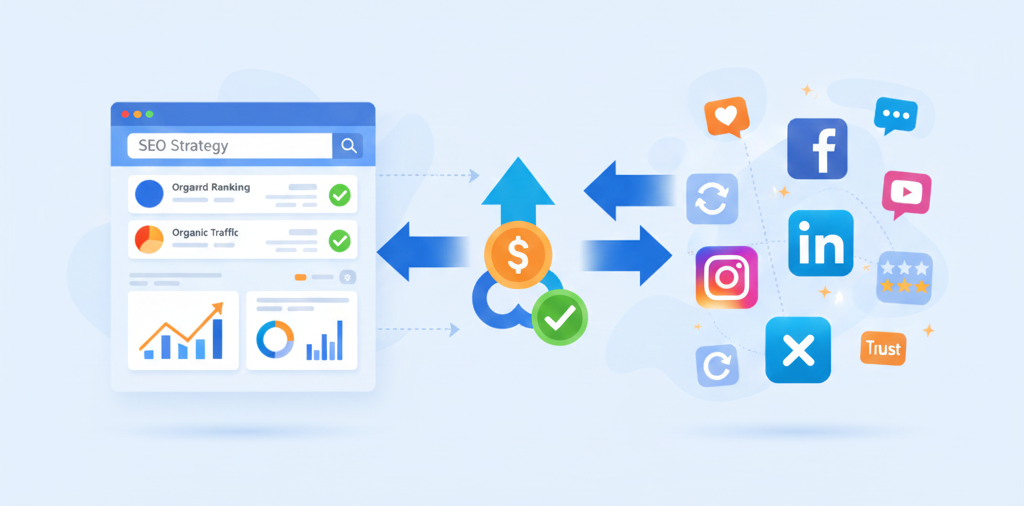
SEO focuses on search engines, while social media focuses on people. When combined, they help brands win on both fronts.
Key benefits of combining SEO and social media:
- Higher organic traffic
- Faster content discovery
- Stronger brand presence in search results
- Increased engagement and trust
- Better conversion rates
Search engines favor brands that demonstrate authority, relevance, and consistency—and social media supports all three.
How Social Media Impacts SEO Indirectly
Social media does not directly influence rankings, but its impact on SEO is undeniable.
1. Increased Content Visibility
Social media helps content reach a wider audience quickly. More exposure means more opportunities for clicks, shares, and links.
2. Brand Awareness and Searches
An active social presence increases branded searches. Google views brand searches as a trust signal.
3. Natural Link Opportunities
When content is shared widely, bloggers and publishers are more likely to link to it.
4. Improved User Engagement
Social traffic can improve dwell time and reduce bounce rates, which positively affects SEO performance.
Keyword Research for SEO Social Media Strategy

Keyword research is the foundation of both SEO and social media success.
Types of keywords to focus on:
- Primary SEO keywords
- Long-tail keywords
- Trending social media keywords
- Hashtag-based keywords
- Branded keywords
Smart keyword usage:
- Add keywords to social media bios
- Use them naturally in captions
- Include keywords in video titles
- Optimize post descriptions
Using keywords correctly improves visibility across search engines and social platforms.
Optimizing Social Media Profiles for SEO
Social media profiles often rank on Google. Optimizing them improves brand authority and search presence.
Profile optimization checklist:
- Use primary keywords in bios
- Maintain consistent brand name and username
- Add website links
- Include business location if applicable
- Use high-quality branded images
Well-optimized profiles act as additional digital assets in search results.
Creating SEO-Driven Social Media Content
Content should be designed to rank and engage at the same time.
Best content types for SEO and social media:
- Blog posts and guides
- Short-form and long-form videos
- Infographics
- Case studies
- How-to posts
Content optimization tips:
- Repurpose blog posts into social content
- Use keyword-rich but natural captions
- Add internal links when possible
- Include clear calls to action
This approach increases reach and supports SEO goals.
Promoting SEO Content Through Social Media

Publishing content alone is not enough. Promotion is essential.
Effective promotion strategies:
- Share blog posts multiple times with different captions
- Use platform-specific hashtags
- Post during peak engagement hours
- Encourage comments and discussions
Higher engagement increases visibility and traffic.
Hashtag Strategy for SEO Social Media
Hashtags act like keywords on social platforms.
Best hashtag practices:
- Use niche-relevant hashtags
- Combine popular and low-competition hashtags
- Create branded hashtags
- Avoid overloading posts
A smart hashtag strategy improves reach and discoverability.
Video Content and SEO Social Media Strategy
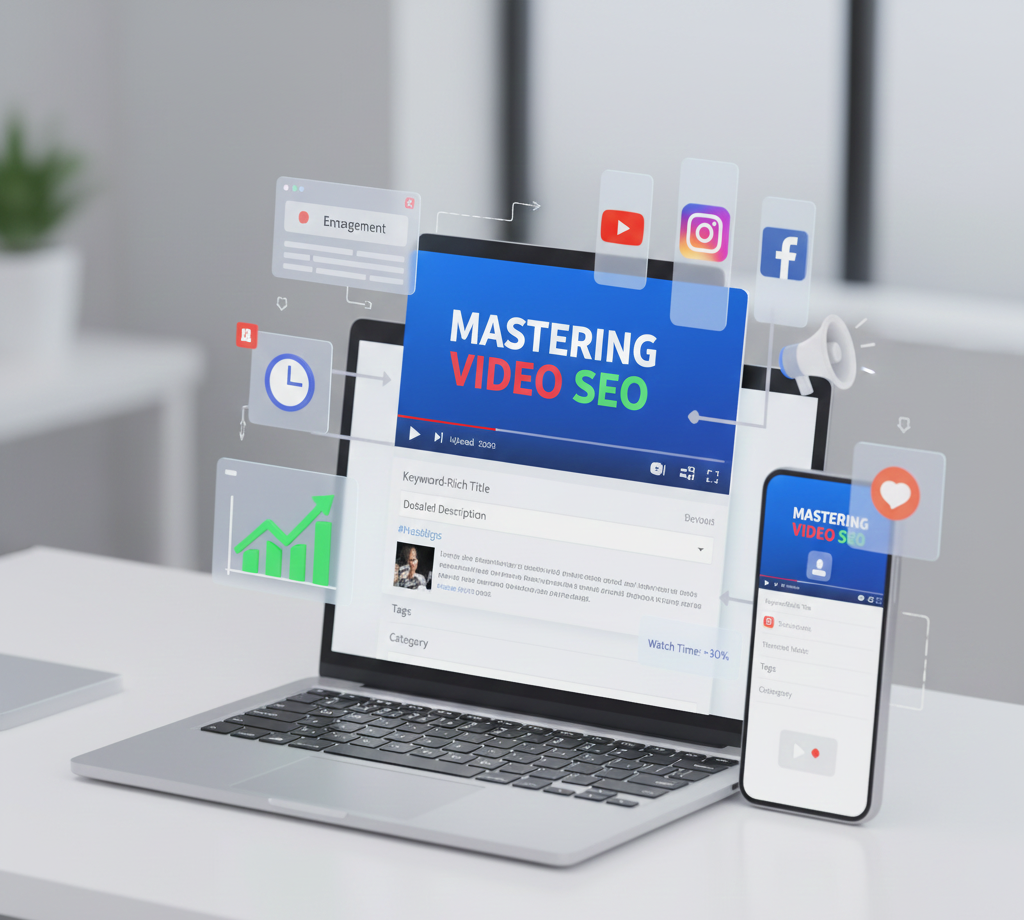
Video content plays a major role in both SEO and social media.
Why video matters:
- Higher engagement rates
- Longer watch times
- Increased social sharing
- Better SERP visibility
Video optimization tips:
- Use keywords in titles and descriptions
- Add captions for accessibility
- Optimize thumbnails
- Include hashtags
Platforms like YouTube function as powerful search engines.
Link Building Support Through Social Media
Social media is a valuable tool for link-building support.
How social media helps link building:
- Promotes link-worthy content
- Connects brands with influencers
- Encourages content sharing
- Attracts natural backlinks
While social links are usually nofollow, they open doors for organic backlinks.
Local SEO and Social Media Strategy
For local businesses, social media strengthens local SEO signals.
Local optimization tips:
- Use city-based keywords
- Add location details in profiles
- Share local events and updates
- Encourage customer reviews
Local engagement improves trust and geographic relevance.
Measuring SEO and Social Media Performance

Tracking performance ensures long-term success.
Key metrics to monitor:
- Website traffic from social media
- Engagement rates
- Keyword ranking improvements
- Brand mentions
- Conversion rates
Analytics help identify what works and what needs improvement.
Common SEO Social Media Strategy Mistakes
Avoid these common errors:
- Posting without a keyword strategy
- Ignoring profile optimization
- Using too many hashtags
- Not linking back to the website
- Focusing only on likes and followers
Consistency and strategy matter more than volume.
Platform-Specific SEO Social Media Tips
- Optimize page descriptions
- Share long-form content
- Encourage comments and shares
- Use keyword-rich captions
- Optimize bio with keywords
- Focus on Reels and Stories
- Publish SEO-focused articles
- Use professional keywords
- Build authority content
X (Twitter)
- Use trending keywords
- Share blog links
- Engage in conversations
Each platform supports SEO in a unique way.
AI and Automation in SEO Social Media Strategy

AI tools help scale efforts efficiently.
AI benefits:
- Content scheduling
- Keyword trend analysis
- Caption optimization
- Performance insights
Automation saves time, but authenticity remains essential.
SEO Social Media Strategy for E-Commerce
E-commerce brands benefit greatly from SEO-driven social media.
Best practices:
- Optimize product descriptions
- Use keyword-based hashtags
- Promote category pages
- Share user-generated content
This approach drives both traffic and sales.
Building Brand Authority Through SEO and Social Media
Brand authority plays a major role in SEO success.
Authority-building strategies:
- Publish consistent, high-quality content
- Engage with followers regularly
- Share expert insights
- Collaborate with influencers
Strong brands earn better rankings over time.
How Long Does an SEO Social Media Strategy Take to Work?

Results depend on consistency and competition.
Typical timeline:
- Engagement growth: 1–2 months
- Traffic improvement: 2–4 months
- SEO impact: 4–6 months
Long-term success requires patience and consistency.
The Future of SEO Social Media Strategy
SEO and social media will continue to merge.
Emerging trends:
- Voice search optimization
- AI-powered content discovery
- Visual and video search
- Increased importance of brand signals
Businesses that adapt early will gain a competitive edge.
Final Thoughts
An effective SEO social media strategy connects keywords, content, engagement, and authority into one unified system. Instead of treating SEO and social media separately, businesses should align them for maximum impact.
When executed correctly, this strategy:
- Amplifies content reach
- Drives sustainable organic traffic
- Builds brand trust and authority
- Supports long-term business growth
In today’s digital environment, SEO and social media are strongest when they work together.