
The European digital market is vast, competitive, and diverse. Businesses that want to succeed in Europe need to adapt their SEO strategies to the unique characteristics of this region. From language differences to local search trends and regulatory requirements like GDPR, European SEO demands a targeted, well-planned approach.
Why SEO in Europe Is Different

SEO for Europe is not the same as general global SEO. Several factors make it unique:
- Multilingual markets: Europe is home to dozens of languages. Optimizing for French, German, Spanish, and Italian users requires multilingual strategies.
- Cultural diversity: User search intent, content expectations, and design preferences differ across countries.
- Local search engines: While Google dominates most European countries, search engines like Bing, Yandex (Russia), and Qwant (France) are also relevant in certain markets.
- Regulations and compliance: GDPR affects data handling, cookies, and tracking, impacting SEO and analytics.
Failing to adapt your strategy to these nuances can cost businesses visibility and customer trust in the European market.
Keyword Research for European SEO
Keyword research is the foundation of any SEO strategy, and in Europe, it requires extra attention to language and cultural differences.
Steps for Effective Keyword Research:
- Multilingual keyword analysis: Identify keywords in the target language rather than translating them literally.
- Long-tail keywords: Focus on specific queries like “best Italian pasta restaurant in Rome” or “affordable German web design agency.”
- Local intent: Include city, region, or country-specific phrases for targeting European users.
- Competitor research: Analyze local competitors to discover gaps and opportunities.
- Search volume vs. competition: Balance between highly searched keywords and realistic ranking potential in each market.
Tools for European Keyword Research:
- Google Keyword Planner
- SEMrush and Ahrefs (with country-specific filters)
- Ubersuggest for European markets
- AnswerThePublic for local search trends
Keyword research in Europe ensures that your content is relevant, discoverable, and engaging for local audiences.
On-Page SEO Best Practices for Europe
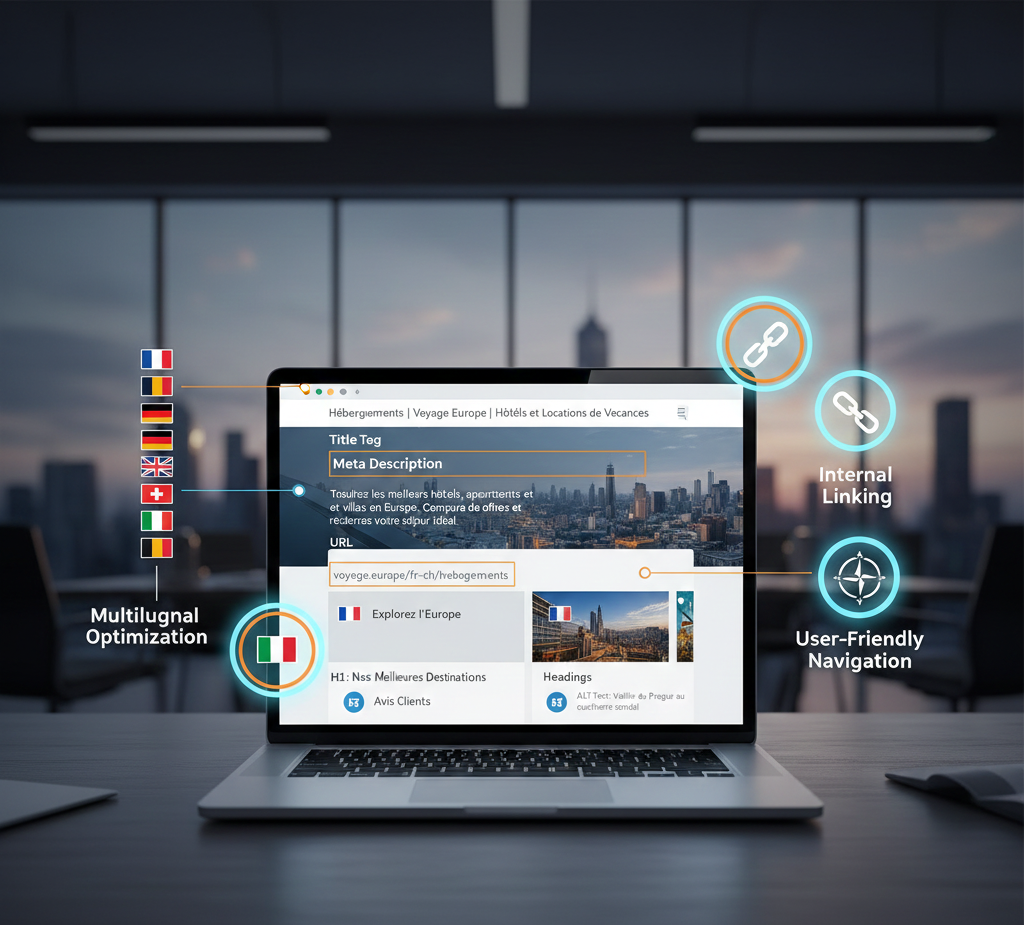
On-page SEO ensures your website is optimized for both users and search engines. This includes content, HTML structure, and internal linking.
Key On-Page SEO Elements:
- Title tags and meta descriptions: Include keywords in the target language and keep them culturally relevant.
- Headings (H1, H2, H3): Organize your content for readability and emphasize key phrases.
- URLs: Keep them simple, descriptive, and localized (e.g.,
example.com/de/webdesign-berlin). - Content optimization: Write naturally in the local language, addressing user intent.
- Internal linking: Connect related articles, products, or services to improve navigation.
- Image optimization: Include alt text and file names in the target language.
By properly optimizing your pages, your site will rank higher in country-specific search results while improving user engagement.
Technical SEO for European Websites
Technical SEO ensures that your website is crawlable, fast, secure, and user-friendly.
Technical SEO Checklist:
- Mobile optimization: Many European users access websites via smartphones, making mobile-friendly design crucial.
- Site speed: Optimize images, leverage caching, and reduce unnecessary scripts.
- SSL certificate (HTTPS): Required for trust and Google rankings.
- Localized sitemaps: Include country-specific URLs and language versions.
- Hreflang tags: Indicate the language and region of each page to avoid duplicate content penalties.
- Structured data/schema markup: Highlight products, reviews, and events for rich results.
- GDPR compliance: Ensure consent management for cookies and tracking to comply with regulations.
Technical SEO lays the foundation for higher rankings and better user experience in the European market.
Content Strategy for European SEO

Content is key to engaging European audiences and demonstrating authority.
European Content Strategy Tips:
- Multilingual content: Offer pages in multiple languages, using native speakers for accuracy.
- Localized case studies and examples: Include references relevant to each country.
- Blog and resource content: Write about industry trends, tutorials, and guides tailored to local users.
- Video and visual content: Europeans increasingly consume video, infographics, and interactive content.
- User-generated content: Encourage reviews and testimonials to improve credibility and engagement.
Content SEO Best Practices:
- Naturally include keywords in headings, paragraphs, and images.
- Use internal links to guide visitors to related content.
- Optimize media for faster loading.
- Keep content readable and engaging, with clear headings, bullet points, and short paragraphs.
High-quality, localized content boosts visibility, engagement, and conversions.
Local SEO in Europe
For businesses targeting specific cities or regions, local SEO is essential.
Local SEO Tips:
- Google Business Profile: Claim and optimize your listing for each country.
- Local citations: Add your business to local directories and review sites.
- Localized keywords: Include city and region names in titles, meta descriptions, and content.
- Reviews and ratings: Encourage satisfied clients to leave feedback in local languages.
- Maps optimization: Ensure your locations appear correctly in Google Maps and other mapping services.
Local SEO helps drive high-intent traffic to your business from nearby users.
Backlinks and Off-Page SEO

Backlinks improve website authority and search engine ranking. In Europe, off-page SEO strategies should consider local relevance.
Backlink Strategies for Europe:
- Collaborate with local industry influencers or bloggers.
- Submit content to country-specific directories, news outlets, or review platforms.
- Participate in industry events and awards to earn mentions and links.
- Guest post on European blogs relevant to your niche.
- Create shareable content, including infographics, case studies, or guides.
High-quality backlinks improve trust, visibility, and rankings in regional search results.
Tracking and Measuring Performance
Monitoring your SEO efforts is critical for long-term success.
Key Metrics to Track:
- Website traffic: Check the number of visitors from different countries.
- Top-performing pages: Identify which content attracts the most traffic.
- Keyword rankings: Track your position for local and multilingual keywords.
- Referral sources: Measure traffic from backlinks, social media, and partner websites.
- Conversions: Track inquiries, purchases, or newsletter sign-ups.
Tools for European SEO Analytics:
- Google Analytics and Search Console
- Ahrefs and SEMrush (with country-specific filters)
- Moz Pro for domain authority and competitor analysis
Tracking helps you adjust strategies, improve rankings, and maximize ROI.
Emerging Trends in European SEO

SEO in Europe is evolving, and businesses need to stay ahead.
- Voice search optimization: Users increasingly use voice commands in local languages.
- AI-powered content discovery: Tools like ChatGPT and AI analytics can guide content creation.
- Mobile-first indexing: Ensure websites are optimized for mobile users first.
- Visual search: Platforms like Pinterest Lens and Google Lens are growing in popularity.
- Sustainability and accessibility: Eco-friendly and accessible websites are favored by users and search engines.
Adopting these trends early can give your business a competitive advantage in European markets.
Common Mistakes to Avoid in European SEO
- Using literal translations instead of native-language keywords
- Ignoring local search intent and cultural preferences
- Failing to comply with GDPR regulations
- Overlooking mobile optimization and site speed
- Neglecting local backlinks and citations
Avoiding these mistakes ensures that your European SEO strategy is effective and sustainable.
Final Thoughts
SEO for the European market requires a multilingual, culturally-aware, and technically sound approach. By focusing on keyword research, on-page optimization, technical SEO, content strategy, local SEO, backlinks, and performance tracking, businesses can increase visibility, attract high-quality traffic, and boost conversions across Europe.
A well-planned SEO strategy ensures that your website doesn’t just exist—it thrives in competitive European search results, connecting you with clients who value your services.