
In today’s digital-driven world, businesses rely heavily on search engines to attract potential customers. This has made the role of an SEO Executive critical for organizations seeking online visibility. An SEO Executive is responsible for planning, implementing, and managing strategies that improve a website’s search engine rankings, drive organic traffic, and enhance overall online presence.
This comprehensive guide covers the SEO Executive job description, including key responsibilities, required skills, qualifications, performance metrics, and career growth opportunities. Whether you are a business looking to hire or an individual aspiring to become an SEO professional, this article provides complete insight into the role.
What is an SEO Executive?

An SEO Executive is a digital marketing professional who specializes in optimizing websites to achieve higher rankings on search engines like Google, Bing, and Yahoo. They work closely with content creators, web developers, and marketing teams to enhance website visibility and drive targeted traffic.
The role requires a combination of technical SEO knowledge, analytical skills, and strategic thinking to implement effective SEO campaigns that align with business objectives.
Key Responsibilities of an SEO Executive
An SEO Executive’s daily tasks vary depending on the organization, but core responsibilities typically include:
1. Keyword Research and Analysis
- Conduct research to identify high-traffic, low-competition keywords.
- Analyze search intent and target audience preferences.
- Use tools like Google Keyword Planner, Ahrefs, SEMrush, and Moz for keyword planning.
- Integrate targeted keywords into website content and metadata.
2. On-Page SEO Optimization
- Optimize website pages for search engines and user experience.
- Update title tags, meta descriptions, headings (H1, H2, H3), and image alt text.
- Improve internal linking and site structure for better crawlability.
- Ensure content readability and keyword density is appropriate.
3. Technical SEO
- Monitor website performance and resolve technical issues.
- Improve page speed and mobile responsiveness.
- Implement structured data (schema markup) and canonical tags.
- Conduct regular audits to fix crawl errors, broken links, and duplicate content.
4. Content Strategy and Optimization
- Collaborate with content teams to produce SEO-friendly blog posts, landing pages, and product descriptions.
- Suggest topic ideas based on keyword research and search trends.
- Optimize existing content to improve rankings and engagement metrics.
5. Off-Page SEO and Link Building
- Build high-quality backlinks from reputable websites.
- Develop outreach campaigns for guest posting and partnerships.
- Monitor and disavow toxic or spammy backlinks.
- Promote content through social media and PR channels to improve authority.
6. Analytics and Reporting
- Track website traffic, rankings, and user behavior using Google Analytics and Search Console.
- Monitor performance of SEO campaigns and adjust strategies accordingly.
- Prepare regular reports for management highlighting successes, challenges, and recommendations.
7. Competitor Analysis
- Conduct competitor research to identify gaps and opportunities.
- Analyze competitor keywords, backlinks, and content strategies.
- Develop strategies to outperform competitors in search engine results pages (SERPs).
Required Skills for an SEO Executive
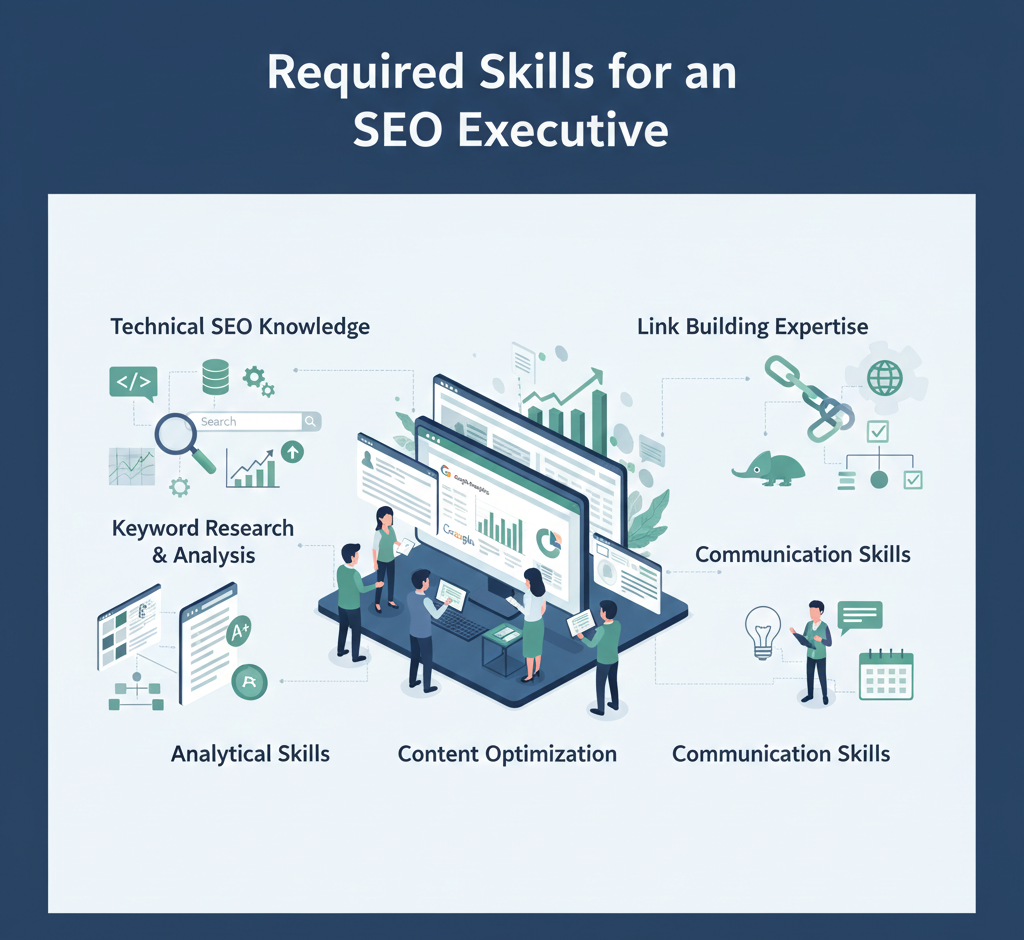
To excel as an SEO Executive, candidates should have a mix of technical, analytical, and creative skills:
- Technical SEO Knowledge: Understanding website architecture, HTML, CSS, JavaScript, and CMS platforms.
- Keyword Research & Analysis: Ability to identify target keywords and search trends.
- Analytical Skills: Proficiency in Google Analytics, Search Console, and SEO tools for data-driven decisions.
- Content Optimization: Writing and editing skills to optimize content for both search engines and users.
- Link Building Expertise: Knowledge of white-hat link-building strategies and outreach methods.
- Communication Skills: Ability to collaborate with cross-functional teams and explain SEO concepts clearly.
- Problem-Solving: Quickly identify and resolve SEO-related issues.
- Adaptability: Stay updated with search engine algorithm changes and emerging SEO trends.
Qualifications and Experience
While requirements vary by organization, most SEO Executive roles require:
- Bachelor’s degree in Marketing, Business, IT, or related fields.
- 1–3 years of experience in SEO or digital marketing.
- Familiarity with SEO tools like Ahrefs, SEMrush, Moz, Screaming Frog, and GTMetrix.
- Understanding of HTML, CSS, and basic coding is a plus.
- Portfolio of past SEO campaigns or case studies.
Performance Metrics for SEO Executives

The success of an SEO Executive is measured using key performance indicators (KPIs), including:
- Organic traffic growth
- Keyword ranking improvements
- Click-through rates (CTR) from search results
- Bounce rate and engagement metrics
- Conversion rates and lead generation
- Backlink quality and quantity
- Technical SEO audit scores
Regular monitoring of these metrics ensures that SEO efforts align with business objectives and deliver measurable results.
Career Path for an SEO Executive
SEO is a dynamic field with ample opportunities for growth. Career progression may include:
- Junior SEO Executive / SEO Trainee – Entry-level position focusing on research and basic optimization tasks.
- SEO Executive – Handles full campaigns, content optimization, and technical audits.
- Senior SEO Executive / SEO Specialist – Oversees multiple campaigns, mentors juniors, and develops strategies.
- SEO Manager / Team Lead – Manages a team of SEO professionals and coordinates with marketing managers.
- Head of SEO / SEO Director – Sets company-wide SEO strategy and integrates SEO into broader digital marketing efforts.
Why Businesses Need SEO Executives
Hiring an SEO Executive brings numerous benefits to organizations:
- Improved Visibility: Higher search rankings lead to more organic traffic.
- Targeted Leads: SEO attracts users actively searching for products or services.
- Cost-Effective Marketing: Organic search traffic reduces dependency on paid advertising.
- Brand Authority: Strong online presence builds credibility and trust.
- Long-Term Growth: Consistent SEO practices yield sustainable results over time.
Conclusion
The role of an SEO Executive is vital in helping businesses navigate the competitive digital landscape. From keyword research and technical optimization to content strategy and analytics, SEO Executives ensure that websites rank well, attract targeted traffic, and deliver measurable business outcomes.
For aspiring SEO professionals, this role offers a dynamic career path with opportunities for growth and specialization. For organizations, hiring a skilled SEO Executive is an investment in long-term online success.