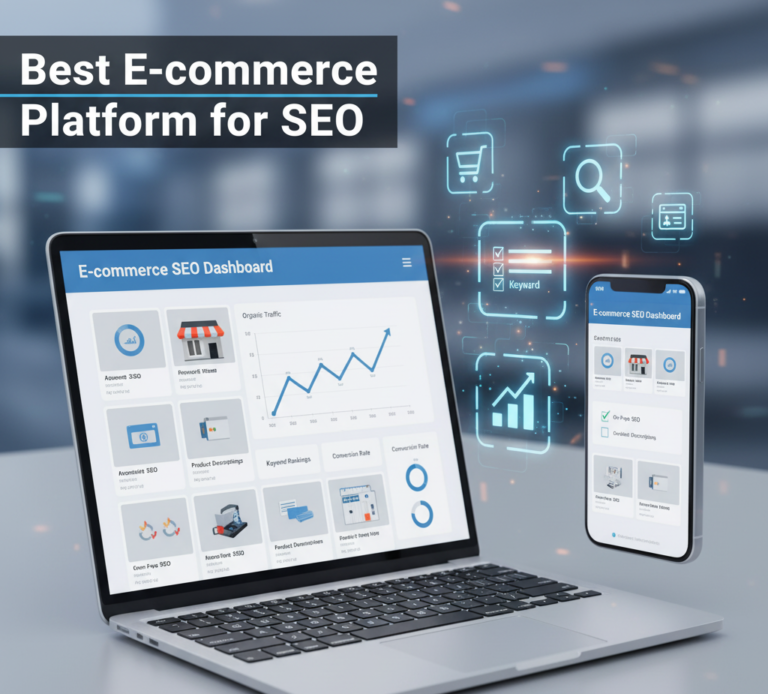
In today’s digital-first world, running a successful online store requires more than just great products—it requires a strong SEO strategy. Choosing the best e-commerce platform for SEO is critical because it determines how well your website can rank in search engines, attract organic traffic, and convert visitors into customers.
This article provides a comprehensive guide to the top e-commerce platforms optimized for SEO, including features, pros and cons, and expert tips to maximize your online store’s visibility in 2026.
What Makes an E-commerce Platform SEO-Friendly?
Not all e-commerce platforms are created equal. To rank well in search engines, your platform should support technical SEO, on-page SEO, and user experience best practices. Key factors include:
- Clean URL Structures
- URLs should be readable, keyword-rich, and avoid unnecessary parameters.
- Fast Loading Speed
- Page speed affects both SEO rankings and conversion rates.
- Mobile-Friendliness
- With mobile-first indexing, responsive design is essential.
- Customizable Meta Tags and Titles
- Ability to add unique titles, descriptions, and header tags per page or product.
- Schema Markup Support
- Rich snippets improve click-through rates and highlight product information in search results.
- Integrated Blog or Content Management
- Content marketing and blogging are essential for targeting long-tail keywords.
- Secure HTTPS Hosting
- SSL certificates are necessary for trust, SEO, and ranking.
- Internal Linking and Navigation
- Supports breadcrumbs, category pages, and related products to enhance crawlability.
Top E-commerce Platforms for SEO in 2026
Here are some of the best e-commerce platforms optimized for SEO:
1. Shopify
Pros:
- User-friendly and quick setup
- Built-in SEO features like customizable meta tags, URL handles, and sitemaps
- Fast and secure hosting with SSL
- App ecosystem for SEO tools and integrations
Cons:
- Limited URL structure flexibility
- Apps required for advanced SEO features may increase costs
Best For: Small to medium-sized businesses looking for simplicity and speed
2. WooCommerce (WordPress)
Pros:
- Highly flexible and fully customizable
- Extensive plugin ecosystem for SEO (Yoast SEO, Rank Math)
- Full control over URLs, meta tags, headings, and schema markup
- Blogging capabilities integrated for content marketing
Cons:
- Requires WordPress setup and maintenance
- Hosting and security are the responsibility of the owner
Best For: Businesses that want full control over SEO and content strategy
3. BigCommerce
Pros:
- SEO-friendly URLs, meta tags, and structured data
- Mobile-optimized templates for responsive design
- Fast hosting and SSL security included
- Multi-channel selling for marketplaces like Amazon and eBay
Cons:
- Slightly higher cost for advanced plans
- Less flexible than WooCommerce for custom content
Best For: Growing businesses with large product catalogs
4. Magento (Adobe Commerce)
Pros:
- Extremely powerful and scalable for large e-commerce stores
- Full control over technical SEO, URLs, metadata, and schema markup
- Supports multiple languages and currencies for global SEO
- Robust SEO extensions available
Cons:
- Complex setup and requires development expertise
- Higher cost for hosting and maintenance
Best For: Enterprise-level businesses with complex SEO needs
5. Squarespace
Pros:
- Clean templates and fast hosting
- Basic SEO features like meta descriptions, alt text, and clean URLs
- Integrated blog for content marketing
- Affordable for small businesses
Cons:
- Limited advanced SEO customization
- Less control over URL structures compared to Shopify or WooCommerce
Best For: Small businesses or beginners who need simplicity with basic SEO
SEO Features to Compare in E-commerce Platforms
When evaluating e-commerce platforms, focus on these SEO capabilities:
| Feature | Importance for SEO | Platforms Strong in Feature |
|---|---|---|
| Customizable Meta Tags | High | WooCommerce, Magento, Shopify |
| URL Structure Control | High | WooCommerce, Magento |
| Mobile Responsiveness | High | All top platforms |
| Page Speed Optimization | High | Shopify, BigCommerce |
| Schema Markup | Medium | WooCommerce, Magento |
| Blogging/Content Management | High | WooCommerce, Squarespace, Shopify |
| SSL Security | High | All platforms |
| Internal Linking Support | Medium | WooCommerce, Magento, BigCommerce |
Best Practices for SEO on E-commerce Platforms
- Keyword Research for Products
- Use tools like Google Keyword Planner, Ahrefs, or SEMrush to find high-intent product keywords.
- Target long-tail keywords for better ranking and conversions.
- Optimize Product Pages
- Include unique titles, descriptions, headers, and alt text for images.
- Add structured data for products to enhance SERP appearance.
- Create a Blog for Content Marketing
- Publish articles, guides, and reviews to attract organic traffic.
- Target informational and transactional keywords for multiple stages of the buyer journey.
- Improve Site Structure
- Use categories, subcategories, and breadcrumbs to create an intuitive navigation system.
- Helps search engines crawl and index pages efficiently.
- Internal Linking Strategy
- Link related products and blog posts to improve authority flow and user experience.
- Optimize for Mobile and Speed
- Compress images, use caching, and select fast hosting.
- Mobile-first design is crucial for search rankings.
- Monitor SEO Performance
- Use Google Analytics, Google Search Console, and SEO tools to track rankings, traffic, and conversion.
- Adjust strategies based on data insights.
Benefits of Choosing the Best SEO-Friendly E-commerce Platform
- Higher Organic Traffic: Better SEO features lead to higher rankings and visibility.
- Improved User Experience: Optimized navigation, mobile responsiveness, and fast loading increase engagement.
- Increased Conversions: SEO-optimized product pages attract targeted visitors likely to convert.
- Scalability: Platforms with robust SEO support grow with your business.
- Competitive Advantage: Effective SEO ensures you rank above competitors for relevant search terms.
Common Mistakes to Avoid
- Ignoring Technical SEO
- Make sure URLs, meta tags, and schema markup are optimized.
- Duplicate Content
- Avoid copying manufacturer descriptions; unique content improves rankings.
- Neglecting Mobile Optimization
- Mobile-first indexing means slow or unresponsive sites will suffer in rankings.
- Poor Internal Linking
- Use breadcrumbs and related product links to improve navigation and authority flow.
- Not Tracking Performance
- Continuously monitor SEO metrics to refine strategy and maintain rankings.
Conclusion
Choosing the best e-commerce platform for SEO is critical for success in 2026. Platforms like WooCommerce, Shopify, BigCommerce, Magento, and Squarespace offer a range of SEO-friendly features suitable for different business sizes and budgets.
By selecting a platform with strong SEO capabilities and following best practices like keyword optimization, technical SEO, internal linking, and content marketing, businesses can:
- Boost organic traffic
- Improve search engine rankings
- Enhance user experience
- Increase conversions and revenue
- Stay competitive in the ever-growing e-commerce landscape
Investing in the right platform is not just about ease of use—it’s about building a foundation for long-term SEO success.