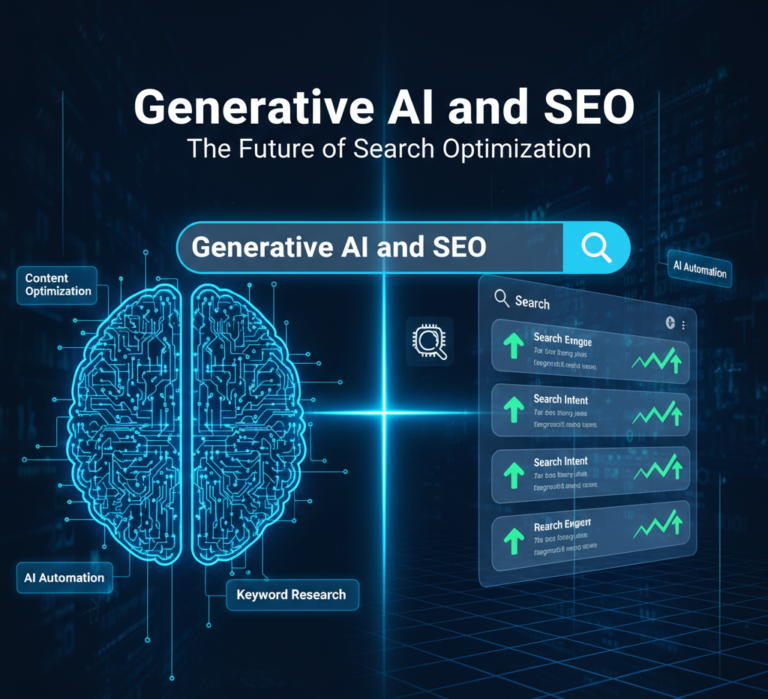
The relationship between generative AI and SEO is transforming the digital marketing world. Businesses, bloggers, and agencies are rethinking how they create content, conduct keyword research, and optimize websites.
Generative AI is no longer just a trend. It is a powerful tool that is reshaping how search engines work and how content is created.
In this comprehensive guide, you will learn:
- What generative AI is
- How generative AI impacts SEO
- Benefits and risks of AI-generated content
- How search engines evaluate AI content
- Best practices for using generative AI in SEO
- The future of SEO in an AI-driven world
Let’s explore how generative AI and SEO work together — and how you can use them strategically.
What Is Generative AI?
Generative AI refers to artificial intelligence systems that can create new content, including:
- Text
- Images
- Videos
- Code
- Audio
Unlike traditional software that follows fixed rules, generative AI learns patterns from massive datasets and produces human-like content.
Today, many marketers use generative AI tools to:
- Write blog posts
- Generate product descriptions
- Create ad copy
- Build SEO outlines
- Produce social media content
But how does this connect with SEO?
How Generative AI Is Changing SEO
SEO has always been about:
- Understanding search intent
- Creating relevant content
- Optimizing for keywords
- Improving user experience
Generative AI enhances each of these areas.
1. Faster Content Creation
AI tools can produce drafts in minutes. This allows businesses to:
- Publish more content
- Cover more keyword variations
- Test different topics quickly
However, speed alone does not guarantee rankings. Quality and relevance still matter most.
2. Smarter Keyword Research
Generative AI can help:
- Discover long-tail keywords
- Suggest semantic variations
- Identify content gaps
- Cluster related keywords
Instead of manually brainstorming ideas, marketers can generate structured keyword lists efficiently.
3. Improved Content Optimization
AI tools can analyze top-ranking pages and suggest:
- Content structure
- Heading improvements
- Keyword placement
- Internal linking strategies
This helps create content aligned with search engine expectations.
Does Google Allow AI-Generated Content?
Yes — but with conditions.
Search engines do not penalize content simply because it is AI-generated. What matters is:
- Content quality
- Accuracy
- Originality
- Value to users
If AI content is helpful, trustworthy, and informative, it can rank well.
If it is:
- Spammy
- Repetitive
- Low-value
- Keyword stuffed
It will struggle to perform.
The focus remains on helpful content, not the method used to create it.
Benefits of Generative AI in SEO
1. Scalability
AI allows businesses to scale content production quickly without expanding large writing teams.
2. Cost Efficiency
It reduces content production costs, especially for small businesses.
3. Idea Generation
AI is excellent for:
- Topic brainstorming
- Blog outlines
- FAQ creation
- Meta description suggestions
4. Consistency
AI can maintain tone and formatting consistency across multiple pages.
Risks of Using Generative AI for SEO
While powerful, generative AI must be used carefully.
1. Lack of Depth
AI-generated content can sometimes be generic. Without human editing, it may lack unique insights.
2. Factual Errors
AI may generate incorrect or outdated information. Human review is essential.
3. Over-Optimization
Some AI tools overuse keywords, leading to unnatural content.
4. Duplicate-Like Content
If many websites use similar prompts, content may appear repetitive.
That is why human oversight remains critical.
Best Practices for Using Generative AI in SEO
To succeed with generative AI and SEO, follow these proven strategies.
1. Use AI as an Assistant, Not a Replacement
AI should help you:
- Create outlines
- Generate drafts
- Suggest improvements
But always edit and refine the content yourself.
Human creativity adds:
- Personal experience
- Real-world examples
- Emotional tone
- Unique perspective
2. Focus on Search Intent
Before generating content, define:
- Who is your target audience?
- What problem are they solving?
- What stage of the buying journey are they in?
AI works best when guided by clear intent.
3. Add Original Insights
To stand out, include:
- Case studies
- Personal experiences
- Data analysis
- Unique frameworks
Search engines reward original value.
4. Optimize for E-E-A-T
Search engines evaluate content based on:
- Experience
- Expertise
- Authoritativeness
- Trustworthiness
AI can generate structure, but trust signals must come from:
- Author credibility
- Accurate information
- Clear sourcing
- Transparent branding
5. Avoid Keyword Stuffing
Modern SEO prioritizes natural language.
Instead of repeating one keyword excessively, use:
- Semantic variations
- Related phrases
- Conversational language
Generative AI can help diversify keyword usage.
Generative AI and Technical SEO
AI is not limited to content creation. It can assist with technical SEO as well.
AI Can Help With:
- Schema markup suggestions
- Internal linking recommendations
- Meta tag generation
- Content audits
- Page structure improvements
This improves overall site optimization.
Generative AI and Content Strategy
Smart marketers use AI for strategy development.
AI can analyze:
- Trending topics
- Competitor content
- Search demand patterns
It can help build:
- Topic clusters
- Pillar pages
- Long-term content calendars
Instead of guessing what to publish, you can make data-driven decisions.
The Impact of AI on Search Results
Search engines are also integrating AI into their algorithms.
This means:
- Search results are more contextual
- User intent is better understood
- Conversational queries are prioritized
Content must now:
- Answer questions clearly
- Provide structured information
- Be easy to scan
- Deliver real value
Shallow content will not survive in an AI-enhanced search environment.
Will Generative AI Replace SEO Professionals?
No.
Generative AI is a tool. It does not replace:
- Strategic thinking
- Brand positioning
- Link building
- Relationship building
- Conversion optimization
SEO professionals who adapt to AI will become more efficient and competitive.
Those who ignore it may fall behind.
The Future of Generative AI and SEO
The future will likely include:
- AI-assisted content creation as the standard
- More personalized search results
- Greater emphasis on authority and trust
- Hybrid human-AI collaboration
Businesses that combine:
- AI efficiency
- Human creativity
- Strong SEO fundamentals
will dominate search rankings.
Practical Workflow for Using Generative AI in SEO
Here is a simple step-by-step approach:
- Conduct keyword research.
- Define search intent.
- Use AI to generate an outline.
- Expand with AI-generated draft content.
- Add human insights and examples.
- Optimize on-page SEO elements.
- Edit for clarity and readability.
- Publish and monitor performance.
This hybrid method produces high-quality, scalable content.
Final Thoughts
Generative AI and SEO are not competitors. They are partners.
When used strategically, generative AI can:
- Improve efficiency
- Expand content reach
- Enhance keyword research
- Strengthen optimization
But success still depends on:
- Quality
- Accuracy
- User experience
- Authority
SEO in 2026 is about smart collaboration between human expertise and artificial intelligence.
If you focus on delivering real value to users while using AI responsibly, you can build sustainable search visibility and long-term digital growth.