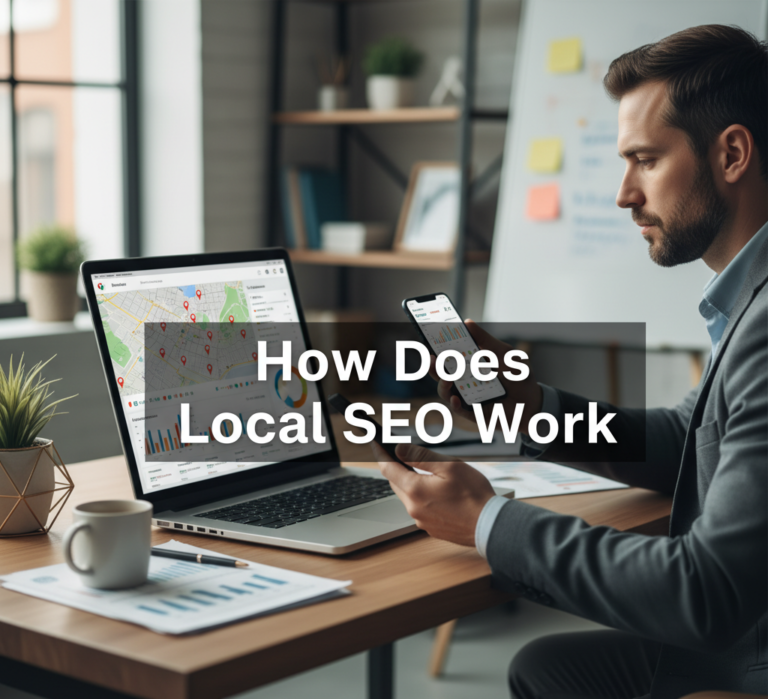
Local SEO is one of the most effective ways for businesses to attract nearby customers and improve their online visibility. Unlike general SEO, which targets a global or national audience, local SEO focuses on optimizing your online presence to appear in searches relevant to a specific geographic location. If you’re wondering “how does local SEO work”, this guide will break down everything from basics to advanced strategies.
What is Local SEO?
Local SEO, or local search engine optimization, is the process of optimizing your website, online listings, and local business information so that your business appears in location-based searches. For example, when someone searches for “pizza near me” or “best dentist in [city]”, local SEO ensures your business shows up in search results.
Unlike traditional SEO that focuses on keywords and backlinks for broader search terms, local SEO emphasizes geographic relevance, proximity, and local signals.
Why Local SEO is Important
Local SEO is crucial for businesses that rely on nearby customers. Here’s why:
- Increased Visibility: Optimizing for local search increases your chances of appearing in Google Maps, local packs, and local search results.
- Higher Conversion Rates: Local searches often have high intent. People searching for “emergency plumber near me” are likely to take immediate action.
- Cost-Effective Marketing: Local SEO is more targeted than traditional advertising, often resulting in better ROI.
- Builds Trust and Credibility: Appearing in local search results with accurate information builds credibility among potential customers.
How Does Local SEO Work?
Local SEO works through a combination of on-page, off-page, and technical strategies. Here’s a detailed breakdown of the main components:
1. Google Business Profile Optimization
A Google Business Profile (GBP), formerly known as Google My Business, is the cornerstone of local SEO. It allows your business to appear in Google Maps and the local pack.
Key Factors for GBP Optimization:
- Accurate business name, address, and phone number (NAP)
- Correct business category selection
- High-quality photos of your business
- Customer reviews and ratings
- Regular posts and updates
Google uses your GBP to determine relevance, distance, and prominence when showing local search results.
2. Local Keywords
Just like traditional SEO, keywords are essential in local SEO—but they must include location-based terms.
Examples of Local Keywords:
- “Best coffee shop in Los Angeles”
- “24-hour locksmith near me”
- “Italian restaurant [city name]”
Using these keywords in your website content, meta titles, meta descriptions, and headings helps search engines understand your geographic relevance.
3. On-Page SEO for Local Search
On-page SEO involves optimizing your website to target local search effectively. Key elements include:
- Title Tags and Meta Descriptions: Include local keywords naturally.
- Content: Create pages that focus on your location, services, or neighborhoods served.
- NAP Consistency: Ensure your business name, address, and phone number are consistent across your website and online directories.
- Local Schema Markup: Adding structured data helps search engines identify your location and business details.
4. Local Citations
Citations are mentions of your business name, address, and phone number on other websites. Quality citations help build trust and improve your local search ranking.
Where to Get Citations:
- Local business directories
- Yelp, Yellow Pages, and TripAdvisor
- Industry-specific directories
- Chamber of commerce websites
Consistency is key; inconsistent NAP information can hurt your rankings.
5. Online Reviews
Online reviews are critical for local SEO because they influence both rankings and customer decisions.
Best Practices for Reviews:
- Encourage happy customers to leave reviews
- Respond to all reviews, positive or negative
- Use keywords naturally in review responses
- Showcase reviews on your website
Businesses with higher ratings and more reviews often appear higher in local search results.
6. Mobile Optimization
Most local searches happen on mobile devices. Your website must be mobile-friendly to rank in local search results.
Mobile Optimization Tips:
- Fast-loading pages
- Responsive design
- Easy-to-use navigation
- Click-to-call buttons
Google prioritizes mobile-friendly websites for local search results.
7. Backlinks and Local Authority
Backlinks from relevant local sources improve your website’s authority.
Examples of Local Backlinks:
- Local newspapers or blogs
- Local sponsorships or events
- Industry-specific associations in your area
High-quality local backlinks signal to search engines that your business is credible and relevant in your geographic area.
8. Social Media Signals
Active social media profiles help build your local presence and engage with the community.
- Post updates about local events, offers, and community news
- Engage with followers and respond to inquiries
- Share customer testimonials and success stories
While social signals are indirect ranking factors, they contribute to brand visibility and credibility.
9. Local Content Marketing
Creating content specifically targeting local audiences is an advanced local SEO strategy.
Content Ideas:
- Blog posts about local events or news
- Guides or tips specific to your city or neighborhood
- Customer success stories or local case studies
Local content signals to search engines that your business is active and relevant in the area.
10. Tracking and Analytics
Measuring your local SEO performance ensures your strategies are working.
Metrics to Track:
- Local search ranking positions
- Google Business Profile insights
- Website traffic from local searches
- Click-through rates and calls from local listings
Tools like Google Analytics and Google Search Console help monitor your local SEO progress.
Common Mistakes in Local SEO
Even experienced marketers can make mistakes. Avoid these:
- Inconsistent NAP: Mismatched business information across directories lowers trust.
- Ignoring Reviews: Not responding to reviews can hurt reputation.
- Overstuffing Keywords: Overusing local keywords can penalize your site.
- Neglecting Mobile Optimization: Most local searches happen on mobile devices.
- Ignoring Competitor Analysis: Not understanding what competitors are doing can leave you behind.
Advanced Local SEO Strategies
Once basic strategies are in place, you can enhance local SEO with advanced tactics:
- Hyperlocal Targeting: Target specific neighborhoods or districts instead of the whole city.
- Voice Search Optimization: Many users search with phrases like “near me” using voice assistants.
- Google Q&A: Respond to questions on your Google Business Profile to improve engagement.
- Local Link Building Campaigns: Collaborate with local influencers, bloggers, or organizations.
Conclusion
So, how does local SEO work? Local SEO combines website optimization, Google Business Profile management, local citations, reviews, backlinks, content, and social signals to improve a business’s visibility in local searches.
By implementing a structured local SEO strategy, businesses can attract more nearby customers, increase credibility, and achieve higher ROI compared to traditional marketing methods. Local SEO is not a one-time task—it requires consistent updates, monitoring, and engagement to remain effective in today’s competitive digital landscape.
FAQs About Local SEO
Q1: What is the main difference between SEO and local SEO?
Local SEO focuses on geographic relevance and location-based searches, while general SEO targets broader, national, or global audiences.
Q2: How long does it take for local SEO to show results?
Typically 3–6 months, depending on competition, website optimization, and review activity.
Q3: Do online reviews impact local SEO rankings?
Yes, both the quantity and quality of reviews influence rankings and customer trust.
Q4: Is Google Business Profile necessary for local SEO?
Absolutely. GBP is a key factor in appearing in local packs and Google Maps results.
Q5: Can small businesses benefit from local SEO?
Yes, local SEO is especially effective for small businesses targeting nearby customers.