f you want your website to appear on the first page of Google, you need to get the basics right first. That’s where a solid on site seo checklist comes in.
On-site SEO (also called on-page SEO) focuses on everything you can control directly on your own website. When done well, it helps search engines understand your content and gives users a smooth, helpful experience. In this guide, I’ll walk you through a practical, up-to-date on site seo checklist that actually works in 2026.
Whether you’re launching a new blog, running an online store, or optimizing an old website, following this checklist will help you fix issues, improve rankings, and attract more visitors.
What Is an On Site SEO Checklist and Why It Matters
An on site seo checklist is a step-by-step list of all the important elements you need to optimize on your webpages. It covers everything from title tags and headings to page speed and mobile-friendliness.
Unlike off-page SEO (like building backlinks), on-site SEO is completely under your control. That makes it one of the most powerful and cost-effective ways to improve your search visibility. A good checklist ensures you don’t miss anything important and helps you create pages that both Google and real people love.
Many websites lose traffic simply because they skip basic on-site elements. Running through a complete on site seo checklist regularly can quickly boost your rankings and keep your site healthy.
Complete On Site SEO Checklist for 2026
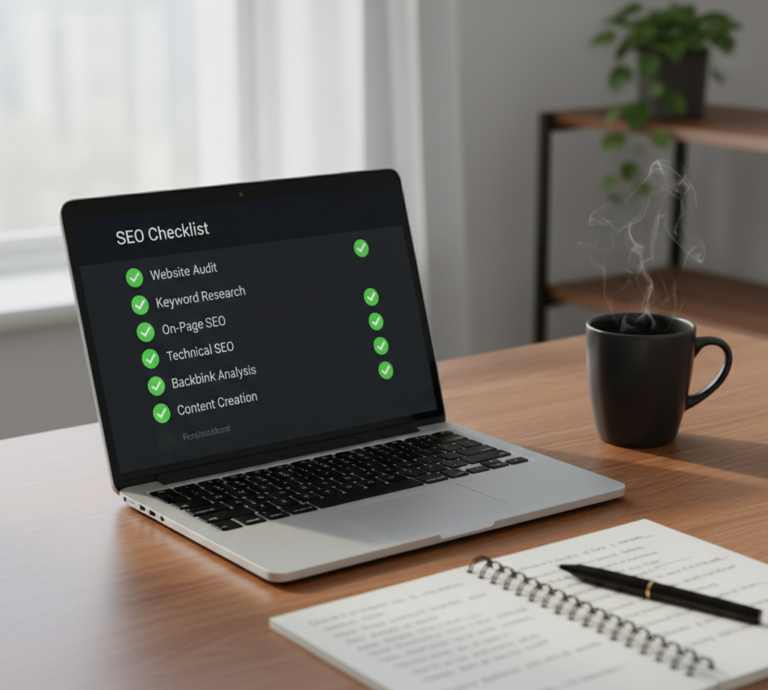
Here’s a clear, actionable on site seo checklist broken down into key sections. Go through these items for every important page on your site.
1. Title Tags and Meta Descriptions
- Keep title tags under 60 characters
- Include your main keyword naturally at the beginning
- Make titles compelling and unique for each page
- Write meta descriptions between 150–160 characters
- Add a call-to-action in the meta description when possible
2. URL Structure
- Use short, descriptive URLs
- Include target keyword when it makes sense
- Separate words with hyphens (not underscores)
- Avoid dates and unnecessary parameters
3. Headings (H1, H2, H3)
- Use only one H1 tag per page
- Include main keyword in H1
- Use H2 and H3 tags to break up content logically
- Keep headings clear and helpful for readers
4. Content Quality and Optimization
- Aim for in-depth, helpful content (usually 1,500+ words for competitive topics)
- Naturally include primary and related keywords
- Use short paragraphs and bullet points for readability
- Add internal links to other relevant pages on your site
- Include relevant images with proper alt text
5. Image Optimization
- Compress images to reduce file size
- Use descriptive file names (example: on-site-seo-checklist.jpg)
- Add meaningful alt text that includes keywords where natural
- Use modern formats like WebP when possible
6. Technical On-Site Elements
- Make sure your site is mobile-friendly (responsive design)
- Enable HTTPS security
- Create and submit an XML sitemap
- Add a robots.txt file
- Fix broken links and 404 errors
- Improve page loading speed (aim for under 3 seconds)
7. Schema Markup and Structured Data
- Add schema for articles, products, FAQs, or local business
- Use JSON-LD format when possible
- Test with Google’s Rich Results Test
8. User Experience Signals
- Easy navigation and clear menu structure
- Logical internal linking between related pages
- Clear calls-to-action on every page
- No intrusive pop-ups that block content
- Readable fonts and good color contrast
How to Use This On Site SEO Checklist Effectively
Don’t try to fix everything at once. Instead, follow this simple approach:
- Start with your most important pages (homepage, main service pages, top blog posts)
- Run the checklist on one page at a time
- Use free tools like Google PageSpeed Insights, Screaming Frog, and Google Search Console
- Keep a simple spreadsheet to track progress
- Re-check each page every 3–6 months
Treating your on site seo checklist as an ongoing habit rather than a one-time task will bring the best long-term results.
Benefits of Following a Strong On Site SEO Checklist
When you consistently apply this on site seo checklist, you can expect:
- Better rankings for your target keywords
- Higher click-through rates from search results
- Lower bounce rates and longer time on page
- Improved user experience and conversions
- Faster indexing of new content by Google
- More organic traffic without relying only on backlinks
Many website owners notice noticeable improvements within weeks of cleaning up their on-site elements.
Pro Tips to Take Your On-Site SEO Further
Here are some extra tips to get even better results:
- Focus on search intent — make sure your page fully answers what users are looking for
- Update old content with fresh information and new images
- Use related keywords and semantic terms naturally throughout the page
- Create topic clusters around your main pillars
- Monitor Core Web Vitals in Google Search Console
- Test different title tags and meta descriptions using Google Search Console data
Remember, the best on site seo checklist always puts real users first while staying search-engine friendly.
Frequently Asked Questions About On Site SEO Checklist
How often should I run my on site seo checklist? Ideally every 3 months for important pages, and whenever you publish new content.
Do I need paid tools to follow this checklist? No. Many parts can be done with free tools like Google Search Console, PageSpeed Insights, and the Yoast or Rank Math plugin.
Is on-site SEO more important than off-site SEO? Both matter, but on-site SEO is the foundation. Without a strong on-site setup, even great backlinks won’t perform as well.
Can on-site SEO fix all ranking problems? It solves many issues, but technical problems, low-quality content, or weak authority may still need attention.
Should every page on my site be fully optimized? Focus first on your high-value pages. Thin or low-traffic pages can follow lighter optimization.
Does on-site SEO change every year? The core principles stay similar, but details like Core Web Vitals and helpful content guidelines evolve, so it’s smart to stay updated.
Final Thoughts: Make Your On Site SEO Checklist a Daily Habit
A thorough on site seo checklist is one of the smartest investments you can make in your website. It costs almost nothing, gives you full control, and delivers lasting results when done consistently.
Print this checklist, bookmark it, or turn it into your personal routine. Take it one page at a time, and you’ll soon see your rankings climb and your traffic grow.
Your website has everything it needs to succeed — you just have to give it the right foundation. Start working through your on site seo checklist today, and watch your hard work pay off in better visibility and more visitors.