Table of Contents
- Introduction
- What Is a Product Marketing Manager?
- Key Responsibilities of a Product Marketing Manager
- Product Marketing Manager vs Product Manager vs Marketing Manager
- Essential Skills Every Product Marketing Manager Needs
- Salary and Career Outlook for a Product Marketing Manager
- Benefits of Becoming a Product Marketing Manager
- Practical Tips to Become or Succeed as a Product Marketing Manager
- Frequently Asked Questions (FAQ)
- Conclusion
Introduction
In today’s fast-moving tech and consumer markets, launching a great product isn’t enough. Companies need someone who can truly connect that product with the right customers and drive real adoption. That’s where the product marketing manager comes in.
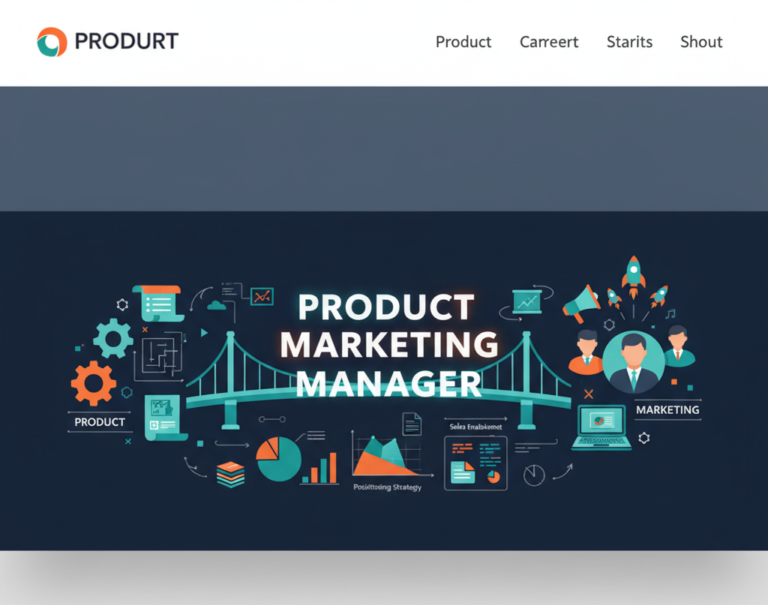
This cross-functional role sits at the intersection of product development, marketing, and sales. A product marketing manager shapes how a product is positioned, messaged, and brought to market successfully.
If you love understanding customer needs, crafting compelling stories, and collaborating across teams, this career path offers exciting opportunities and strong earning potential. In this guide, we’ll explore the role in detail, compare it to similar positions, discuss salaries, and share actionable tips to help you thrive.
What Is a Product Marketing Manager?
A product marketing manager (often called a PMM) owns the strategy for bringing products to market and ensuring they resonate with target audiences. Unlike general marketers who handle broad campaigns, PMMs focus deeply on specific products or features throughout their lifecycle.
They translate technical product details into customer-friendly language, conduct market research, and create go-to-market (GTM) plans that drive awareness, adoption, and revenue. In many companies — especially SaaS and tech firms — the product marketing manager acts as the voice of the customer inside the organization and the voice of the product in the marketplace.
The role has grown in importance as products become more complex and competition intensifies. A skilled product marketing manager can make the difference between a product that flops and one that becomes a market leader.
Key Responsibilities of a Product Marketing Manager
Day-to-day work for a product marketing manager is varied and collaborative. Common duties include:
- Conducting market research and competitive analysis to understand customer pain points and market gaps.
- Developing positioning, messaging frameworks, and buyer personas.
- Creating go-to-market strategies for new product launches or feature updates.
- Building sales enablement materials, such as pitch decks, battle cards, and demo scripts.
- Collaborating with product, sales, customer success, and design teams.
- Measuring launch success through KPIs like adoption rates, win rates, and customer feedback.
- Crafting content for websites, emails, webinars, and press materials.
In larger organizations, senior product marketing managers may oversee entire product lines or mentor junior team members. The role blends strategy with hands-on execution, making every day dynamic.
Product Marketing Manager vs Product Manager vs Marketing Manager
It’s easy to confuse these titles, but the differences matter:
- Product Marketing Manager: Focuses on external market readiness — positioning, messaging, launches, and sales support. They answer: “How do we make customers choose and love this product?”
- Product Manager: Owns the internal product vision, roadmap, and feature prioritization. They work closely with engineering to build the right thing.
- Marketing Manager: Handles broader marketing efforts like brand campaigns, advertising, content, or demand generation across multiple products.
The product marketing manager bridges the gap between what gets built and what actually sells. Product managers put products “on the shelf,” while product marketing managers help get them “off the shelf.” Understanding these distinctions helps you choose the right career direction.
Essential Skills Every Product Marketing Manager Needs
Success as a product marketing manager requires a mix of soft and hard skills:
- Strong communication and storytelling abilities.
- Analytical thinking for market research and performance tracking.
- Customer empathy and the ability to build detailed buyer personas.
- Project management to coordinate cross-functional launches.
- Competitive intelligence and strategic thinking.
- Familiarity with tools like Google Analytics, Salesforce, HubSpot, or survey platforms.
- Basic understanding of product management concepts and sales processes.
Technical PMMs in SaaS often benefit from some domain knowledge in software or data. Mastering both qualitative storytelling and quantitative analysis sets great product marketing managers apart.
Salary and Career Outlook for a Product Marketing Manager
The product marketing manager role offers competitive compensation that reflects its strategic value. In the United States in 2026:
- Average base salary typically ranges from $105,000 to $120,000.
- Total compensation (including bonuses, commissions, and equity) often reaches $135,000–$160,000 or higher.
- Top earners in tech hubs or at large companies can exceed $200,000 in total pay.
Salaries vary by experience, location (higher in San Francisco or New York), company size, and industry. Tech, SaaS, and enterprise software companies generally pay the most.
Career progression is promising: many product marketing managers advance to senior PMM, head of product marketing, or even VP roles. The demand remains strong as companies prioritize customer-centric product launches.
Benefits of Becoming a Product Marketing Manager
Choosing this path brings several advantages:
- High visibility and impact — Your work directly influences revenue and product success.
- Cross-functional collaboration — You interact with almost every department.
- Diverse skill development — You build expertise in strategy, research, writing, and leadership.
- Strong earning potential and job satisfaction — Many find the blend of creativity and analytics deeply rewarding.
- Future-proof skills — Understanding customers and markets is valuable across industries.
For professionals who enjoy both big-picture strategy and detailed execution, the product marketing manager role offers a fulfilling and lucrative career.
Practical Tips to Become or Succeed as a Product Marketing Manager
Ready to break in or level up? Here are actionable steps:
- Build foundational experience — Start in marketing, sales, or product roles. Create case studies from past campaigns showing measurable results.
- Develop key skills — Take courses on product marketing, positioning, and GTM strategies. Read books like “Obviously Awesome” by April Dunford.
- Network actively — Join communities like Product Marketing Alliance, attend webinars, and connect with PMMs on LinkedIn.
- Create a portfolio — Document mock or real launches, messaging frameworks, or competitive analyses.
- Tailor your resume — Highlight any experience with customer research, launches, or cross-team projects.
- Stay current — Follow trends in AI-driven personalization, privacy regulations, and buyer behavior shifts.
For those already in the role: focus on delivering clear ROI from your launches and seek stretch opportunities like owning larger product lines.
Frequently Asked Questions (FAQ)
Q1: What degree do you need to become a product marketing manager? A bachelor’s degree in marketing, business, communications, or a related field is common. Many successful PMMs come from diverse backgrounds, and experience often matters more than the specific major.
Q2: How does a product marketing manager differ from a product manager? Product managers focus on building and prioritizing the product itself, while product marketing managers focus on positioning it in the market and supporting sales and customers.
Q3: Is the product marketing manager role in high demand in 2026? Yes — especially in tech and SaaS. Companies need skilled PMMs to ensure new features and products succeed in competitive markets.
Q4: What is the average salary for a product marketing manager? Base salaries average around $105,000–$120,000, with total compensation often between $135,000 and $160,000 depending on location and experience.
Q5: Can you transition into product marketing from another field? Absolutely. Many come from general marketing, sales, consulting, or even customer success. Highlight transferable skills like research, communication, and project management.
Conclusion
The product marketing manager role is one of the most dynamic and influential positions in modern business. You get to blend deep customer insight with strategic execution, helping products find their perfect audience and drive meaningful growth.
Whether you’re exploring a career switch or looking to advance in your current PMM role, focus on building strong positioning and messaging skills, collaborating effectively, and always keeping the customer at the center.
With the right mix of curiosity, communication, and analytical thinking, you can build a rewarding career that shapes how the world experiences great products. Start by assessing your skills, networking with current PMMs, and gaining hands-on experience with launches. The opportunity is waiting — go make your mark.