Introduction
Running an online store on Shopify gives businesses access to powerful tools for selling products, managing orders, and building a professional e-commerce website. However, simply launching a store does not guarantee traffic or sales. To attract potential customers, your website must appear in search engine results when people search for products you sell.
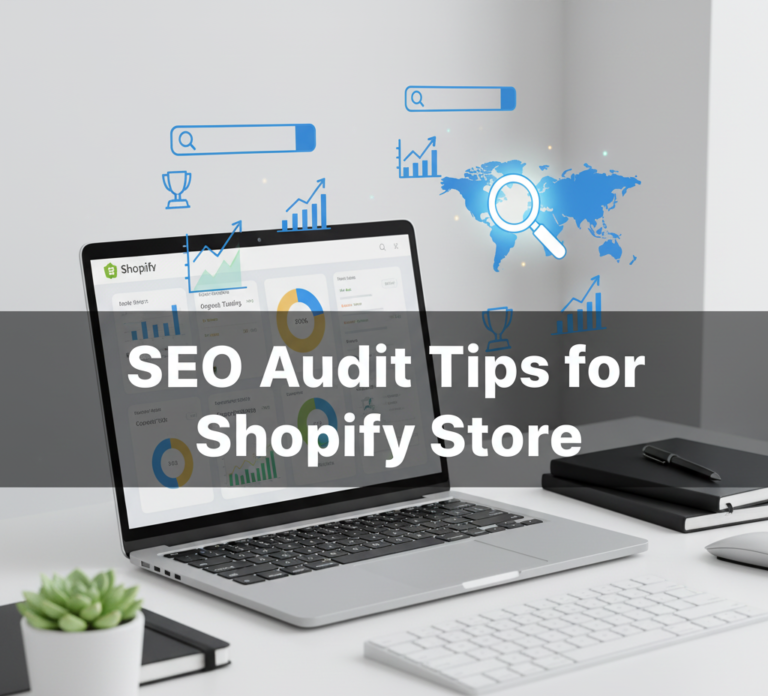
This is where seo audit tips for shopify store become extremely valuable. An SEO audit helps store owners analyze their website, identify weaknesses, and improve their search engine visibility. Regular SEO audits ensure that your Shopify store stays optimized, competitive, and easy for both users and search engines to navigate.
In this guide, we will explore practical seo audit tips for shopify store owners that can help increase organic traffic, improve rankings, and boost sales.
What Is an SEO Audit for a Shopify Store?
An SEO audit is a complete analysis of your website’s search engine optimization performance. It evaluates different aspects of your store such as:
- Technical SEO
- On-page SEO
- Website structure
- Page speed
- Mobile usability
- Content optimization
- Backlink profile
For Shopify store owners, performing a regular audit ensures that your website follows the best SEO practices and remains visible in search results.
Using effective seo audit tips for shopify store, you can detect problems that might prevent your store from ranking well on search engines.
Why SEO Audits Are Important for Shopify Stores
Many Shopify store owners focus mainly on product listings and advertising, but they overlook the importance of SEO audits. Regular audits can bring several benefits.
Improved Search Rankings
An SEO audit helps identify issues that affect rankings. Fixing these problems allows your store to appear higher in search results.
Better User Experience
Search engines prioritize websites that offer a good user experience. Audits reveal usability issues such as slow pages or broken links.
Increased Organic Traffic
When your website becomes optimized, more customers can discover your store through search engines without paid advertising.
Higher Conversion Rates
Optimized websites load faster, look more professional, and guide users toward purchases more effectively.
Using proper seo audit tips for shopify store ensures your website performs well both technically and strategically.
SEO Audit Tips for Shopify Store
Below are some of the most important steps for conducting a complete SEO audit.
1. Check Your Shopify Store’s Technical SEO
Technical SEO forms the foundation of your website’s search performance. If technical problems exist, even the best content may struggle to rank.
During your audit, check for:
- Broken links
- Crawl errors
- Duplicate pages
- Redirect issues
- XML sitemap functionality
Shopify automatically generates a sitemap, but it is important to ensure that search engines can access it properly.
These technical improvements are essential seo audit tips for shopify store owners who want to improve search visibility.
2. Analyze Website Speed and Performance
Website speed is a critical ranking factor. Slow-loading websites often lose visitors and rank lower in search results.
To improve speed, consider:
- Compressing images
- Removing unnecessary apps
- Using lightweight Shopify themes
- Enabling browser caching
- Reducing JavaScript files
A fast-loading store improves user experience and increases the chances of ranking higher in search engines.
Among the most effective seo audit tips for shopify store, speed optimization is one of the most impactful.
3. Optimize Product Page SEO
Product pages are the core of every Shopify store. Each product page should be optimized to target relevant keywords.
When auditing product pages, review:
Product Titles
Ensure product titles include relevant keywords while remaining natural and readable.
Product Descriptions
Avoid using manufacturer descriptions. Write unique and detailed descriptions that highlight benefits and features.
Image Alt Text
Add descriptive alt text to product images so search engines understand what the images represent.
Internal Links
Link related products and categories to help users explore more items in your store.
These improvements strengthen product visibility and follow essential seo audit tips for shopify store optimization.
4. Review Your Keyword Strategy
Keywords help search engines understand what your pages are about. Without proper keyword targeting, your store may struggle to attract organic traffic.
During your SEO audit:
- Identify primary keywords for each page
- Avoid keyword duplication across multiple pages
- Use long-tail keywords for better targeting
For example, instead of targeting a broad keyword like:
“running shoes”
You might target a more specific phrase like:
“lightweight running shoes for men”
Applying smart keyword strategies is one of the most powerful seo audit tips for shopify store growth.
5. Check Mobile Friendliness
Most online shoppers use mobile devices to browse and purchase products. Google also uses mobile-first indexing, meaning it evaluates the mobile version of your site first.
During the audit, verify that:
- Pages load properly on smartphones
- Text is readable without zooming
- Buttons are easy to click
- Images scale correctly
Mobile optimization is an essential part of modern seo audit tips for shopify store success.
6. Improve Your Shopify Store Structure
A clear website structure helps both users and search engines navigate your store easily.
Your store should follow a logical structure such as:
Home Page
→ Collection Pages
→ Product Pages
Avoid complicated navigation or too many nested categories.
A well-organized store structure improves crawlability and supports better SEO performance.
7. Evaluate Content Quality
Content plays a major role in SEO. Search engines prefer websites that provide helpful and informative content.
During your audit:
- Check for duplicate content
- Improve thin product descriptions
- Update outdated information
- Add blog articles related to your niche
Creating helpful content allows your store to attract visitors who are searching for information before making a purchase.
Strong content strategy is a key element in seo audit tips for shopify store marketing.
8. Review Internal Linking
Internal linking connects different pages within your store. It helps search engines discover pages and improves user navigation.
Examples include:
- Linking blog posts to product pages
- Linking related products
- Connecting category pages to featured products
Good internal linking distributes authority across your website and strengthens SEO performance
9. Analyze Backlinks
Backlinks are links from other websites pointing to your store. Search engines view backlinks as signals of credibility and authority.
During an SEO audit, review:
- Number of backlinks
- Quality of linking websites
- Anchor text distribution
If your store lacks backlinks, consider strategies such as:
- Guest blogging
- Influencer partnerships
- Content marketing
- Product reviews
Building high-quality backlinks is one of the most advanced seo audit tips for shopify store authority.
10. Optimize Shopify Meta Tags
Meta tags help search engines understand your page content and encourage users to click your result.
Important meta elements include:
Meta Titles
Titles should contain primary keywords and remain under 60 characters.
Meta Descriptions
Descriptions should summarize the page and encourage clicks.
URL Structure
Keep URLs short, clean, and descriptive.
Optimizing these elements is a simple but powerful step in seo audit tips for shopify store optimization.
Common SEO Mistakes Shopify Store Owners Make
Many Shopify store owners unknowingly harm their SEO by making common mistakes.
Some of these include:
- Using duplicate product descriptions
- Ignoring image optimization
- Installing too many apps that slow down the site
- Not updating old content
- Neglecting keyword research
Avoiding these mistakes helps maintain strong SEO performance.
Best Tools for Shopify SEO Audits
Several tools can help simplify the SEO audit process.
Some popular options include:
- Google Search Console
- Google Analytics
- Ahrefs
- SEMrush
- Screaming Frog SEO Spider
These tools provide insights into website performance, search rankings, and technical issues.
Using these tools alongside seo audit tips for shopify store helps create a more effective SEO strategy.
How Often Should You Perform an SEO Audit?
SEO is not a one-time task. Search engine algorithms change frequently, and competitors constantly improve their websites.
Experts recommend performing a complete SEO audit:
- Every 3 to 6 months
- After major website updates
- When traffic suddenly drops
Regular audits ensure your Shopify store remains optimized and competitive.
Conclusion
Running a successful online store requires more than just listing products and launching marketing campaigns. Search engine visibility plays a crucial role in attracting new customers and increasing sales.
By applying the right seo audit tips for shopify store, business owners can identify technical issues, optimize content, improve website performance, and strengthen their overall SEO strategy.
From optimizing product pages and improving site speed to analyzing backlinks and refining keyword strategies, every part of the audit contributes to better search rankings.
For Shopify store owners who want long-term growth, regular SEO audits are not optional—they are essential.
Investing time in these optimization techniques will help your store gain more organic traffic, reach new customers, and compete successfully in the rapidly growing e-commerce market.