
If you are serious about search engine optimization, you already know one thing: keyword research is the foundation of SEO. Without the right keywords, even the best content may never rank.
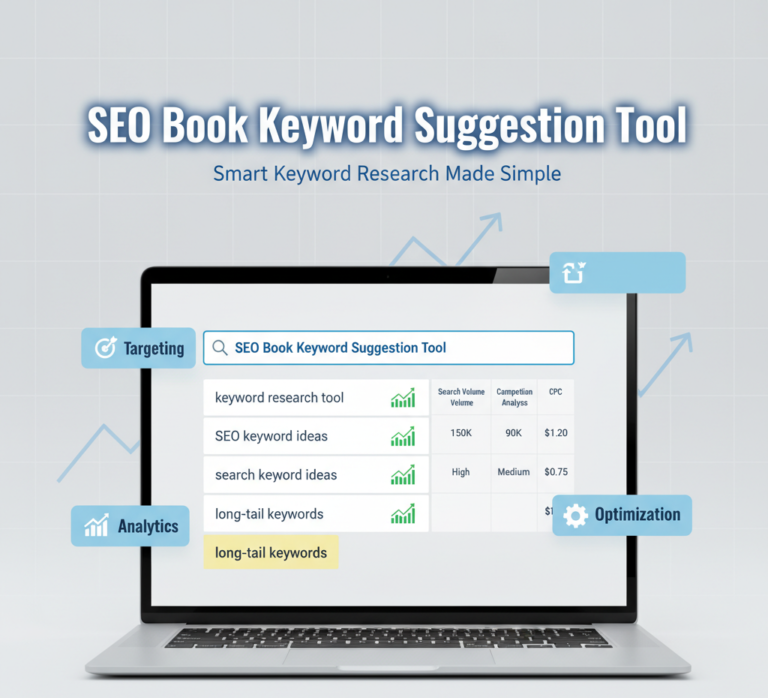
One of the classic tools in the SEO world is the SEO Book Keyword Suggestion Tool. Many digital marketers still search for this tool because of its simplicity and practical keyword ideas.
In this complete guide, you will learn:
- What the SEO Book keyword suggestion tool is
- How it works
- Its key features
- Benefits and limitations
- How to use it for better rankings
- Modern alternatives
- Best practices for keyword research in 2026
Let’s break it down in a simple and readable way.
What Is the SEO Book Keyword Suggestion Tool?
The SEO Book Keyword Suggestion Tool is a keyword research tool designed to help marketers discover search terms related to a specific topic.
It provides:
- Keyword ideas
- Search volume estimates
- Competition data
- Cost-per-click (CPC) insights
The tool was created to make keyword research easier, especially for beginners who needed quick keyword inspiration without complicated dashboards.
Although newer tools have entered the market, many people still look for the SEO Book keyword suggestion tool because of its straightforward approach.
Why Keyword Research Matters in SEO
Before we go deeper, let’s understand why keyword research is so important.
Keywords help you:
- Understand what users are searching for
- Create content that matches search intent
- Improve organic traffic
- Increase conversions
- Build authority in your niche
If you target the wrong keywords, you may:
- Compete against high-authority websites
- Rank for low-traffic queries
- Attract the wrong audience
That is why using a keyword suggestion tool is essential.
How the SEO Book Keyword Suggestion Tool Works
The concept is simple.
You enter a seed keyword into the tool. For example:
- “digital marketing”
- “weight loss tips”
- “plumbing services”
- “SEO tools”
The tool then generates related keyword suggestions based on search data.
You typically receive:
- Variations of your keyword
- Long-tail keyword ideas
- Estimated search volume
- Competition level
- CPC information
This helps you evaluate which keywords are worth targeting.
Key Features of the SEO Book Keyword Suggestion Tool
Let’s explore the main features in detail.
1. Keyword Variations
The tool provides multiple keyword variations based on your seed term.
For example, if you enter:
“SEO tools”
You might see suggestions like:
- best SEO tools
- free SEO tools
- SEO tools for beginners
- technical SEO tools
- SEO audit tools
These variations help you expand your content ideas.
2. Search Volume Estimates
Search volume shows how many people search for a keyword each month.
High search volume means:
- More potential traffic
- More competition
Low search volume often means:
- Less competition
- Highly targeted traffic
A balanced strategy includes both.
3. Competition Level
Competition data helps you understand how difficult it may be to rank for a keyword.
If competition is high, you may need:
- Strong backlinks
- High domain authority
- Long-form content
- Better on-page optimization
If competition is low, ranking becomes easier.
4. Cost-Per-Click Data
CPC (Cost Per Click) shows how much advertisers pay for a keyword in paid ads.
High CPC usually indicates:
- Commercial intent
- High conversion potential
If advertisers are paying more, the keyword is likely valuable.
Benefits of Using the SEO Book Keyword Suggestion Tool
Here are some advantages:
Simple Interface
The tool is easy to use and beginner-friendly.
Quick Keyword Ideas
It provides fast keyword suggestions without overwhelming dashboards.
Useful for Blog Planning
Content creators can quickly generate blog topic ideas.
Good for Niche Research
You can discover micro-niche opportunities through long-tail keywords.
Limitations of the SEO Book Keyword Suggestion Tool
While useful, it does have limitations.
Data Accuracy
Search volume numbers may not always be precise compared to premium tools.
Limited Advanced Features
Modern tools offer:
- Keyword difficulty score
- SERP analysis
- Competitor tracking
- Content gap analysis
SEO Book is more basic in comparison.
No Deep Competitor Insights
You may need additional tools to analyze competitors effectively.
How to Use the SEO Book Keyword Suggestion Tool Effectively
Simply generating keywords is not enough. You need a strategy.
Step 1: Start with a Clear Topic
Choose a main topic relevant to your niche.
Example:
If your niche is fitness, start with:
“home workout”
Step 2: Analyze Search Intent
Look at the keyword suggestions and ask:
Is the user looking for information?
Are they ready to buy?
Are they comparing products?
Search intent types include:
- Informational
- Navigational
- Transactional
- Commercial
Create content that matches the intent.
Step 3: Focus on Long-Tail Keywords
Long-tail keywords are longer, more specific phrases.
Example:
Instead of targeting:
“SEO”
Try:
“best SEO strategies for small businesses”
Long-tail keywords:
- Have less competition
- Convert better
- Are easier to rank for
Step 4: Group Keywords by Topic
Do not create one page for every keyword.
Instead, group related keywords into one comprehensive article.
Example:
Main topic: SEO tools
Include subtopics:
- free SEO tools
- best SEO tools
- SEO tools for beginners
- technical SEO tools
This improves topical authority.
Step 5: Optimize Naturally
Use your primary keyword in:
- Title
- Introduction
- Headings
- Meta description
- URL
- Image alt text
But avoid keyword stuffing.
Write naturally for readers first.
SEO Book Keyword Suggestion Tool vs Modern Tools
Today, many advanced tools exist in the market.
Modern tools often provide:
- Keyword difficulty score
- SERP analysis
- Competitor keyword tracking
- Backlink data
- AI-powered suggestions
However, the SEO Book keyword suggestion tool remains useful for:
- Quick research
- Beginners
- Simple niche exploration
It is a lightweight solution compared to more complex platforms.
Best Practices for Keyword Research in 2026
Regardless of the tool you use, follow these best practices.
Focus on User Intent
Do not choose keywords only based on volume.
Choose keywords that match what your audience truly wants.
Balance High and Low Competition
Target:
- A few high-volume keywords
- Many low-competition long-tail keywords
This builds traffic steadily.
Study the Search Results
Before targeting a keyword, check:
- Who is ranking?
- How long are their articles?
- What type of content appears?
If top results are strong authority sites, you may need a different angle.
Create High-Quality Content
Even the best keyword tool cannot replace quality content.
Make sure your content:
- Solves a real problem
- Is easy to read
- Is well-structured
- Provides depth
Track Performance
After publishing content:
- Monitor rankings
- Track traffic
- Analyze user behavior
- Update content regularly
SEO is not one-time work.
Who Should Use the SEO Book Keyword Suggestion Tool?
This tool is ideal for:
- Beginner bloggers
- Affiliate marketers
- Small business owners
- Content writers
- Niche website builders
If you want quick keyword ideas without complex analytics, it is a good starting point.
Final Thoughts
The SEO Book keyword suggestion tool is a simple yet practical tool for keyword research. While it may not offer advanced analytics like modern platforms, it still provides valuable keyword ideas for content creation.
Remember, keyword research is only the first step.
Real SEO success comes from:
- Understanding user intent
- Creating valuable content
- Optimizing properly
- Building authority
- Staying consistent
If you combine smart keyword research with high-quality content, your chances of ranking improve significantly.