In the modern digital economy, every company needs an online presence to stay competitive. However, simply having a website is not enough. If your target audience cannot find your business on search engines, you risk losing potential customers. This is why SEO for companies is critical—it ensures that businesses appear in front of the right people at the right time, increasing visibility, traffic, and revenue.
This comprehensive guide explores why SEO matters for companies, the strategies involved, key benefits, and actionable steps to achieve long-term success.
What Is SEO for Companies?
SEO, or Search Engine Optimization, is the process of improving a website’s visibility on search engines like Google, Bing, and Yahoo. For companies, SEO focuses on attracting organic traffic—visitors who are actively searching for products or services the company offers.
SEO for companies involves:
- Optimizing website structure and design
- Conducting keyword research
- Creating high-quality, relevant content
- Improving technical aspects like page speed and mobile responsiveness
- Building authority through backlinks and partnerships
- Monitoring analytics and performance
The goal is simple: make it easy for potential customers to find your company online.
Why SEO Is Essential for Companies
1. Increase Online Visibility
With millions of websites competing for attention, SEO helps your company appear at the top of search results for relevant keywords. High visibility leads to more clicks, traffic, and potential sales.
2. Generate Targeted Traffic
SEO attracts users who are actively searching for products or services like yours. Unlike traditional advertising, SEO brings high-intent visitors who are more likely to convert into leads or customers.
3. Build Brand Credibility
Websites that rank on the first page are often perceived as more trustworthy. SEO for companies helps establish authority through content, backlinks, and technical optimization, increasing customer confidence.
4. Improve User Experience
Modern SEO emphasizes usability. Optimized websites load quickly, are mobile-friendly, and have clear navigation—all of which enhance the user experience.
5. Cost-Effective Marketing
Unlike paid advertising, SEO provides long-term benefits. Once your company ranks well, you can attract traffic without continuously paying for clicks. This results in a higher return on investment (ROI) over time.
6. Competitive Advantage
Companies investing in SEO gain a significant edge over competitors who neglect it. Ranking above competitors ensures you capture more leads and build a stronger online presence.
Key Components of SEO for Companies
SEO for companies can be divided into several key components:
1. Keyword Research
Understanding what potential customers are searching for is crucial. Keyword research helps companies:
- Identify high-value keywords
- Understand search intent
- Target local or global markets
- Discover content opportunities
Tools like Google Keyword Planner, Ahrefs, and SEMrush can provide insights into search volume, competition, and trends.
2. On-Page SEO
On-page SEO involves optimizing elements directly on your website:
- Meta Titles and Descriptions: Include keywords and create compelling snippets
- Headings (H1, H2, H3): Structure content logically and include relevant keywords
- URL Structure: Use clean, descriptive URLs
- Internal Linking: Connect related pages to improve navigation and link equity
- Content Optimization: Ensure content is high-quality, relevant, and engaging
WordPress, Shopify, and other CMS platforms offer plugins like Yoast SEO or Rank Math to simplify on-page optimization.
3. Technical SEO
Technical SEO ensures search engines can crawl and index your site effectively. Key elements include:
- Fast page speed
- Mobile responsiveness
- Secure HTTPS connection
- XML sitemap
- Structured data and schema markup
- Fixing broken links and errors
Proper technical SEO lays the foundation for all other SEO efforts.
4. Content Marketing
Content is at the core of SEO for companies. Effective content strategies include:
- Blog posts that answer customer questions
- Guides and tutorials related to your industry
- Case studies showcasing your expertise
- Videos, infographics, and interactive content
High-quality content attracts backlinks, improves engagement, and strengthens domain authority.
5. Off-Page SEO
Off-page SEO focuses on building your company’s reputation and authority online:
- Backlinks from reputable websites
- Social media signals and shares
- Online mentions and reviews
- Guest posting on industry-relevant blogs
A strong off-page SEO profile increases trustworthiness in the eyes of search engines.
6. Local SEO
For companies serving specific regions, local SEO is crucial:
- Optimize Google Business Profile
- Include location keywords in content
- Collect and manage reviews
- Target “near me” searches
Local SEO helps companies attract customers in their geographic area and improve foot traffic for physical locations.
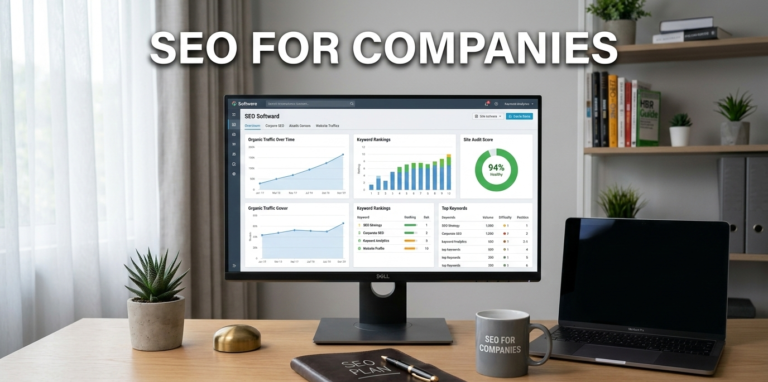
7. Analytics and Monitoring
Tracking performance is essential to measure the success of your SEO efforts:
- Monitor keyword rankings
- Track organic traffic and conversions
- Analyze user behavior on your site
- Adjust strategy based on performance metrics
Tools like Google Analytics, Google Search Console, and Ahrefs can provide valuable insights for continuous improvement.
Benefits of SEO for Companies
Implementing SEO offers companies multiple advantages:
- Higher Search Rankings: Appear at the top of search results
- Increased Website Traffic: Attract organic, targeted visitors
- Better Conversion Rates: High-intent visitors lead to more leads and sales
- Enhanced Brand Awareness: Consistent presence in SERPs builds recognition
- Sustainable Growth: Long-term traffic without continuous ad spend
- Improved Customer Insights: Data-driven decisions based on user behavior
SEO is a strategic investment that yields measurable results over time.
Common SEO Mistakes Companies Make
Even experienced companies can make SEO mistakes, including:
- Ignoring Mobile Optimization: Google prioritizes mobile-friendly websites
- Overlooking Content Quality: Thin or irrelevant content fails to rank
- Neglecting Technical SEO: Slow load times and errors hurt rankings
- Ignoring User Intent: Focusing solely on keywords rather than solving user problems
- Failing to Track Results: Without analytics, SEO efforts can be misaligned
Avoiding these mistakes ensures SEO efforts are effective and sustainable.
Future of SEO for Companies
The SEO landscape is constantly evolving. Companies need to stay ahead by:
- Optimizing for voice search and AI assistants
- Creating high-quality, long-form content
- Enhancing mobile experience and Core Web Vitals
- Using AI-driven content optimization tools
- Focusing on semantic search and search intent
Adapting to these trends ensures companies maintain a competitive edge.
How Companies Can Get Started with SEO
- Conduct comprehensive keyword research
- Optimize on-page elements including titles, meta descriptions, and headings
- Ensure technical SEO is sound
- Produce high-quality, relevant content
- Build authoritative backlinks
- Optimize for local SEO if applicable
- Track and analyze performance regularly
- Update and refresh content to stay relevant
Consistency, monitoring, and continuous improvement are key to long-term SEO success.
Conclusion
SEO is no longer optional for companies—it is a critical component of business growth. By implementing a well-rounded SEO strategy, companies can:
- Increase visibility and reach new audiences
- Attract high-intent traffic
- Build credibility and trust
- Generate measurable revenue
- Stay competitive in an increasingly digital marketplace
Whether you are a startup, a small business, or a large enterprise, investing in SEO ensures your company remains discoverable, relevant, and competitive in 2026 and beyond.