
In today’s competitive digital landscape, SEO-friendly web hosting plays a critical role in determining how well your website performs in search engine rankings. While content and backlinks are essential, the foundation of your website—your hosting provider—can significantly influence speed, uptime, security, and overall user experience.
This in-depth guide explains what SEO-friendly web hosting is, why it matters, and how choosing the right hosting provider can dramatically improve your search visibility and organic traffic in 2026 and beyond.
What Is SEO-Friendly Web Hosting?

SEO-friendly web hosting refers to hosting services optimized to support search engine ranking factors. These hosting solutions provide fast page loading speeds, high uptime, strong security, scalability, and server reliability—key elements that search engines like Google consider when ranking websites.
An SEO-friendly hosting environment ensures that:
- Search engine bots can crawl your site easily
- Pages load quickly on all devices
- Downtime is minimal
- User experience is smooth and consistent
Without proper hosting, even the best SEO strategies can fail.
Why Web Hosting Matters for SEO
Search engines aim to deliver the best experience to users. If your website loads slowly, goes offline frequently, or is insecure, it sends negative signals to search engines.
Here’s how web hosting directly impacts SEO:
1. Page Speed and Performance
Page speed is a confirmed Google ranking factor. A slow hosting server leads to:
- Higher bounce rates
- Lower user engagement
- Poor Core Web Vitals scores
SEO-friendly hosting uses modern infrastructure like SSD storage, optimized servers, and caching to ensure fast loading times.
2. Website Uptime and Availability
Search engines prefer websites that are consistently accessible. Frequent downtime can:
- Prevent search engine crawling
- Reduce rankings
- Damage brand trust
The best SEO-friendly hosting providers offer 99.9% uptime guarantees, ensuring your website is always available.
3. Server Location and Latency
Server location affects how quickly your website loads for users in different regions. Hosting closer to your target audience reduces latency and improves page speed.
Many SEO-optimized hosts offer:
- Global data centers
- Content Delivery Networks (CDNs)
- Geo-targeting options
These features enhance both user experience and search rankings.
4. Security and HTTPS
Website security is another ranking factor. SEO-friendly web hosting includes:
- Free SSL certificates
- Malware protection
- Firewalls and DDoS protection
HTTPS builds user trust, protects data, and improves SEO performance.
Types of SEO-Friendly Web Hosting
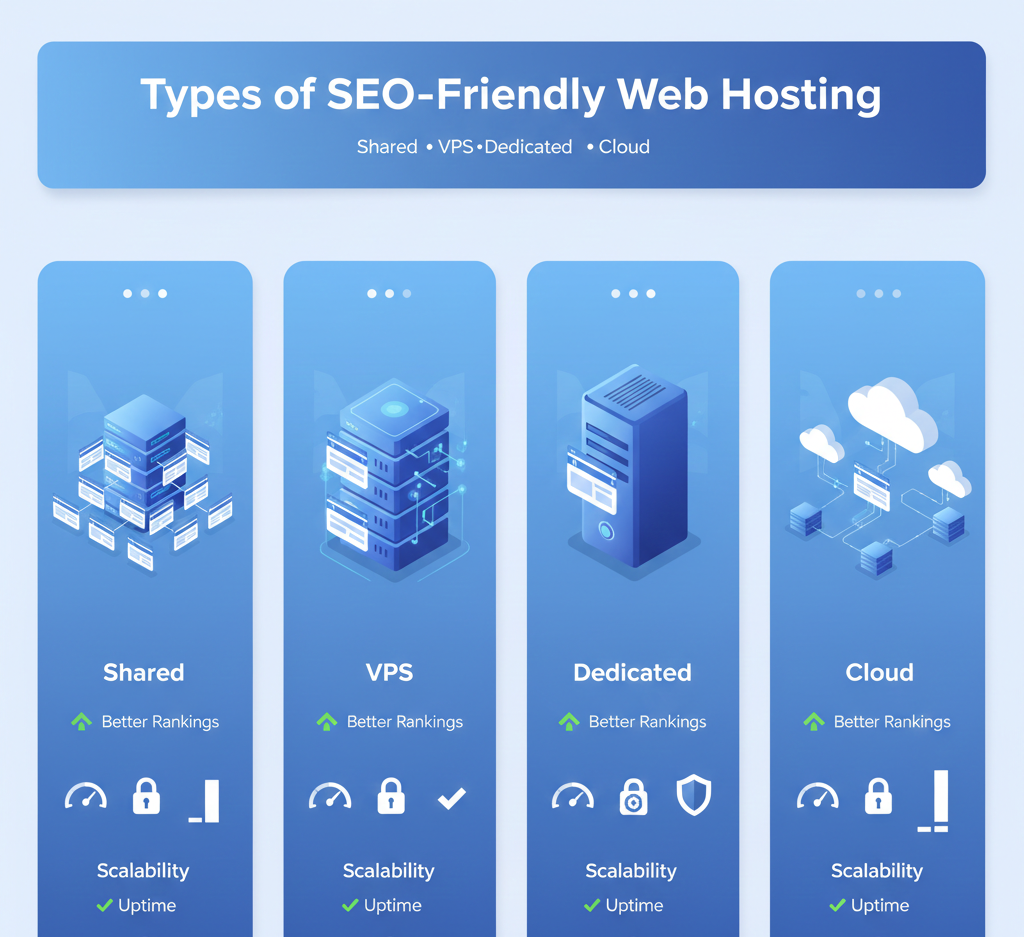
Understanding hosting types helps you choose the right solution for your SEO goals.
Shared Hosting
Shared hosting is budget-friendly but has limitations.
Pros:
- Low cost
- Easy setup
Cons:
- Shared resources
- Slower speeds
- Potential security risks
Best for small blogs or beginner websites with low traffic.
VPS (Virtual Private Server) Hosting
VPS hosting offers better performance and control.
Pros:
- Dedicated resources
- Improved speed and reliability
- Better security
Cons:
- Higher cost than shared hosting
- Requires some technical knowledge
Ideal for growing websites focused on SEO performance.
Dedicated Hosting
Dedicated hosting provides an entire server exclusively for your website.
Pros:
- Maximum performance
- Full control
- Excellent SEO support
Cons:
- Expensive
- Requires technical expertise
Best for high-traffic websites and enterprise-level SEO strategies.
Cloud Hosting
Cloud hosting is one of the most SEO-friendly options.
Pros:
- High scalability
- Excellent uptime
- Fast load times
Cons:
- Variable pricing
Perfect for websites expecting traffic growth and global audiences.
Key Features of SEO-Friendly Web Hosting
When choosing a hosting provider, look for these essential SEO features:
1. Fast Server Speed
Speed optimization features include:
- SSD or NVMe storage
- LiteSpeed or NGINX servers
- Built-in caching systems
Faster servers improve rankings and user experience.
2. Free SSL Certificate
HTTPS is mandatory for SEO. A good hosting provider includes:
- Free SSL certificates
- Automatic HTTPS redirection
This enhances trust and search engine visibility.
3. Content Delivery Network (CDN)
A CDN distributes your content across global servers, reducing load times.
Benefits include:
- Faster page delivery
- Better Core Web Vitals
- Improved international SEO
4. Scalability and Resources
SEO-friendly hosting grows with your website. Look for:
- Easy upgrades
- Flexible bandwidth
- Auto-scaling options
This prevents performance drops during traffic spikes.
5. Reliable Customer Support
Technical issues can impact SEO if not resolved quickly. Choose a host with:
- 24/7 expert support
- SEO-aware technicians
- Fast response times
How to Choose the Best SEO-Friendly Web Hosting Provider

Selecting the right hosting provider requires careful evaluation.
Step 1: Define Your SEO Goals
Ask yourself:
- Are you targeting local or global traffic?
- How much traffic do you expect?
- Do you need advanced SEO tools?
Clear goals help you choose the right hosting plan.
Step 2: Check Performance Metrics
Review hosting specifications such as:
- Server response time
- Uptime guarantee
- Core Web Vitals optimization
Performance directly affects rankings.
Step 3: Evaluate Security Features
Ensure your hosting includes:
- SSL certificates
- Regular backups
- Malware scanning
Security issues can harm SEO and user trust.
Step 4: Read Reviews and Case Studies
Look for real-world feedback from users focused on SEO performance. Reliable hosts consistently deliver fast speeds and stable uptime.
Common Hosting Mistakes That Hurt SEO
Avoid these mistakes that negatively impact search rankings:
- Choosing the cheapest hosting without performance considerations
- Ignoring uptime reliability
- Hosting on slow, overcrowded servers
- Skipping SSL certificates
- Using servers far from your target audience
These errors can undermine even the strongest SEO strategies.
SEO-Friendly Hosting and Core Web Vitals
Google’s Core Web Vitals measure user experience. Hosting affects all three metrics:
- Largest Contentful Paint (LCP): Server speed
- First Input Delay (FID): Server responsiveness
- Cumulative Layout Shift (CLS): Stable loading
High-performance hosting helps meet Core Web Vitals standards, leading to better rankings.
SEO Benefits of Managed Web Hosting

Managed hosting services handle technical tasks like updates and optimization.
Benefits include:
- Faster load times
- Reduced technical errors
- Improved security
- More focus on content and SEO
Managed hosting is ideal for businesses prioritizing SEO growth.
Best Practices for SEO-Optimized Hosting in 2026
To stay competitive, follow these best practices:
- Choose fast, SSD-based hosting
- Enable HTTPS and CDN
- Monitor uptime regularly
- Optimize server response times
- Scale hosting as traffic grows
- Perform regular SEO and performance audits
These steps ensure long-term SEO success.
Conclusion
SEO-friendly web hosting is the backbone of a successful online presence. It influences site speed, security, uptime, and user experience—key ranking factors in modern SEO. Choosing the right hosting provider ensures your website loads quickly, stays online, and remains secure, giving search engines and users exactly what they want.
By investing in high-performance, SEO-optimized hosting, you lay a strong foundation for sustainable rankings, higher organic traffic, and long-term digital growth. Remember, great SEO starts with great hosting.