Introduction
In today’s digital-first world, small businesses need to be visible online to succeed. Search Engine Optimization (SEO) is essential for driving traffic, generating leads, and increasing sales. However, many small business owners find SEO overwhelming due to its technical nature and constant changes in search engine algorithms.
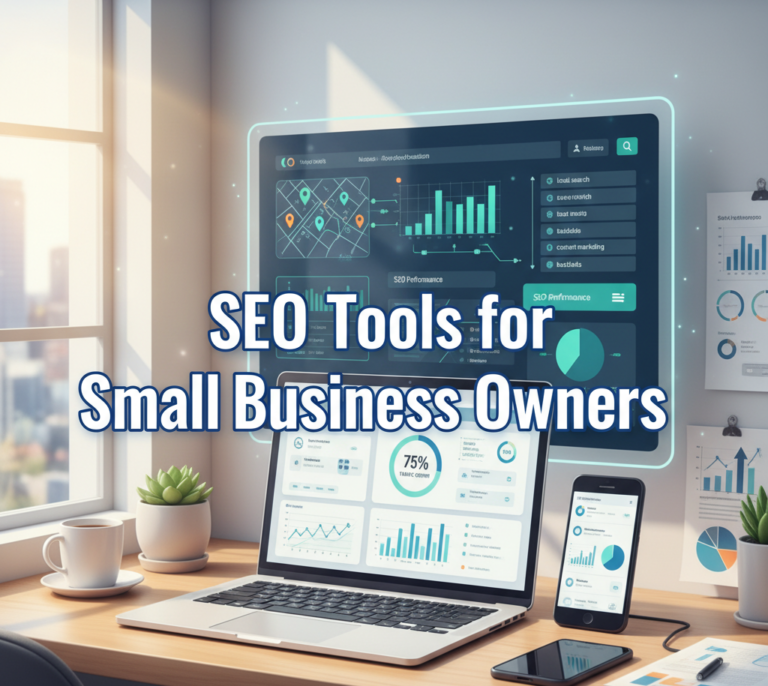
This is where SEO tools for small business owners come in. These tools simplify complex SEO tasks, help track website performance, optimize content, and improve search rankings. By leveraging the right tools, small businesses can compete with larger companies and grow their online presence efficiently.
In this article, we will explore the best SEO tools for small business owners, their features, benefits, and how to use them effectively to achieve measurable results.
Why SEO is Critical for Small Business Owners
SEO is more than just ranking on Google; it is about making your business discoverable to potential customers at the right time. Some benefits include:
- Increased Visibility: Higher search rankings mean more people find your business online.
- Cost-Effective Marketing: Organic traffic reduces dependence on paid advertising.
- Better User Experience: Optimizing your website enhances usability and engagement.
- Higher Credibility: Websites that rank well are perceived as trustworthy by users.
- Long-Term Growth: SEO investments pay off over time, unlike short-term ad campaigns.
By understanding these benefits, small business owners can prioritize SEO and use tools to streamline the process.
Essential SEO Tools for Small Business Owners
1. Google Search Console
Google Search Console is a free tool provided by Google to monitor your website’s performance in search results.
Key Features:
- Tracks website indexing and visibility
- Provides keyword performance and click-through rates
- Identifies technical issues like broken links or crawl errors
- Submits sitemaps to improve search engine indexing
Benefits for Small Business Owners:
Helps understand which keywords drive traffic, detect SEO issues early, and improve overall search visibility.
2. Google Analytics
Google Analytics is another free, essential tool for small businesses to track website traffic and user behavior.
Key Features:
- Tracks page views, bounce rates, and user sessions
- Measures conversions and goal completions
- Provides demographic and location data
- Integrates with Google Ads for advertising insights
Benefits:
Allows small business owners to understand their audience, measure marketing effectiveness, and optimize campaigns for better ROI.
3. SEMrush
SEMrush is a comprehensive SEO suite suitable for small businesses looking to analyze competitors and optimize their website.
Key Features:
- Keyword research and tracking
- Site audit for technical SEO issues
- Backlink analysis and competitor monitoring
- Content optimization suggestions
Benefits:
SEMrush enables small businesses to identify opportunities, track performance, and outperform competitors in search rankings.
4. Ahrefs
Ahrefs is a powerful tool for backlink analysis and competitive research.
Key Features:
- Analyze backlinks and domain authority
- Track keyword rankings over time
- Explore competitors’ strategies
- Identify content gaps and popular topics
Benefits:
Small business owners can use Ahrefs to build high-quality backlinks, monitor SEO health, and generate content ideas that attract traffic.
5. Moz Pro
Moz Pro is an all-in-one SEO platform designed for businesses of all sizes.
Key Features:
- Keyword research and SERP analysis
- Site crawl to detect SEO issues
- Page optimization recommendations
- Link tracking and local SEO tools
Benefits:
Moz Pro helps small business owners improve search rankings, optimize on-page content, and manage local SEO efforts efficiently.
6. Ubersuggest
Ubersuggest, developed by Neil Patel, is a beginner-friendly SEO tool ideal for small businesses on a budget.
Key Features:
- Keyword suggestions and search volume data
- Backlink tracking
- Content ideas and SEO audit reports
- Competitor analysis
Benefits:
Ubersuggest simplifies SEO tasks for small business owners and helps generate actionable insights to increase organic traffic.
7. Screaming Frog SEO Spider
Screaming Frog SEO Spider is a technical SEO tool used to analyze website structure and identify issues.
Key Features:
- Crawls websites to find broken links and redirects
- Analyzes metadata and headings
- Detects duplicate content
- Generates XML sitemaps for SEO
Benefits:
This tool ensures small business websites are technically optimized for search engines, improving overall SEO performance.
8. Yoast SEO (For WordPress Users)
Yoast SEO is a popular WordPress plugin that simplifies on-page SEO for small businesses.
Key Features:
- Real-time content analysis and readability check
- SEO title and meta description optimization
- Internal linking suggestions
- XML sitemap generation
Benefits:
Yoast SEO makes it easy for small business owners to optimize content without extensive technical knowledge, improving chances of ranking higher in search results.
How to Use SEO Tools Effectively
Using SEO tools for small business owners is only effective if paired with a proper strategy. Here’s how to get the most out of these tools:
1. Conduct Keyword Research
Identify the right keywords your target audience is searching for. Tools like SEMrush, Ahrefs, and Ubersuggest help find high-volume, low-competition keywords.
2. Optimize On-Page SEO
Use tools like Yoast SEO or Moz to optimize meta titles, descriptions, headings, and content structure. Ensure that your keywords appear naturally in your content.
3. Track Performance
Use Google Analytics and Google Search Console to monitor website traffic, keyword rankings, and user behavior. Adjust your strategy based on performance data.
4. Build Quality Backlinks
Analyze competitor backlinks using Ahrefs or SEMrush. Focus on acquiring high-authority backlinks from reputable websites to boost domain authority.
5. Audit Technical SEO
Regularly check for broken links, duplicate content, slow-loading pages, and crawl errors using Screaming Frog or SEMrush. Technical health is essential for better search rankings.
6. Create Valuable Content
SEO tools help identify content gaps and trending topics. Produce high-quality, informative content that addresses customer needs and incorporates targeted keywords.
Benefits of Using SEO Tools for Small Business Owners
Using SEO tools offers several advantages:
- Time-Saving: Automates complex SEO tasks
- Cost-Effective: Reduces the need for large marketing teams
- Data-Driven Decisions: Makes it easier to identify what works and what doesn’t
- Competitive Advantage: Helps small businesses compete with larger brands
- Improved ROI: Increases organic traffic, leads, and sales
By leveraging SEO tools, small business owners can make informed decisions and implement effective strategies without hiring expensive agencies.
Common Mistakes to Avoid
Even with SEO tools, small business owners can make mistakes that hinder results:
- Ignoring mobile optimization
- Overstuffing keywords in content
- Neglecting technical SEO
- Failing to monitor and adjust strategies
- Focusing only on rankings rather than conversions
Avoiding these pitfalls ensures that your SEO efforts lead to meaningful business growth.
Future Trends in SEO for Small Businesses
The SEO landscape is constantly evolving. Small business owners should be aware of future trends to stay competitive:
- Voice Search Optimization: People increasingly use voice assistants to search online
- Mobile-First Indexing: Google prioritizes mobile-friendly websites
- AI and Automation: Tools using AI will simplify keyword research and content creation
- Video SEO: Optimizing video content for search engines is becoming essential
- Local SEO: Hyper-local searches are crucial for small businesses serving nearby customers
Adapting to these trends ensures long-term SEO success for small businesses.
Conclusion
SEO tools for small business owners are indispensable for building an effective online presence. From keyword research and on-page optimization to backlink analysis and technical audits, these tools simplify complex SEO processes and deliver measurable results.
By leveraging the right tools, creating high-quality content, and following a structured SEO strategy, small business owners can increase visibility, attract more customers, and compete with larger brands in the digital marketplace.
Investing in SEO tools is not just about improving rankings—it’s about building a sustainable online presence that drives growth, credibility, and long-term success.