
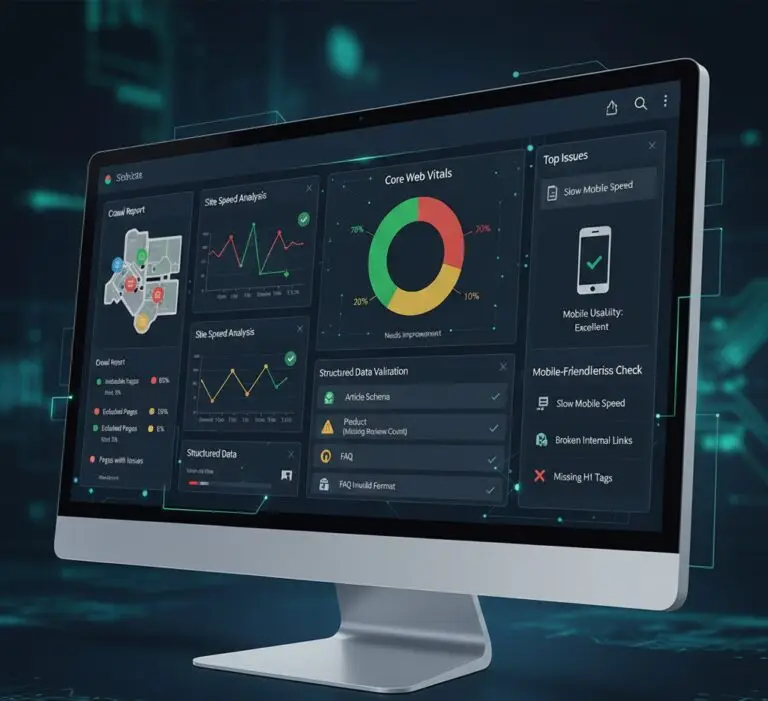
In the modern digital landscape, having a website is no longer enough. To succeed online, your site must not only provide valuable content but also perform efficiently, load quickly, and be optimized for search engines. This is where technical SEO auditing becomes essential.
Technical SEO auditing is the process of examining your website’s backend structure, performance, and technical elements to ensure it meets search engine requirements. A thorough audit can identify issues that affect crawlability, indexing, user experience, and ranking potential.
This guide provides an in-depth look at technical SEO auditing, its components, tools, best practices, and actionable strategies to help your website perform at its best.
What is Technical SEO Auditing?
Technical SEO auditing is the process of analyzing a website to identify and fix technical issues that may prevent search engines from crawling, indexing, and ranking the site effectively. Unlike on-page or off-page SEO, which focuses on content and backlinks, technical SEO targets the backend elements of a website, including:
- Site architecture and navigation
- Page speed and performance
- Mobile responsiveness
- Security protocols
- Structured data and schema markup
A well-executed technical SEO audit ensures that your site is search engine friendly, improves user experience, and enhances overall visibility.
Why Technical SEO Auditing is Important
A technical SEO audit is critical for several reasons:
- Improves Crawlability and Indexing
Search engines use bots to crawl your website. Technical issues like broken links, duplicate content, or poorly structured URLs can hinder this process, affecting your rankings. - Enhances Page Speed and Performance
Slow-loading websites lead to higher bounce rates and lower rankings. Technical audits identify elements slowing your site down, enabling optimization. - Boosts Mobile Usability
With mobile-first indexing, search engines prioritize mobile-friendly sites. Technical audits ensure responsive design, proper viewport settings, and fast mobile performance. - Ensures Security
HTTPS, secure certificates, and safe browsing are essential for user trust and search engine ranking. - Supports SEO Strategy
A technical audit highlights underlying issues, guiding content, on-page, and link-building strategies effectively.
Key Components of a Technical SEO Audit
A complete technical SEO audit covers several essential areas.
1. Site Crawl and Indexing
- Check Crawlability: Use tools like Google Search Console or Screaming Frog to see how search engines crawl your site.
- Identify Broken Links (404 Errors): Broken internal or external links affect user experience and search engine trust.
- XML Sitemap Analysis: Ensure your sitemap is updated and submitted to Google and Bing.
- Robots.txt File: Check if any essential pages are being blocked unintentionally.
2. Site Architecture and URL Structure
- Logical Hierarchy: Pages should follow a clear hierarchy (Home > Category > Subcategory > Page).
- URL Optimization: URLs should be short, descriptive, and include relevant keywords.
- Breadcrumbs: Help users navigate and improve internal linking.
- Canonicalization: Avoid duplicate content by implementing proper canonical tags.
3. Page Speed and Performance
Page speed is a ranking factor and affects user experience. Audit your website for:
- Core Web Vitals: Measure Largest Contentful Paint (LCP), First Input Delay (FID), and Cumulative Layout Shift (CLS).
- Image Optimization: Compress images without losing quality.
- Browser Caching and Minification: Reduce load times by minifying CSS, JS, and HTML.
- Server Response Time: Ensure hosting is fast and reliable.
Tools like Google PageSpeed Insights, GTMetrix, and Pingdom are essential for performance auditing.
4. Mobile-Friendliness
With mobile-first indexing, mobile optimization is crucial:
- Responsive Design: Ensure the site adapts to different screen sizes.
- Viewport Configuration: Properly set viewport for mobile devices.
- Touch-Friendly Elements: Buttons and menus must be easily clickable.
- Mobile Page Speed: Mobile users expect fast-loading pages; optimize accordingly.
5. Security and HTTPS
Security signals are important for search rankings and user trust:
- SSL Certificate: Ensure HTTPS is enabled across the website.
- No Mixed Content: Avoid pages loading both HTTP and HTTPS elements.
- Secure Login Pages: Protect user data with strong encryption.
- Regular Updates: Keep CMS, plugins, and scripts up to date to prevent vulnerabilities.
6. Structured Data and Schema Markup
Structured data helps search engines understand your content and display rich snippets:
- Schema Types: Implement Article, Product, Event, Review, or LocalBusiness schemas where relevant.
- Validation Tools: Use Google Rich Results Test to verify structured data.
- Breadcrumb and FAQ Markup: Improve SERP appearance and click-through rates.
7. Duplicate Content and On-Page Issues
Duplicate content can dilute ranking potential:
- Canonical Tags: Prevent duplicate content issues with canonicalization.
- Meta Tags: Check for missing or duplicate title tags, meta descriptions, and header tags.
- Thin Content: Ensure pages have sufficient, high-quality content.
8. Internal Linking and Navigation
A strong internal linking strategy improves crawlability and user experience:
- Logical Link Hierarchy: Ensure main pages link to subpages naturally.
- Anchor Text: Use descriptive anchor text to help search engines understand linked pages.
- Orphan Pages: Identify pages not linked internally and incorporate them into site navigation.
9. Analytics and Tracking
A technical SEO audit includes ensuring proper tracking:
- Google Analytics / GA4 Setup: Check if analytics code is correctly installed.
- Google Search Console: Ensure all important pages are indexed and no errors are reported.
- Event Tracking: Monitor clicks, conversions, and user behavior.
Accurate tracking allows for data-driven SEO decisions.
Technical SEO Audit Tools
Several tools simplify technical SEO audits:
- Screaming Frog SEO Spider: Crawl websites for broken links, redirects, duplicate content, and more.
- Google Search Console: Monitor indexing, crawl errors, and performance metrics.
- Ahrefs / SEMrush: Identify technical issues, backlink profile, and competitor insights.
- GTMetrix / Google PageSpeed Insights: Analyze page speed and performance.
- Sitebulb: Advanced auditing for structured data, internal linking, and content issues.
- DeepCrawl: Comprehensive site crawl and technical SEO monitoring.
Using a combination of these tools ensures a thorough audit.
Steps to Perform a Technical SEO Audit
- Crawl Your Website: Identify broken links, redirects, and page structure issues.
- Check Indexing: Ensure all important pages are indexed and accessible to search engines.
- Analyze Site Speed: Test page load times and optimize performance.
- Review Mobile Usability: Ensure responsiveness and fast mobile experience.
- Audit Security: Verify HTTPS, SSL certificates, and protection against vulnerabilities.
- Check Structured Data: Implement schemas and rich snippets.
- Evaluate On-Page SEO: Review meta tags, header structure, and content quality.
- Review Internal Linking: Ensure proper navigation and eliminate orphan pages.
- Monitor Analytics: Validate tracking codes and analyze user behavior data.
- Prioritize Issues: Create an action plan based on severity and impact.
Benefits of a Regular Technical SEO Audit
- Improved Search Rankings: Fixing issues boosts visibility on search engines.
- Enhanced User Experience: Faster, secure, and mobile-friendly sites keep users engaged.
- Reduced Bounce Rates: Proper technical optimization encourages users to stay longer.
- Higher Conversion Rates: Technical SEO supports business goals through better usability.
- Long-Term Growth: Continuous audits ensure the website remains competitive.
Common Technical SEO Issues to Watch For
- Broken Links and Redirects – Affect crawlability and UX.
- Duplicate Content – Confuses search engines and dilutes ranking.
- Slow Page Speed – Leads to higher bounce rates.
- Missing Structured Data – Reduces chances for rich snippets.
- Non-Mobile-Friendly Pages – Poor experience on mobile devices.
- Indexing Errors – Important pages not appearing in search results.
- Server Issues or Downtime – Impacts search engine trust and user access.
Conclusion
Technical SEO auditing is an essential component of any comprehensive SEO strategy. By evaluating and optimizing site structure, performance, mobile usability, security, and indexing, businesses can improve search engine visibility, enhance user experience, and achieve long-term growth.
A systematic technical audit, combined with continuous monitoring, ensures that your website remains search engine friendly, fast, and secure, helping you stay ahead of competitors in an increasingly digital world.