
In the digital era, having a website is essential for businesses, bloggers, and entrepreneurs. However, just having a website is not enough—it must be optimized for search engines to attract traffic, generate leads, and achieve business goals. This is where the concept of an SEO website comes into play.
An SEO website is designed, structured, and maintained to improve its visibility in search engines like Google, Bing, and Yahoo. Unlike ordinary websites, an SEO website focuses on organic traffic, user experience, and search engine rankings, ensuring that your target audience can easily find your business online.
In this article, we will explore what an SEO website is, why it’s important, its key features, best practices, and how it can transform your online presence.
What Is an SEO Website?

An SEO website is a website built and optimized following best practices in Search Engine Optimization (SEO). Its main goal is to rank higher in search engine results pages (SERPs) and attract relevant organic traffic.
Key aspects of an SEO website include:
- Keyword Optimization – Using relevant keywords naturally throughout your website content.
- High-Quality Content – Informative, engaging, and valuable content for users.
- Technical SEO – Ensuring your site is crawlable, fast, and mobile-friendly.
- Link Building – Gaining authoritative backlinks from other websites.
- User Experience (UX) – Making navigation intuitive, design appealing, and pages easy to read.
Essentially, an SEO website is designed to serve both users and search engines, balancing content quality, technical health, and strategic optimization.
Why Having an SEO Website Is Important
An SEO website is not just about ranking on Google—it impacts your business in multiple ways:
1. Increased Organic Traffic
SEO websites attract users actively searching for your products or services, resulting in high-intent traffic. Unlike paid ads, organic traffic is earned and sustainable over time.
2. Better User Experience
SEO requires improving site speed, mobile responsiveness, and navigation. This enhances the experience for visitors, increasing engagement and conversions.
3. Higher Brand Visibility and Credibility
Websites that rank high in SERPs are perceived as more trustworthy and authoritative. An SEO website builds credibility and brand awareness.
4. Long-Term Marketing ROI
SEO is a long-term investment. While results take time, the impact of an optimized website continues to grow, providing sustainable returns on investment.
5. Competitive Advantage
If your competitors are investing in SEO and you are not, you risk losing traffic and customers. An SEO website ensures that your business remains competitive in the digital space.
Key Features of an SEO Website
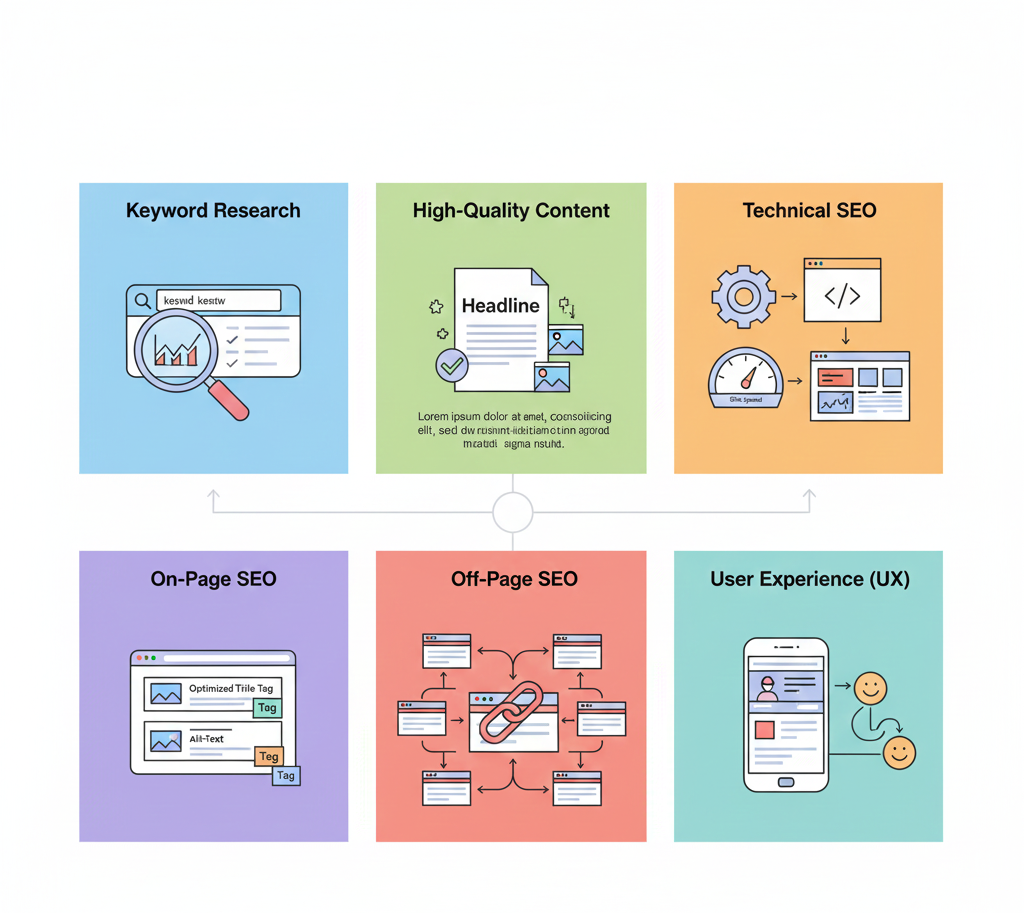
Creating an SEO website involves multiple components. Here’s what makes a website SEO-friendly:
1. Keyword Research and Optimization
- Identify keywords your target audience uses.
- Include primary and secondary keywords in titles, headings, content, URLs, and meta tags.
- Avoid keyword stuffing—focus on natural integration.
2. High-Quality Content
- Provide informative, original, and engaging content.
- Use blog posts, guides, videos, infographics, and FAQs to address user intent.
- Update content regularly to maintain relevance.
3. Technical SEO
- Ensure fast page loading (under 3 seconds).
- Mobile-first design for smartphones and tablets.
- Use a clear site hierarchy and navigation.
- Implement structured data and XML sitemaps for search engines.
4. On-Page SEO Elements
- Meta titles and descriptions optimized for search engines.
- Proper use of headings (H1, H2, H3) to structure content.
- Alt text for images to improve accessibility and image search visibility.
5. Off-Page SEO
- Building quality backlinks from reputable websites.
- Encouraging social sharing and brand mentions.
- Influencer collaborations and partnerships to expand reach.
6. User Experience (UX)
- Easy-to-use menus and internal linking structure.
- Clean design with readable fonts and colors.
- Clear call-to-actions (CTAs) guiding users toward conversion.
How an SEO Website Helps Your Business
An SEO website can transform your online presence and business growth in several ways:
1. Increases Leads and Sales
By ranking for relevant keywords, your website attracts potential customers actively searching for your products or services, resulting in higher conversions.
2. Reduces Marketing Costs
While SEO requires investment, it reduces dependence on paid advertising by generating organic, long-term traffic.
3. Provides Data and Insights
SEO websites allow you to track user behavior, popular pages, bounce rates, and conversion rates. This data helps optimize your marketing strategy further.
4. Enhances Brand Authority
Websites consistently ranking in top positions are viewed as experts and leaders in their industry.
5. Supports Other Marketing Channels
A well-optimized website improves the performance of email campaigns, social media, and paid ads because visitors land on a fast, credible, and informative site.
Best Practices for Building an SEO Website
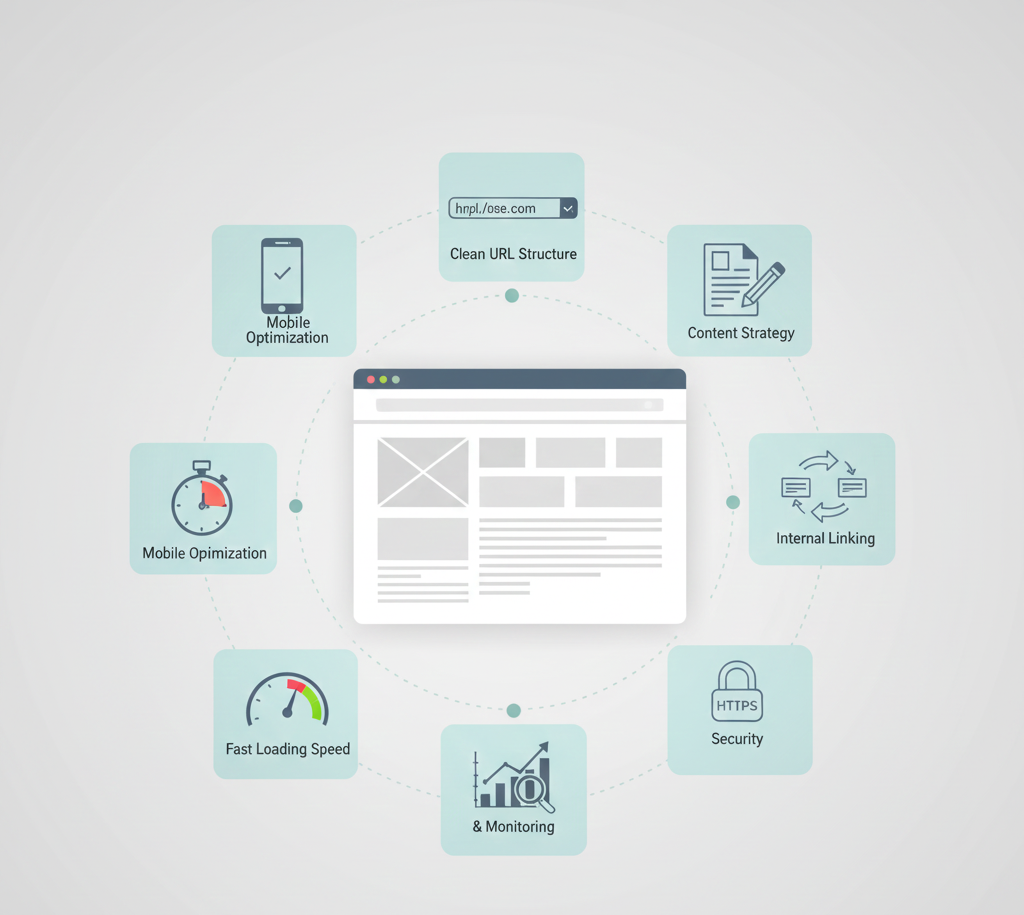
To ensure your website is fully SEO-friendly, follow these best practices:
1. Mobile Optimization
Over 60% of searches come from mobile devices. Ensure responsive design and fast mobile loading speeds.
2. Fast Loading Speed
Use caching, optimized images, and reliable hosting to improve page speed, which is a ranking factor for search engines.
3. Clean URL Structure
Use short, descriptive URLs that include keywords and are easy to read. Example:www.yourwebsite.com/seo-tips
4. Content Strategy
Create content targeting different stages of the buyer journey:
- Awareness (informative blog posts)
- Consideration (product comparisons, guides)
- Decision (reviews, case studies, landing pages)
5. Internal Linking
Link relevant pages within your website to improve user navigation and SEO crawlability.
6. Secure Website (HTTPS)
An HTTPS website is more trusted by users and search engines alike. Security also improves search rankings.
7. Analytics and Monitoring
Use tools like Google Analytics, Google Search Console, and Ahrefs to track performance, detect issues, and refine strategies.
Common Mistakes to Avoid in an SEO Website
- Duplicate content across pages
- Slow-loading websites
- Ignoring mobile optimization
- Poor site navigation
- Lack of keyword research and targeting
- Not updating content regularly
Avoiding these mistakes ensures that your website performs well in search results and provides a better experience for users.
Examples of Effective SEO Websites
- E-commerce websites: Amazon, Zalando – optimized for product searches, high-speed performance, structured data.
- Service-based websites: HubSpot, Moz – clear content, resource-rich blogs, high authority backlinks.
- Local businesses: Restaurants, salons, and clinics – optimized for local SEO with Google Business profiles and local keywords.
Each of these websites demonstrates how SEO improves visibility, trust, and engagement.
The Future of SEO Websites

SEO websites will continue evolving with trends such as:
- Voice search optimization – websites structured for natural language queries.
- AI-powered content and search – using AI tools to improve content relevance.
- Core Web Vitals – focusing on page speed, interactivity, and visual stability.
- Mobile-first indexing – prioritizing mobile versions of websites.
- Video and visual content optimization – images, infographics, and video SEO.
Businesses that adopt these trends will maintain a competitive edge in search rankings.
Conclusion
A well-optimized SEO website is no longer optional—it’s a critical asset for any business or brand in the digital age. By combining keyword research, content strategy, technical SEO, and user experience enhancements, an SEO website can:
- Attract high-quality organic traffic
- Improve brand visibility and credibility
- Generate leads and sales
- Reduce marketing costs
- Provide actionable insights for business growth
Investing in an SEO website ensures that your online presence is discoverable, competitive, and sustainable, helping you reach your audience and achieve your business goals.
Whether you are a small business, e-commerce store, or a service provider, building an SEO website is a strategic investment in your digital future.