Introduction
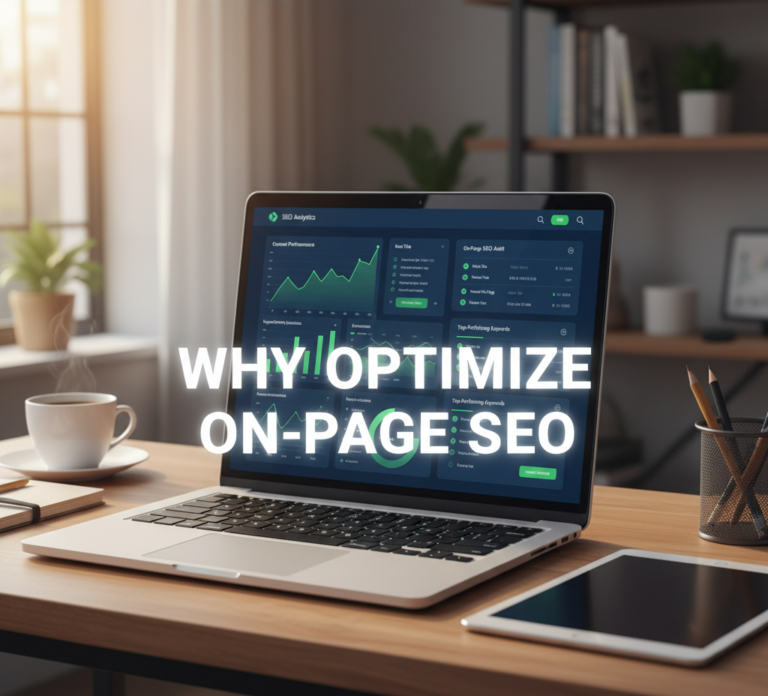
In the world of digital marketing, understanding why optimize on-page SEO is no longer optional—it’s essential. On-page SEO refers to the strategies and practices applied directly on your website to improve search engine rankings, user experience, and overall content performance. Unlike off-page SEO, which focuses on backlinks and external signals, on-page SEO ensures that every element of your website communicates value to both users and search engines.
For businesses, bloggers, and marketers, failing to optimize on-page SEO can result in poor visibility, low traffic, and missed opportunities. Conversely, mastering on-page SEO can significantly enhance your website’s reach, authority, and profitability.
What Is On-Page SEO?
On-page SEO encompasses all techniques applied directly to your website pages to make them more understandable, accessible, and relevant for search engines and users. It ensures that your website conveys its purpose clearly while delivering an engaging experience for visitors.
Key Elements of On-Page SEO
- Title Tags: The clickable headline that appears in search results.
- Meta Descriptions: Short summaries that attract clicks from search engine users.
- Header Tags (H1, H2, H3…): Organize content into logical, readable sections.
- URL Structure: Clean, descriptive, and keyword-rich URLs.
- Internal Linking: Guides visitors and distributes authority across your site.
- Content Quality: Well-researched, engaging, and original content.
- Image Optimization: Proper file names, alt text, and sizes for fast loading.
- Keyword Placement: Target and related keywords naturally integrated into content.
By combining these elements effectively, you make it easier for search engines to crawl, understand, and rank your pages.
Why Optimize On-Page SEO: Key Reasons
Optimizing on-page SEO has several critical benefits for your website:
1. Improve Search Engine Rankings
Search engines like Google analyze page content, structure, and relevance to determine rankings. Optimized pages with clear titles, headings, and keyword placement send strong signals about the topic of your page. Higher relevance leads to higher positions in search results.
2. Enhance User Experience
On-page SEO is not just about search engines—it’s about the users. A website with fast loading speed, clear navigation, and structured content keeps visitors engaged, reduces bounce rates, and increases the likelihood of conversions.
3. Drive More Organic Traffic
Properly optimized pages appear more often in search results for target keywords, which increases organic traffic. This sustainable approach to attracting visitors reduces dependence on paid advertising.
4. Improve Click-Through Rates (CTR)
Well-crafted title tags and meta descriptions increase CTR from search results. Higher CTR is a positive signal to search engines, which can further improve your ranking over time.
5. Boost Conversions
On-page SEO ensures that users land on pages with clear information and calls to action. Optimized content leads visitors toward desired actions, whether it’s signing up for a newsletter, making a purchase, or requesting a quote.
6. Build Authority and Credibility
High-quality, optimized content signals expertise and trustworthiness to both users and search engines. This builds your site’s authority in your niche, which can positively affect rankings and user loyalty.
Core Components of On-Page SEO
To fully understand why optimize on-page SEO, let’s explore its main components in detail.
1. Content Optimization
Content is the backbone of on-page SEO. Quality content:
- Addresses user intent
- Includes target keywords naturally
- Covers topics comprehensively
- Uses structured formatting for readability
Pro Tip: Break content into sections using H2 and H3 headers. Use bullet points, tables, or numbered lists for clarity.
2. URL Structure
- Keep URLs short, descriptive, and keyword-rich.
- Avoid long strings of numbers or symbols.
- Example:
www.example.com/on-page-seo-guideinstead ofwww.example.com/page?id=12345.
A clean URL improves user experience and makes it easier for search engines to understand the page topic.
3. Header Tags
Header tags organize content for both readers and search engines:
- H1: Main page title (unique per page)
- H2: Primary subheadings
- H3: Secondary subheadings or detailed points
Proper header hierarchy improves readability and content comprehension.
4. Internal and External Links
Internal linking connects related pages within your website, helping users navigate and distributing SEO authority. External linking to authoritative sources adds credibility and context to your content.
5. Image and Multimedia Optimization
- Compress images for faster loading
- Use descriptive file names and alt text
- Include videos or infographics to boost engagement
Optimized media improves SEO and makes content more interactive.
6. Mobile-Friendliness
With most traffic coming from mobile devices, a responsive website is critical. Google prioritizes mobile-friendly pages, making this a crucial aspect of on-page SEO.
7. Page Speed
Slow pages harm user experience and rankings. Tools like Google PageSpeed Insights or GTmetrix can help identify speed issues. Optimizing images, reducing unnecessary scripts, and using caching can significantly improve load times.
Advanced On-Page SEO Techniques
1. LSI Keywords
Latent Semantic Indexing (LSI) keywords are related terms that help search engines understand context. Using LSI keywords improves relevance and reduces keyword stuffing.
Example: For “on-page SEO,” LSI keywords might include “meta tags,” “content optimization,” or “internal linking.”
2. Schema Markup
Adding schema markup (structured data) enhances search result snippets with rich information such as ratings, events, and FAQs. Rich snippets often increase CTR.
3. Optimizing for Featured Snippets
Structure content to answer questions clearly and concisely. Use bullet points, numbered lists, and direct answers to capture Google’s featured snippet spots.
4. Content Clustering
Group related content around a central pillar page to improve topical authority. Link all related articles to the main pillar page.
Benefits of Optimizing On-Page SEO
- Higher Rankings: Optimized pages are more likely to rank on page one of search results.
- Increased Traffic: Visibility for relevant keywords drives organic traffic consistently.
- Improved Engagement: Clear structure, multimedia, and headings enhance user experience.
- Better Conversions: Optimized content guides users toward desired actions.
- Reduced Bounce Rates: Fast-loading, mobile-friendly pages keep users on site longer.
- Competitive Advantage: Well-optimized pages outperform competitors who neglect on-page SEO.
Tools for On-Page SEO
Several tools can help you analyze and optimize on-page SEO efficiently:
- Google Search Console: Tracks indexing, performance, and keyword rankings.
- Yoast SEO / Rank Math: Helps optimize meta tags, headings, and readability.
- SEMrush / Ahrefs: Analyzes keyword usage, competitor SEO, and page performance.
- Screaming Frog: Audits internal links, URLs, and metadata.
- GTmetrix / PageSpeed Insights: Measures page speed and performance.
Common Mistakes in On-Page SEO
- Keyword Stuffing: Overloading content with keywords reduces readability and can lead to penalties.
- Duplicate Content: Copying content across pages can harm rankings.
- Ignoring Mobile Optimization: A non-responsive site loses mobile traffic and rankings.
- Poor URL and Header Structure: Unclear URLs and missing headers reduce clarity.
- Skipping Internal Linking: Missing links decreases navigation efficiency and authority distribution.
- Neglecting Multimedia Optimization: Large, unoptimized images slow down pages.
Avoiding these mistakes ensures your on-page SEO strategy is effective.
Case Study: On-Page SEO Success
A website in the health niche optimized their on-page SEO for a blog about “healthy meal planning”:
- Added relevant keywords naturally in titles, headers, and body text
- Compressed images and added alt text
- Used internal links to related articles
- Structured content with H2/H3 headers and bullet points
Result: Within 3 months, organic traffic increased by 60%, and the blog ranked on the first page for multiple high-volume keywords. This demonstrates the power of effective on-page SEO.
Step-by-Step Guide to Optimizing On-Page SEO
- Perform Keyword Research: Identify primary and related keywords.
- Optimize Titles and Meta Descriptions: Include keywords naturally.
- Use Proper Header Structure: Organize content for readability.
- Create High-Quality Content: Cover the topic in detail with examples.
- Optimize URLs: Keep them short, descriptive, and keyword-rich.
- Add Internal and External Links: Support content and navigation.
- Optimize Images and Multimedia: Ensure fast loading and accessibility.
- Check Mobile-Friendliness: Use responsive design for all devices.
- Monitor Performance: Use Google Search Console and analytics tools.
- Update Regularly: Refresh content to maintain relevance and rankings.
Frequently Asked Questions (FAQ)
Why is on-page SEO important?
On-page SEO improves rankings, enhances user experience, drives organic traffic, and supports conversion goals.
How long does it take to see results?
Results usually appear within a few weeks to several months, depending on competition and website authority.
Can on-page SEO work without backlinks?
Yes. Optimized content, structure, and user experience can boost rankings even before acquiring backlinks.
How often should I update on-page SEO?
Regularly—especially when adding new content, updating keywords, or improving site performance.
What’s the difference between on-page and off-page SEO?
On-page SEO focuses on elements within your website, while off-page SEO involves external signals like backlinks and social mentions.
Conclusion
Understanding why optimize on-page SEO is essential for anyone serious about building a strong online presence. Properly optimized pages improve search rankings, attract targeted organic traffic, enhance user experience, and increase conversions.
From keyword research and content structure to multimedia optimization and mobile responsiveness, on-page SEO touches every aspect of your website. Neglecting it can result in lost traffic and lower visibility, while mastering it ensures sustainable growth and competitive advantage.
By following best practices, leveraging tools, and continuously refining your strategy, your website can achieve long-term success. Optimizing on-page SEO is more than a technical requirement—it’s the foundation for digital authority, engagement, and revenue growth.