
In today’s digital-first world, having a website is no longer enough. Businesses must ensure their website is visible, discoverable, and competitive in search engines. This is where Search Engine Optimization (SEO) becomes essential. Whether you run a small local business or a global enterprise, understanding why SEO is important for business can determine your long-term success.
SEO is not just about ranking higher on Google—it’s about attracting the right audience, building trust, increasing conversions, and creating a sustainable online presence. This article explains in detail why SEO matters, how it benefits businesses of all sizes, and why it should be a core part of your digital marketing strategy.
What Is SEO?
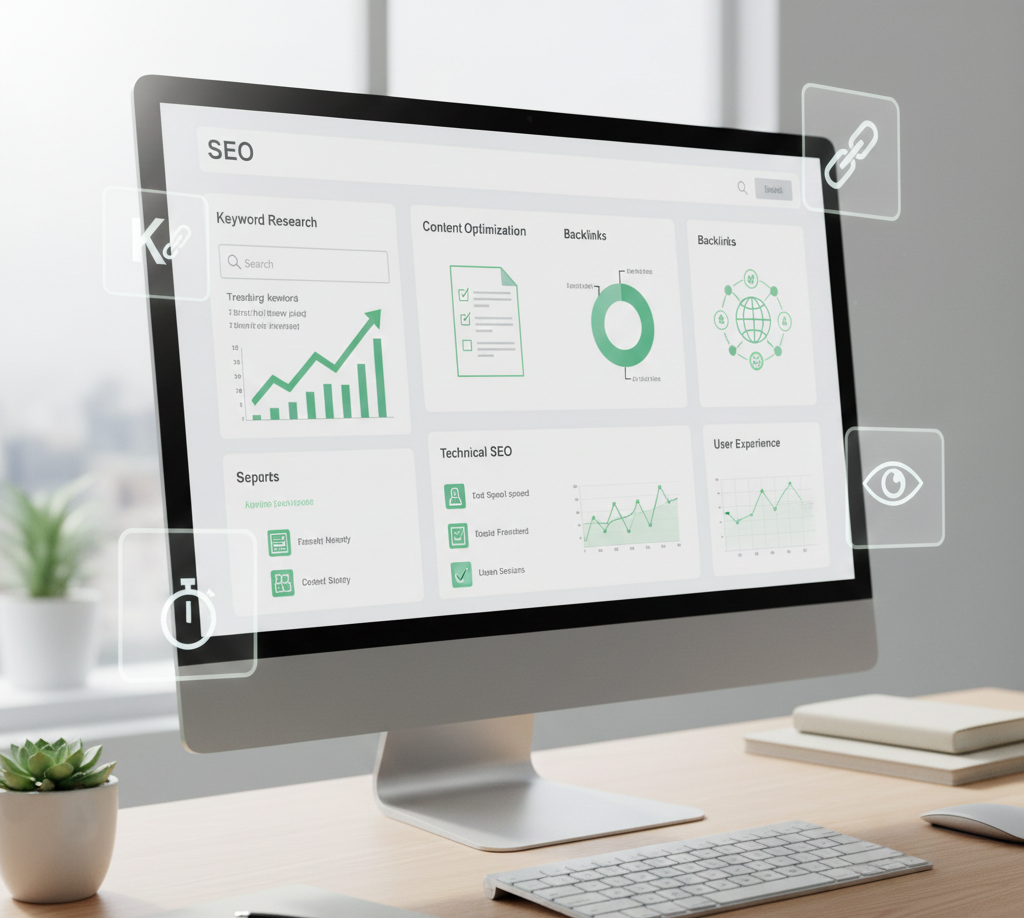
Search Engine Optimization (SEO) is the process of optimizing your website to improve its visibility in search engine results pages (SERPs). It involves a combination of:
- Keyword research
- Content optimization
- Technical website improvements
- Link building
- User experience enhancements
The goal of SEO is to attract organic (non-paid) traffic from search engines like Google, Bing, and Yahoo.
Why SEO Is Important for Business Success
1. SEO Increases Online Visibility and Brand Awareness
Most online experiences begin with a search engine. If your business does not appear on the first page of search results, you are missing valuable opportunities.
Key Benefits:
- Higher rankings lead to increased visibility
- More impressions build brand recognition
- Users trust brands they see consistently in search results
When your website ranks for relevant keywords, potential customers become familiar with your brand—even before they make a purchase decision.
2. SEO Drives High-Quality Organic Traffic

SEO targets users who are actively searching for products, services, or information related to your business.
Why Organic Traffic Matters:
- Visitors have high intent
- Better engagement rates
- Higher conversion potential
Unlike paid ads, SEO traffic is earned, not bought. This makes it more valuable and sustainable over time.
3. SEO Builds Trust and Credibility
Users trust search engines. Websites that rank at the top are perceived as more credible and authoritative.
SEO helps build trust through:
- High-quality content
- Secure websites (HTTPS)
- Mobile optimization
- Fast loading speeds
- Backlinks from reputable sources
A well-optimized website signals professionalism and reliability, which directly impacts customer trust.
4. SEO Delivers Long-Term Results and ROI
One of the biggest reasons SEO is important for business is its long-term value.
SEO vs Paid Advertising:
- Paid ads stop when the budget ends
- SEO continues driving traffic long after optimization
- Lower cost per acquisition over time
Although SEO requires upfront investment, the return on investment (ROI) increases significantly as rankings improve and traffic grows consistently.
5. SEO Helps You Understand Your Customers Better

SEO tools provide valuable insights into customer behavior, including:
- What keywords they search
- How they interact with your website
- Which pages perform best
- Where users drop off
This data helps businesses:
- Improve content strategies
- Optimize user experience
- Align products and services with demand
SEO turns data into actionable business intelligence.
6. SEO Improves User Experience (UX)
Search engines prioritize websites that provide excellent user experiences. As a result, SEO encourages businesses to improve:
- Page speed
- Mobile responsiveness
- Clear navigation
- Content readability
- Accessibility
A better user experience leads to:
- Lower bounce rates
- Longer session durations
- Higher conversions
SEO and UX work together to create a seamless customer journey.
7. SEO Is Cost-Effective Marketing
Compared to traditional advertising, SEO is one of the most cost-effective digital marketing strategies.
Why SEO Saves Money:
- No cost per click
- Targets users already searching for solutions
- Long-lasting results
Small and medium-sized businesses can compete with larger brands by targeting niche keywords and local search terms.
8. SEO Supports Content Marketing Strategies
SEO and content marketing go hand in hand. High-quality, optimized content helps businesses:
- Rank for informational and transactional keywords
- Educate customers
- Build authority in their industry
Examples of SEO-driven content:
- Blog posts
- Guides and tutorials
- Product pages
- FAQs
- Case studies
Well-optimized content continues attracting traffic and leads over time.
9. SEO Gives You a Competitive Advantage
If your competitors are investing in SEO and you are not, you are falling behind. If they are not investing, SEO gives you a chance to dominate.
SEO helps businesses:
- Identify competitor keywords
- Analyze backlink strategies
- Discover content gaps
- Capture market share
A strong SEO strategy allows you to outperform competitors in search results.
10. SEO Is Essential for Local Businesses
Local SEO helps businesses appear in location-based searches such as:
- “best restaurant near me”
- “SEO agency in [city]”
- “plumber near me”
Local SEO benefits include:
- Google Business Profile visibility
- Increased foot traffic
- Higher local conversions
For service-based and brick-and-mortar businesses, local SEO is critical for growth.
How SEO Impacts Different Types of Businesses
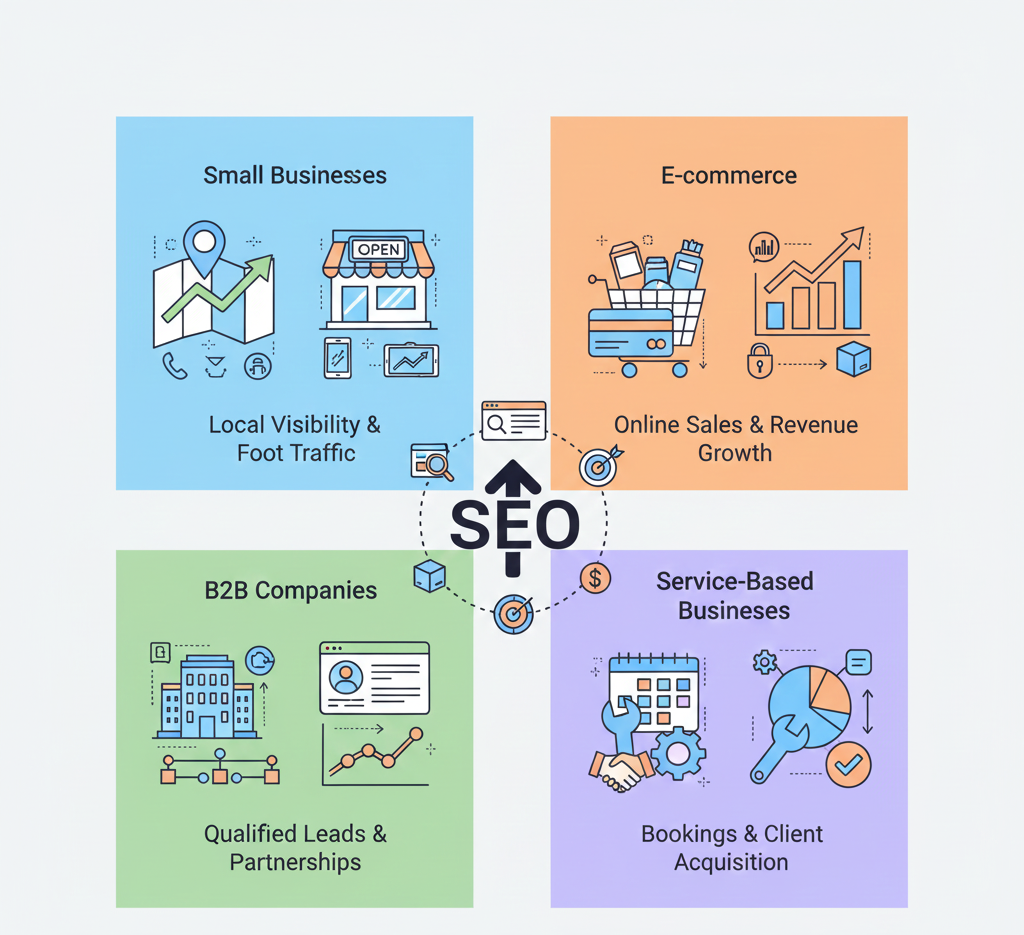
Small Businesses
- Affordable lead generation
- Brand visibility without large budgets
- Competing with larger companies
E-commerce Businesses
- Product page visibility
- Higher sales from organic traffic
- Reduced dependence on paid ads
B2B Companies
- Long sales cycle support
- Lead nurturing through content
- Authority building in niche markets
Service-Based Businesses
- High-intent traffic
- Local search dominance
- Increased inquiries and bookings
Key Components of an Effective SEO Strategy
On-Page SEO
- Keyword optimization
- Meta titles and descriptions
- Internal linking
- Content structure
Technical SEO
- Website speed optimization
- Mobile-first design
- Crawlability and indexing
- Secure HTTPS setup
Off-Page SEO
- Backlink building
- Brand mentions
- Social signals
Content SEO
- High-quality, original content
- Search intent matching
- Regular updates
Common SEO Myths Businesses Should Avoid
- ❌ SEO delivers instant results
- ❌ SEO is a one-time task
- ❌ Keyword stuffing improves rankings
- ❌ SEO is only about Google
SEO is an ongoing, strategic process that evolves with search engine algorithms and user behavior.
Measuring SEO Success
To understand the impact of SEO, businesses should track:
- Organic traffic growth
- Keyword rankings
- Conversion rates
- Bounce rate and engagement
- ROI from organic leads
Tools like Google Analytics, Google Search Console, Ahrefs, and SEMrush help measure performance accurately.
Why SEO Is a Long-Term Business Asset
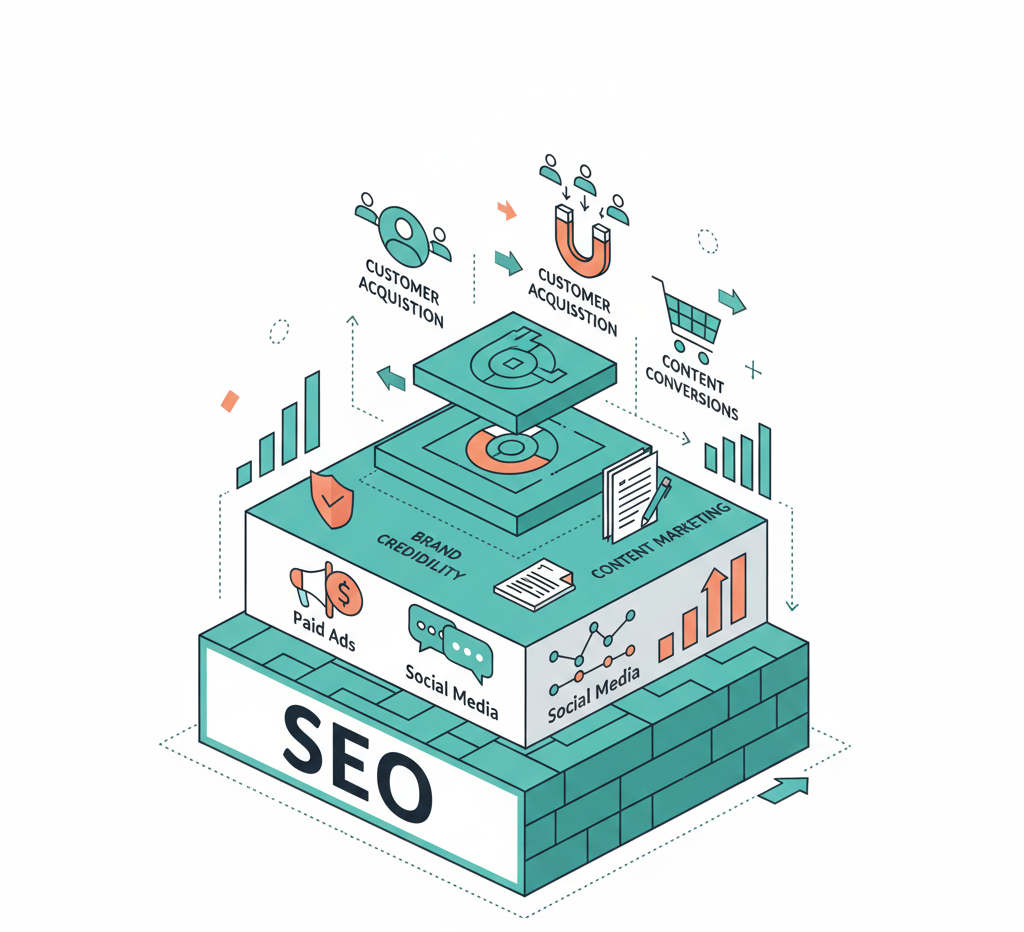
SEO builds a digital foundation that supports every aspect of online marketing. It enhances:
- Paid advertising performance
- Social media visibility
- Brand credibility
- Customer acquisition
Unlike short-term tactics, SEO compounds over time, delivering sustainable growth.
The Future of SEO for Businesses
SEO continues to evolve with trends such as:
- Voice search optimization
- AI-powered search
- Mobile-first indexing
- User intent-focused content
- Core Web Vitals
Businesses that adapt early will gain a significant advantage.
Conclusion: Why SEO Is Important for Business Growth
SEO is no longer optional—it is a critical investment for business success. It increases visibility, builds trust, drives high-quality traffic, and delivers long-term ROI. Whether you want more leads, sales, or brand recognition, SEO provides a scalable and sustainable solution.
By prioritizing SEO, businesses position themselves where customers are already searching. In an increasingly competitive digital marketplace, SEO is the key to staying relevant, visible, and profitable.