
Table of Contents
- Introduction
- What Does SEO Stand for in Marketing?
- The Evolution of SEO in Digital Marketing
- Why SEO Matters in Today’s Marketing Landscape
- Key Components of SEO in Marketing
- SEO vs SEM vs Social Media Marketing
- How to Build an Effective SEO Marketing Approach
- Practical Tips for Success
- Real Benefits of Strong SEO Marketing
- Frequently Asked Questions (FAQ)
- Conclusion
Introduction
In the fast-moving world of digital marketing, new terms appear almost daily. Many business owners and beginners get confused about the different strategies available. One question that comes up often is what does SEO stand for in marketing.
If you’re trying to grow your business online, understanding this core concept is essential. In this guide, we’ll explain everything clearly and simply so you can see how SEO fits into your overall marketing efforts and how you can start using it effectively.
What Does SEO Stand for in Marketing?
SEO stands for Search Engine Optimization. In marketing, it refers to the practice of improving your website and online content so that it ranks higher in search engine results pages (like Google) when potential customers search for relevant topics, products, or services.
Unlike paid advertising, SEO focuses on earning organic visibility. It’s a long-term marketing strategy that helps your business get discovered naturally by people who are actively looking for what you offer.
Bold truth: SEO has become one of the most powerful and cost-effective tools in digital marketing because it targets users with real intent.
The Evolution of SEO in Digital Marketing
SEO has changed significantly over the years. Early SEO was mostly about stuffing keywords into pages. Today, it’s much more sophisticated.
Modern search engines focus on user experience, content quality, expertise, and how well your site answers real questions. In marketing terms, SEO now works hand-in-hand with content marketing, user experience design, and brand building.
This evolution makes SEO a central part of any smart marketing plan rather than just a technical afterthought.
Why SEO Matters in Today’s Marketing Landscape
Search engines are often the first place people go when they need information or want to buy something. A strong SEO presence means you can:
- Reach highly targeted audiences
- Build credibility and trust
- Reduce dependence on paid ads
- Create sustainable, long-term traffic
With increasing competition and rising advertising costs, businesses that invest in SEO marketing gain a significant advantage. They appear in front of customers at the exact moment those customers are searching.
Key Components of SEO in Marketing
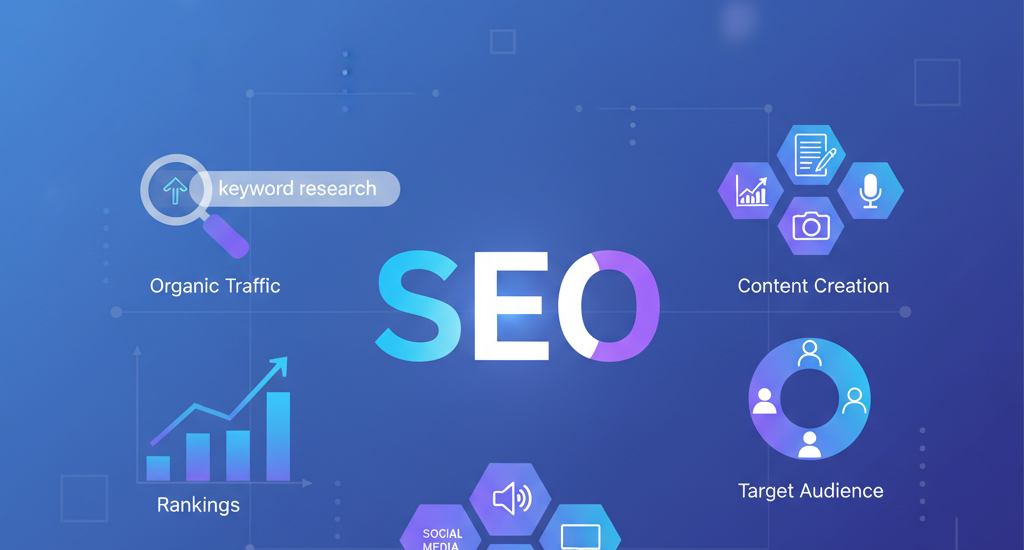
Effective SEO in marketing includes several important areas:
- Keyword Research: Finding the right terms and questions your audience uses.
- Content Creation: Producing helpful, valuable material that matches search intent.
- Technical Optimization: Making sure your site is fast, secure, and easy to navigate.
- On-Page SEO: Optimizing titles, headings, meta descriptions, and content structure.
- Off-Page SEO: Building authority through backlinks and brand mentions.
- Local SEO: Optimizing for customers searching in specific locations.
- Analytics and Measurement: Tracking performance and making improvements.
SEO vs SEM vs Social Media Marketing
It’s easy to mix these up. Here’s a simple comparison:
- SEO (Search Engine Optimization): Free organic results through website improvements.
- SEM (Search Engine Marketing): Usually refers to paid search advertising (like Google Ads).
- Social Media Marketing: Promoting through platforms like Instagram, Facebook, and LinkedIn.
While all three are important, SEO often provides the best long-term return because the traffic keeps coming even after you stop active work.
How to Build an Effective SEO Marketing Approach
You don’t need to be an expert to get started. Follow these practical steps:
- Define your marketing goals clearly.
- Understand your target audience and their search behavior.
- Research relevant keywords and topics.
- Create high-quality content that genuinely helps people.
- Optimize your website technically and on-page.
- Promote your content ethically to earn shares and links.
- Measure results and adjust your strategy regularly.
Numbered list for getting started:
- Claim your Google Search Console account.
- Write 2-3 helpful articles targeting clear questions.
- Optimize your most important service or product pages.
- Ensure your site works perfectly on mobile devices.
- Review performance monthly and keep improving.
Practical Tips for Success
Here are some actionable tips that actually work:
- Always prioritize user experience over search engine tricks.
- Write in a natural, conversational tone.
- Update older content regularly to keep it fresh.
- Focus on building topical authority in your niche.
- Be patient — SEO results build gradually but last longer.
- Combine SEO with other marketing channels for better outcomes.
Italic highlight: The most successful SEO marketing strategies focus on helping people first and ranking second.
Real Benefits of Strong SEO Marketing
Businesses that invest in proper SEO marketing enjoy several advantages:
- Steady flow of free, qualified traffic
- Higher trust and credibility with customers
- Better conversion rates from motivated visitors
- Lower long-term customer acquisition costs
- More control over their brand narrative
- Resilience against changes in paid advertising platforms
Bullet points of key advantages:
- Sustainable growth that compounds over time
- Improved brand visibility and authority
- Valuable insights about customer behavior
- Competitive edge in your industry
Frequently Asked Questions (FAQ)
What does SEO stand for in marketing? SEO stands for Search Engine Optimization. It is the process of improving your online presence to rank higher in organic search results.
Is SEO different from digital marketing? Yes. SEO is one important part of digital marketing, alongside social media, email, content, and paid advertising.
How long does SEO marketing take to show results? Most businesses see initial improvements within 3-6 months, with significant growth usually appearing after 6-12 months of consistent effort.
Do I need a big budget for SEO? No. Many effective strategies rely more on time, quality content, and smart optimization than large financial investments.
Is SEO still relevant in 2026? Absolutely. With more searches happening every year, SEO remains one of the most valuable marketing channels available.
Can small businesses benefit from SEO marketing? Yes — small businesses often see excellent results because they can be more focused and agile than larger competitors.
Conclusion
Now you have a clear answer to what does SEO stand for in marketing and why it plays such an important role in modern business growth. SEO is not just a technical exercise — it’s a customer-focused marketing strategy that helps you connect with people who are already looking for your products or services.
Start small and stay consistent. Focus on creating genuinely helpful content, improving your website experience, and learning more as you go. Over time, your efforts will build into a strong, sustainable source of organic traffic and business growth.
The businesses that thrive online in the coming years will be those that treat SEO as a core part of their marketing strategy rather than an afterthought. You’ve already taken the first step by reading this guide — now it’s time to put these ideas into action and watch your visibility grow.