
Table of Contents
- Introduction
- What Exactly Is an SEO Title?
- How SEO Titles Differ from Regular Page Titles and H1 Headings
- Why SEO Titles Matter for Search Rankings and Click-Through Rates
- Best Practices for Writing Effective SEO Titles in 2026
- Common Mistakes to Avoid with SEO Title Tags
- Practical Tips and Benefits of Optimized SEO Titles
- How to Implement SEO Titles on Your Website
- Frequently Asked Questions (FAQ)
- Conclusion
Introduction
Every time you search something on Google, the first thing that catches your eye is usually the blue clickable headline. That headline is powered by something called the SEO title.
Many website owners and beginners often wonder: what is seo title and why does it play such a big role in getting traffic?
In simple words, the SEO title (also known as the title tag or meta title) is the short, descriptive text that appears in search engine results pages (SERPs). It tells both users and search engines what your page is all about.
A well-crafted SEO title can dramatically improve your click-through rate (CTR) and help your content rank better. In this comprehensive guide, we’ll explore everything from the basics to advanced tips so you can create titles that actually drive results.
Whether you’re running a blog, e-commerce store, or local business site, mastering page title optimization is one of the smartest on-page SEO moves you can make.
What Exactly Is an SEO Title?
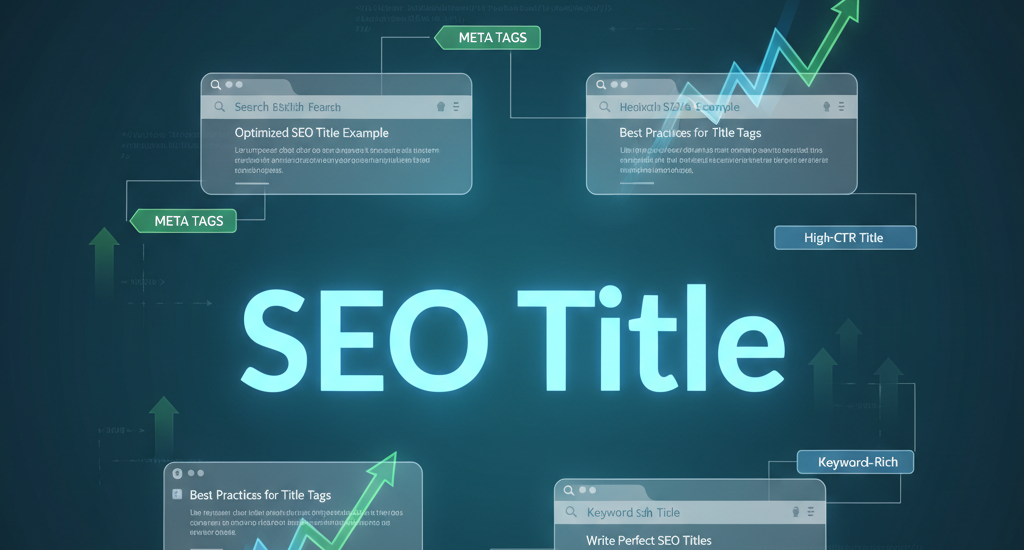
What is SEO title? An SEO title is the HTML title tag that defines the title of a webpage. It sits in the <head> section of your page’s code and looks something like this:
<title>Your Keyword-Rich Page Title Here | Brand Name</title>
This title serves multiple purposes:
- It displays as the main headline in Google, Bing, and other search results.
- It appears in browser tabs when someone visits your page.
- It shows up when your content is shared on social media.
Search engines use the SEO title to understand the main topic of your page. They weigh the words in the title quite heavily when deciding relevance for specific searches.
Unlike the visible H1 heading on your actual page, the SEO title is specifically optimized for search visibility. Many people confuse it with the page title you set in your CMS, but the SEO version is what ultimately shows in SERPs.
How SEO Titles Differ from Regular Page Titles and H1 Headings
It’s easy to mix them up, but they serve different roles:
- SEO Title / Title Tag / Meta Title: Optimized for search engines and SERPs. Often includes target keywords and brand name. Length is limited (ideally under 60 characters).
- Page Title (in CMS): What you might see as the main title when editing a post. It can be longer and more descriptive for readers.
- H1 Heading: The large, visible headline users see on the actual webpage. It should match the topic closely but doesn’t have the same strict character limits.
Google may sometimes rewrite your title tag if it doesn’t match user intent or seems spammy. That’s why crafting a natural, compelling SEO title tag that accurately reflects your content is so important.
Important note: A mismatched or poorly written title can hurt your click-through rates even if your content is excellent.
Why SEO Titles Matter for Search Rankings and Click-Through Rates
SEO titles are one of the most powerful on-page SEO factors. Here’s why they deserve your attention:
- They influence how search engines understand and categorize your page.
- They directly impact CTR — a higher click rate signals to Google that your result is relevant, which can support better rankings over time.
- They help differentiate your result from competitors in crowded SERPs.
- Well-optimized titles improve user experience by setting clear expectations.
In 2026, with more emphasis on helpful content and user intent, titles that clearly address what people are searching for tend to perform best. Front-loading your primary keyword while keeping the title readable and enticing makes a real difference.
Studies and SEO tools consistently show that pages with optimized title tags often see higher organic traffic and better engagement metrics.
Best Practices for Writing Effective SEO Titles in 2026
Creating strong SEO titles isn’t guesswork. Follow these proven guidelines:
- Keep length optimal: Aim for 50-60 characters so the full title displays without truncation on mobile and desktop.
- Front-load primary keywords: Place your main keyword near the beginning for better relevance and visibility.
- Make it compelling: Use power words like “Ultimate”, “Best”, “Guide”, “2026”, numbers, or questions where natural.
- Include brand name (usually at the end) for recognition and trust.
- Be unique: Every page on your site should have a distinct title.
- Match user intent: Ensure the title accurately describes what visitors will find.
Numbered list for crafting great titles:
- Research your primary keyword and related LSI keywords.
- Write a draft that includes the keyword early.
- Add value or a hook (benefit, number, emotion).
- Check length with a preview tool.
- Test variations if possible and monitor performance.
Bullet points for additional tips:
- Use title case for better readability.
- Avoid keyword stuffing — it looks spammy and can reduce clicks.
- Incorporate semantic SEO by adding contextually related terms naturally.
- For local businesses, include location when relevant (e.g., “Best SEO Services in Multan”).
Common Mistakes to Avoid with SEO Title Tags
Even experienced marketers slip up. Watch out for these pitfalls:
- Making titles too long, causing them to get cut off in results.
- Using the exact same title across multiple pages (duplicate titles).
- Stuffing too many keywords, which hurts readability and CTR.
- Being vague or generic instead of specific.
- Ignoring mobile display — most searches happen on phones now.
Bold important sentence: Always prioritize clarity and click-worthiness over forcing every possible keyword into the title.
Regularly audit your site’s titles using tools like Google Search Console to spot issues early.
Practical Tips and Benefits of Optimized SEO Titles
Optimizing your page title tags brings several clear advantages:
- Higher click-through rates from search results.
- Better alignment with search intent, leading to more qualified traffic.
- Improved search engine rankings when combined with strong content.
- Enhanced brand visibility in browser tabs and social shares.
- Easier content organization across large websites.
Benefits in bullet form:
- Cost-effective way to boost organic traffic without extra ad spend.
- Helps small businesses compete with bigger players.
- Supports overall on-page SEO strategy including meta descriptions and headings.
- Contributes to better user experience and lower bounce rates.
For real impact, combine great titles with high-quality, helpful content that delivers on the promise made in the title.
How to Implement SEO Titles on Your Website
Most content management systems make this straightforward:
- In WordPress, plugins like Yoast SEO or Rank Math let you set custom SEO titles easily.
- On other platforms, look for SEO settings or edit the HTML title tag directly.
- Always preview how your title appears in search results.
After updating titles, submit your pages to Google Search Console and monitor impressions and clicks over the following weeks.
Frequently Asked Questions (FAQ)
What is SEO title exactly? The SEO title, or title tag, is the HTML element that defines what appears as the clickable headline in search engine results. It helps users and search engines understand the page topic.
Is the SEO title the same as the meta title? Yes, they are often used interchangeably. The title tag is technically an HTML element, but SEOs commonly call it the meta title.
How long should an SEO title be? Aim for 50-60 characters. This helps prevent truncation in SERPs, especially on mobile devices.
Should I put keywords at the beginning of the title? Yes, front-loading your primary keyword is a best practice for better relevance and visibility.
Can Google change my SEO title? Google sometimes rewrites titles if they believe a different version better matches user intent. That’s why accuracy and natural language matter.
Do LSI keywords help in SEO titles? They can add context when used naturally, but avoid forcing too many. Focus on readability first.
What’s the difference between SEO title and H1? The SEO title appears in search results, while the H1 is the main visible heading on the page itself. They should be related but not necessarily identical.
Conclusion
Understanding what is SEO title is fundamental to improving your website’s visibility in search results. These small but mighty title tags influence everything from how search engines rank your pages to whether users actually click through to read your content.
By following best practices — keeping titles concise, keyword-smart, and user-focused — you can create SEO titles that drive more organic traffic and deliver better results. Remember, great titles work hand-in-hand with valuable, helpful content.
Take time today to review the titles on your most important pages. Small tweaks here can lead to noticeable improvements in clicks and rankings over time. Stay consistent, test what works for your audience, and keep learning as search behaviors evolve.