
Table of Contents
- Introduction
- What Is Landing Page Optimization?
- Why Landing Page Optimization Matters
- Key Elements of a High-Converting Landing Page
- Headline Optimization Strategy
- Content Structure for Better Conversions
- Call-to-Action (CTA) Optimization
- Page Speed and Technical Performance
- Mobile Optimization Best Practices
- A/B Testing for Landing Pages
- Common Landing Page Mistakes
- Benefits of Landing Page Optimization
- Frequently Asked Questions (FAQ)
- Conclusion
Introduction
Landing page optimization is one of the most important parts of digital marketing, especially for businesses running Google Ads, SEO campaigns, or social media ads. A landing page is the first page a user sees after clicking an advertisement or search result, and its performance directly affects conversions, leads, and sales.
Even if you have strong traffic from Google Ads, SEO marketing, or social media campaigns, you can still lose potential customers if your landing page is not properly optimized. This is why landing page optimization plays a critical role in turning visitors into actual customers.
In simple terms, landing page optimization focuses on improving the design, content, speed, and structure of a page to increase conversion rate. It is not just about looking good — it is about guiding users to take action.
Important Insight:
A well-optimized landing page can double or even triple your conversion rate without increasing traffic.
What Is Landing Page Optimization?
Landing page optimization is the process of improving a webpage so that more visitors complete a desired action such as filling out a form, making a purchase, or signing up for a service.
It includes improving elements like headlines, images, content layout, call-to-action buttons, and overall user experience. Businesses use landing page optimization to increase conversion rate optimization (CRO) and reduce advertising costs.
For example, if 100 people visit your page and only 2 convert, optimization strategies can increase that number to 8–10 conversions without increasing traffic.
Important Insight:
Landing page optimization is not about more traffic—it is about better performance from existing traffic.
Why Landing Page Optimization Matters
Landing page optimization is important because it directly impacts business revenue. Many companies spend a lot of money on ads but lose customers due to poor landing page design or confusing content.
A well-optimized landing page improves user experience, builds trust, and guides visitors toward action. It also reduces bounce rate and increases engagement.
In digital marketing strategies like PPC advertising, SEO campaigns, and Facebook ads, landing page optimization ensures that traffic does not go to waste.
Important Insight:
Without optimization, even high-quality traffic can turn into lost opportunities.
Key Elements of a High-Converting Landing Page
A successful landing page includes several important elements that work together to improve conversions.
The headline must immediately grab attention and clearly explain the offer. The content should be simple, focused, and persuasive. Images or visuals should support the message instead of distracting users.
Trust elements like reviews, testimonials, and ratings help build credibility. Finally, a strong call-to-action encourages users to take the next step.
Headline Optimization Strategy
The headline is the most important part of a landing page because it is the first thing users see. A strong headline must clearly communicate value and match user intent.
Good headlines are specific, benefit-focused, and easy to understand. Instead of generic text, they should address user problems directly.
For example:
Instead of “Welcome to Our Website,” use “Get High-Quality SEO Services That Increase Your Traffic Fast.”
Important Insight:
A strong headline can significantly increase engagement and reduce bounce rate.
Content Structure for Better Conversions
Landing page content should be structured in a way that is easy to read and understand. Visitors usually scan pages instead of reading every word, so clarity is very important.
Content should start with a strong introduction, followed by benefits, features, and trust signals. Short paragraphs and bullet points improve readability and keep users engaged.
LSI keywords like conversion rate optimization, digital marketing landing pages, and user experience optimization should be used naturally.
Important Insight:
Clear and structured content improves both SEO and conversion performance.
Call-to-Action (CTA) Optimization
The call-to-action is one of the most powerful elements of landing page optimization. It tells users what to do next, such as “Buy Now,” “Sign Up,” or “Get Free Consultation.”
A good CTA should be visible, clear, and action-oriented. Placement also matters — it should appear multiple times across the page without being overwhelming.
Colors, size, and wording can also affect performance. A well-designed CTA increases click-through rates significantly.
Important Insight:
If users don’t know what to do next, they will leave your page.
Page Speed and Technical Performance
Page speed is a major ranking and conversion factor. If a landing page takes too long to load, users will leave before even seeing the content.
Optimizing images, reducing scripts, and using fast hosting can improve load time. Google also considers page speed as a ranking factor in SEO.
Technical optimization ensures smooth performance on all devices.
Important Insight:
Slow websites lose both traffic and conversions.
Mobile Optimization Best Practices
Most users now browse through mobile devices, so landing pages must be fully mobile-friendly.
A responsive design ensures that content adjusts to different screen sizes. Buttons should be easy to click, and text should be readable without zooming.
Mobile optimization is also essential for Google Ads landing pages and SEO performance.
Important Insight:
Mobile experience directly impacts conversion rates and user satisfaction.
A/B Testing for Landing Pages
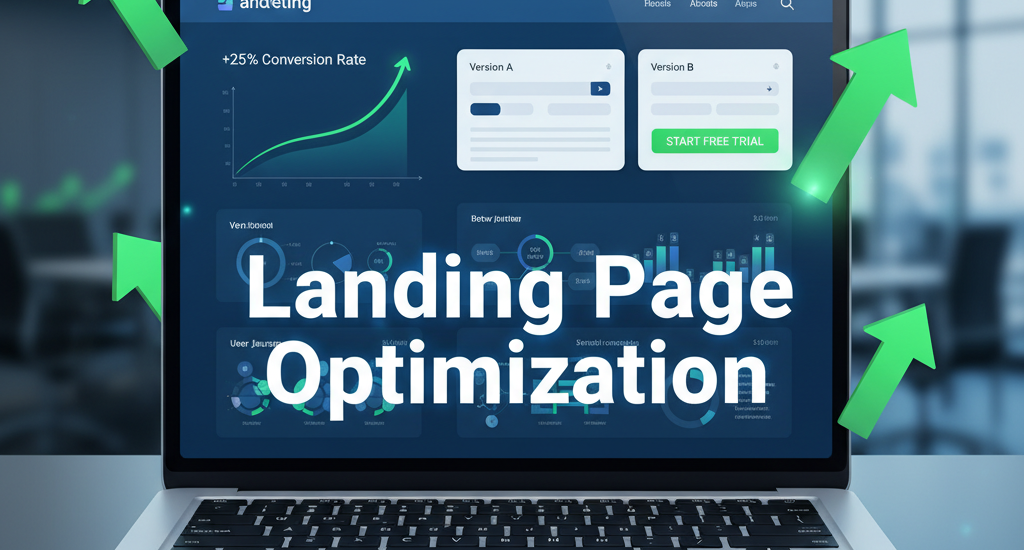
A/B testing is the process of comparing two versions of a landing page to see which performs better.
You can test headlines, images, CTA buttons, and layouts. Even small changes can lead to significant improvements in conversion rates.
Tools like Google Optimize or other CRO platforms are commonly used for testing.
Important Insight:
Data-driven decisions always outperform guesswork in marketing.
Common Landing Page Mistakes
Many businesses lose conversions due to simple mistakes such as too much text, unclear messaging, and poor design.
Other mistakes include slow loading speed, lack of trust signals, and confusing navigation. These issues increase bounce rate and reduce performance.
Important Insight:
Clarity and simplicity are more powerful than complex design.
Benefits of Landing Page Optimization
Landing page optimization improves conversion rates, reduces advertising costs, and increases overall marketing performance.
It also helps businesses generate more leads without increasing traffic. This makes campaigns more profitable and efficient.
In SEO marketing, Google Ads, and PPC campaigns, optimized landing pages deliver better ROI.
Frequently Asked Questions (FAQ)
1. What is landing page optimization?
It is the process of improving a webpage to increase conversions and user actions.
2. Why is landing page optimization important?
Because it improves conversion rates and reduces wasted traffic from ads or SEO.
3. How does landing page optimization help SEO?
It improves user experience, reduces bounce rate, and increases engagement.
4. What is a good conversion rate?
A good conversion rate varies, but 5–10% is considered strong in most industries.
Conclusion
Landing page optimization is a critical part of digital marketing success. Whether you are using SEO, Google Ads, or social media marketing, your landing page determines how many visitors become customers.
By improving headlines, content structure, CTAs, speed, and mobile experience, businesses can significantly increase conversions without increasing traffic.