
- Introduction
- What Is SEO Strategy?
- Why Every Business Needs a Clear SEO Strategy
- Key Components of a Strong SEO Strategy
- Different Types of SEO Strategies
- How to Build an Effective SEO Strategy in 2026
- Benefits of Having a Well-Planned SEO Strategy
- Common Mistakes to Avoid When Creating Your SEO Strategy
- Frequently Asked Questions (FAQ)
- Conclusion
What Is SEO Strategy and How It Can Transform Your Online Growth
If you want your website to appear on the first page of Google and attract consistent visitors, simply writing blog posts or adding keywords isn’t enough. You need a clear plan. That plan is called an SEO strategy.
In this guide, I’ll explain what is SEO strategy, why it matters, and how you can build one that actually works for your business in 2026. Whether you’re a small business owner, blogger, or marketing manager, understanding this topic will help you make smarter decisions and get better results from your SEO efforts.
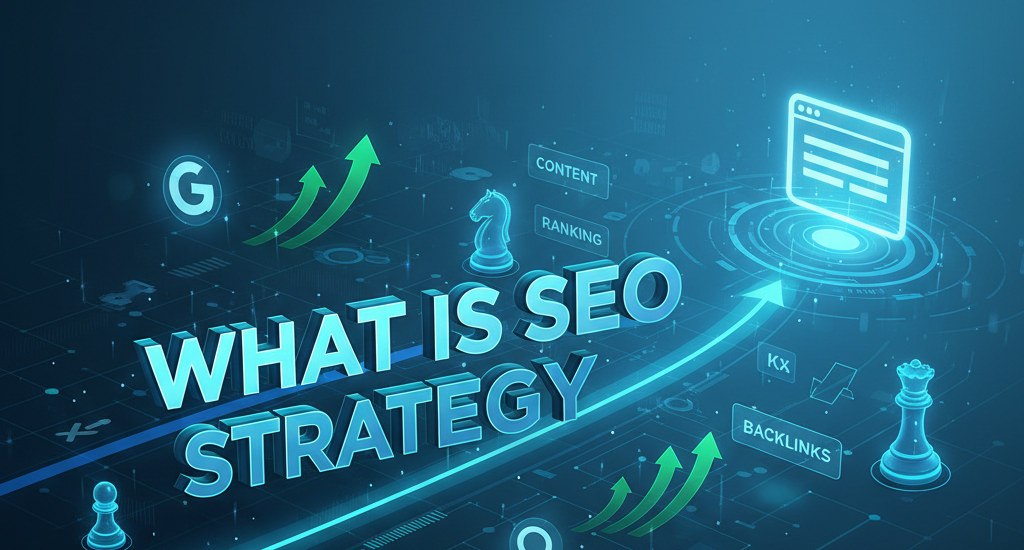
Think of SEO strategy as your roadmap. It tells you where you want to go, which keywords to target, what content to create, and how to measure success.
What Is SEO Strategy?
SEO strategy is a long-term, structured plan designed to improve your website’s visibility in search engines. It combines research, technical improvements, content creation, and ongoing optimisation to attract organic traffic from Google and other search engines.
Unlike random SEO tasks, a proper SEO strategy is goal-oriented. It aligns your search engine optimisation efforts with your overall business objectives — whether that’s generating more leads, increasing online sales, or building brand awareness.
Why Every Business Needs a Clear SEO Strategy
Without a strategy, SEO becomes a collection of disconnected activities — publishing random blog posts, chasing keywords, or fixing technical issues as they appear. This scattered approach rarely delivers strong results.
A well-defined SEO strategy gives you direction and focus. It helps you understand your audience, identify the best opportunities, and use your time and budget efficiently.
Important sentence: A good SEO strategy turns guesswork into a purposeful system that delivers consistent, measurable growth over time.
In 2026, with AI-powered search results and increasing competition, having a strategic approach is more important than ever.
Key Components of a Strong SEO Strategy
Every effective SEO strategy rests on several core pillars:
1. Goal Setting
Define what success looks like for your business — more traffic, higher conversions, better brand visibility, or improved local rankings.
2. Audience and Keyword Research
Understand who your ideal customers are and the exact words and questions they type into Google. This includes informational, navigational, and transactional search intent.
3. Technical Foundation
Ensure your website is fast, mobile-friendly, secure, and easy for search engines to crawl and index.
4. Content Strategy
Create high-quality, helpful content that answers user questions and satisfies search intent.
5. On-Page and Off-Page Optimisation
Optimise individual pages while building authority through ethical link building and brand mentions.
6. Measurement and Improvement
Regularly track performance and adjust your approach based on real data.
Different Types of SEO Strategies
Not all SEO strategies are the same. Here are the most common types:
- Local SEO Strategy: Ideal for businesses with physical locations or serving specific areas.
- Ecommerce SEO Strategy: Focuses on product pages, category optimisation, and user journey.
- Content-Led SEO Strategy: Heavy focus on creating in-depth, helpful blog posts and guides.
- Technical SEO Strategy: Prioritises site speed, structure, and crawl efficiency.
- Competitor-Based Strategy: Analyses top-ranking competitors to find gaps and opportunities.
Many successful businesses combine elements from different types to create a hybrid SEO strategy that fits their unique needs.
How to Build an Effective SEO Strategy in 2026
Here’s a practical step-by-step numbered list to help you create your own strategy:
- Perform a thorough SEO audit of your current website.
- Define clear, measurable goals aligned with your business objectives.
- Research keywords using both volume and search intent.
- Analyse your competitors to discover strengths and weaknesses.
- Develop a content calendar focused on high-value topics.
- Plan technical improvements and prioritise fixes.
- Set up proper tracking with Google Analytics and Search Console.
- Schedule regular reviews to measure progress and adjust tactics.
Bullet points for quick strategy tips:
- Focus on user experience and E-E-A-T (Experience, Expertise, Authoritativeness, Trustworthiness)
- Target a mix of short-tail and long-tail keywords
- Build topical authority around your main niche
- Prioritise mobile-first optimisation
- Create content clusters instead of isolated blog posts
Benefits of Having a Well-Planned SEO Strategy
When you invest time in building a solid SEO strategy, you can expect several important benefits:
- More consistent and predictable organic traffic growth
- Better return on your marketing efforts
- Improved website authority and trust signals
- Higher conversion rates from qualified visitors
- Long-term cost efficiency compared to paid advertising
- Stronger competitive advantage in your industry
Businesses with a clear strategy usually outperform those who simply “do some SEO” whenever they have time.
Common Mistakes to Avoid When Creating Your SEO Strategy
Even experienced marketers make these mistakes:
- Focusing only on keywords instead of user intent
- Ignoring technical SEO until problems appear
- Creating content without a clear strategy or audience in mind
- Chasing quick wins instead of sustainable growth
- Failing to track and measure important metrics
Avoiding these pitfalls will save you time, money, and frustration in the long run.
Frequently Asked Questions (FAQ)
What is the difference between SEO and SEO strategy? SEO refers to the individual tactics and tasks, while SEO strategy is the overall plan that connects those tasks toward specific business goals.
How long does it take to see results from an SEO strategy? Most businesses notice meaningful improvements within 4–8 months, with significant growth often appearing after 12 months of consistent execution.
Do I need a professional to create my SEO strategy? Not necessarily. Small businesses can build a basic strategy themselves, but complex projects or competitive niches often benefit from expert help.
Is SEO strategy still relevant in 2026 with AI search? Yes. While search is evolving, a strong SEO strategy focused on user value and E-E-A-T remains essential for long-term visibility.
Can a small business create an effective SEO strategy? Absolutely. Many small businesses succeed by starting with clear goals, targeting less competitive keywords, and producing genuinely helpful content.
How often should I update my SEO strategy? Review and update your strategy every 6–12 months, or whenever there are major changes in your business goals or Google’s algorithm.
Conclusion
Understanding what is SEO strategy is the first step toward achieving sustainable online success. It’s much more than just ranking for keywords — it’s about creating a smart, focused plan that brings the right visitors to your website and helps your business grow.
A well-crafted SEO strategy gives you clarity, saves resources, and delivers long-term results that paid advertising alone cannot match. Whether you build it yourself or work with a specialist, investing time in strategy will always outperform random SEO efforts.
Start today by reviewing your current situation. Define your goals, research your audience, and begin building a simple but effective SEO strategy. The businesses that succeed online in 2026 and beyond will be those that treat SEO as a strategic business investment rather than a collection of random tasks.